
RNA interference (RNAi) has emerged as a revolutionary mechanism in gene regulation, transforming therapeutic approaches for various diseases. The University of North Carolina at Chapel Hill (UNC-Chapel Hill) has developed a new technology that enhances RNAi potency, addressing the limitations of traditional small interfering RNA (siRNA) therapies. This innovation promises to expand the scope and efficacy of RNAi applications, particularly in challenging medical conditions.
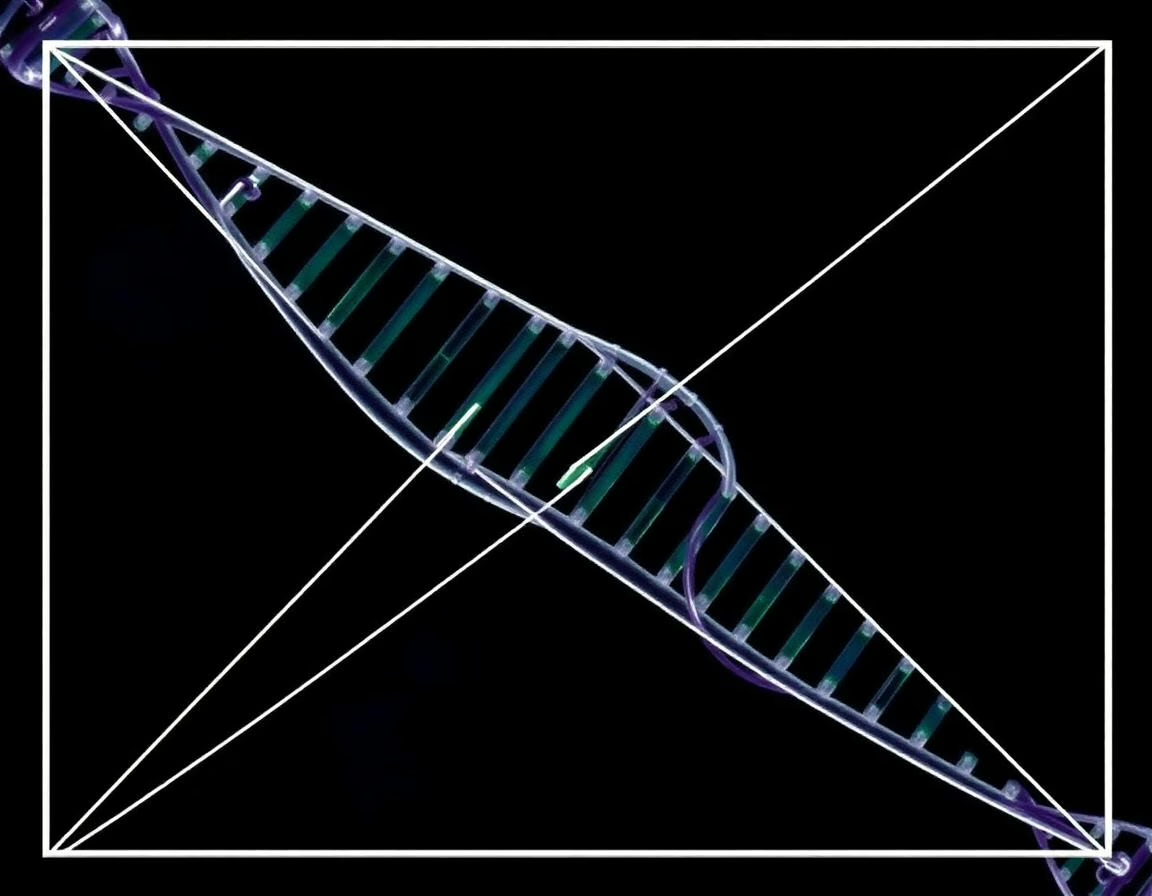
Understanding RNA Interference
At its core, RNA interference is a natural cellular process that silences specific genes by targeting messenger RNA (mRNA) post-transcription. Unlike traditional methods that modify DNA, RNAi operates at the RNA level, controlling protein synthesis through two primary classes of RNA molecules: siRNAs and microRNAs (miRNAs). These RNA types interact with the RNA-induced silencing complex (RISC), which is crucial for executing gene silencing.
The mechanism of action for siRNAs involves a “guide” strand that directs RISC to the corresponding mRNA. Upon binding, a protein called Argonaute 2 (AGO2) cleaves the mRNA, preventing protein production. Conversely, miRNAs tend to bind less precisely, primarily inhibiting translation or destabilizing mRNA. This nuanced control highlights RNAi’s potential, especially in targeting genes that conventional treatments cannot address.
The Challenges of Current siRNA Therapies
Despite the clinical validation of RNAi therapies, significant hurdles remain. Current siRNAs face structural limitations that restrict their effectiveness, particularly outside liver-targeted applications. A core challenge lies in the efficient loading of the correct antisense strand into RISC. Inefficient loading can weaken gene silencing, necessitating higher doses that may elevate the risk of adverse effects.
While chemical modifications have improved the stability of siRNAs against body nucleases, they often disrupt the RISC machinery’s function. Consequently, gene silencing may be slower or less effective, limiting the therapeutic potential of siRNA-based interventions.
UNC-Chapel Hill’s Innovative Approach
UNC-Chapel Hill’s new platform technology seeks to overcome these barriers through specific DNA-based modifications at the 5′ end of the antisense strand. By introducing a nucleotide overhang of deoxythymidines (dT), the researchers have optimized the RISC loading process, thereby enhancing RNAi potency.
This innovation directly targets RNAi’s structural weaknesses. The incorporation of deoxythymidines creates a “sticky” end that facilitates better recognition and activation by RISC. In comparative studies targeting genes like KRAS and MYC, this modified approach demonstrated superior inhibition across various cell lines, indicating a significant leap in siRNA drug efficacy.
Enhanced Potency and Broader Applications
The primary advantage of UNC-Chapel Hill’s technology is the substantial increase in RNAi potency, enabling effective gene silencing at lower doses. This improvement minimizes the risk of off-target effects and systemic toxicity, making the approach particularly valuable for therapeutic applications constrained by dose limitations.
Moreover, the platform is adaptable and not restricted to specific genes. The deoxythymidine overhang enhances interactions with the RNAi machinery, allowing for deployment against a wide range of genetic targets, including specific mutations like KRAS G12V. This versatility positions the technology as a promising tool for expanding RNAi therapies into more complex areas, such as oncology.
Real-World Implications of the Technology
The implications of this advancement extend beyond theoretical applications. The technology offers high precision in targeting oncogenic mutations while sparing normal sequences. Its compatibility with existing delivery systems, like lipid nanoparticles, ensures easy integration into current RNAi development pipelines.
By addressing structural challenges and enhancing silencing efficiency, UNC-Chapel Hill’s platform could redefine the landscape of RNAi therapeutics. It enables better targeting of traditionally “undruggable” oncogenes and enhances the performance of siRNA candidates in various diseases.
Conclusion
The breakthrough at UNC-Chapel Hill marks a significant milestone in the evolution of RNAi technology. By enhancing the intrinsic potency of siRNAs, this innovative approach lays the groundwork for more effective and safer gene silencing therapies. As RNAi continues to evolve, the potential applications in precision medicine and beyond are boundless.
- RNA interference is a powerful tool for gene regulation.
- UNC-Chapel Hill’s new technology enhances siRNA potency significantly.
- The platform is adaptable to various genetic targets, expanding therapeutic possibilities.
- Improved efficiency reduces the risk of side effects associated with higher dosages.
- The technology is poised to tackle complex diseases, especially in oncology.
Read more → www.labiotech.eu



