
Rapid identification of pathogenic bacteria is essential in preventing foodborne illnesses and clinical infections. In a world where timely diagnosis can significantly influence patient outcomes, the development of innovative technologies is crucial. Traditional methods often lack the speed and efficiency necessary for real-time diagnostics, leading to a push for microfluidic technologies that enhance detection capabilities at smaller scales.
The Significance of Microfluidic Systems
Microfluidic biosensors represent a breakthrough in the detection of pathogenic bacteria, addressing a critical need in public health. They offer a solution to the limitations posed by conventional culture-based techniques, which typically require lengthy incubation periods and specialized laboratory environments. As a result, these traditional methods can delay treatment and exacerbate bacterial infections.
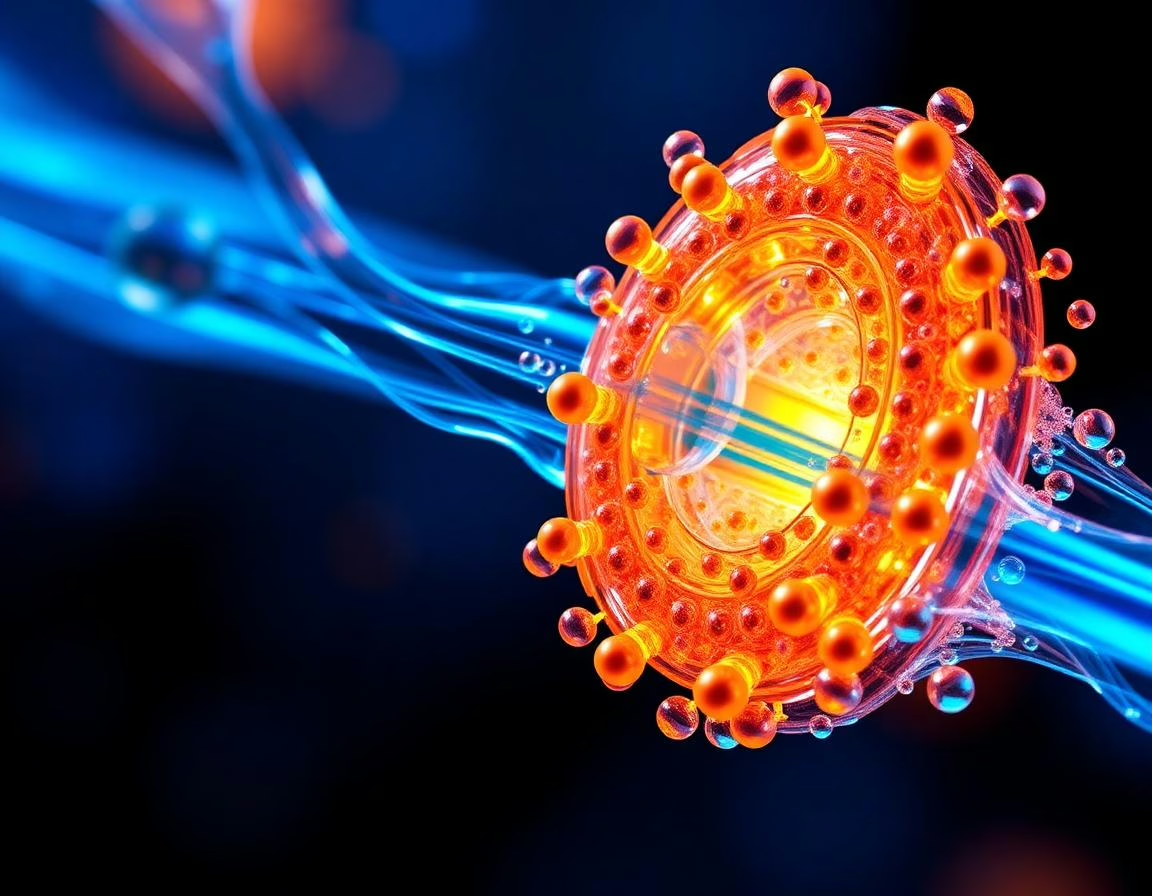
Microfluidic systems streamline laboratory functions onto compact chips, permitting rapid detection with minimal sample volumes. These devices integrate microscale fluidic channels with biorecognition components such as antibodies, aptamers, and enzymes, enabling the selective identification of bacterial pathogens.
Architecture and Functionality of Microfluidic Biosensors
Microfluidic biosensors are designed to control fluid flow within channels that measure mere micrometers in width. Their architecture incorporates sample preparation, biorecognition interfaces, and signal transduction elements into a single device.
Biorecognition elements, including antibodies and lectins, are immobilized within these channels to specifically bind to target bacterial cells or their markers. As fluid samples traverse the microchannels, binding events produce measurable changes in signals, indicating the presence and concentration of pathogens.
The small dimensions of microfluidic channels enhance mass transport efficiency, allowing for detection at lower biomass levels compared to traditional methods. This design facilitates the integration of multiple analytical steps, such as enrichment, extraction, and detection, into an uninterrupted workflow.
Innovative Detection Techniques
Surface plasmon resonance (SPR) biosensors integrated with microfluidic platforms offer label-free detection by monitoring changes in refractive index. These systems can detect bacteria through localized surface plasmon resonance, enabling the analysis of small fluid volumes without fluorescent tagging.
Recent advancements include cascaded plasmonic-liquid crystal biosensors that can detect low concentrations of E. coli while simultaneously measuring higher concentrations through light intensity variations. Fluorescence-based systems also play a crucial role in pathogen detection, utilizing immunomagnetic separation and fluorescent labeling for accurate measurements.
Electrochemical and Multimodal Approaches
Electrochemical biosensors represent an economical alternative for detecting bacteria. By employing cell-imprinted polymers that mimic the size and shape of target pathogens, these sensors create specific binding sites without necessitating biological components.
Dynamic detection ranges have been reported, achieving statistically distinguishable counts from 100 to 10 million colony-forming units per milliliter. Additionally, microfluidic devices featuring functionalized electrodes can selectively detect pathogens through electrochemical signal transduction, achieving low detection limits and rapid analysis times.
Multimodal biosensors that incorporate various detection mechanisms on a single platform enhance diagnostic reliability. By validating results through different pathways, these sensors provide comprehensive pathogen characterization.
Rapid Nucleic Acid Detection
The integration of loop-mediated isothermal amplification (LAMP) technologies into microfluidic devices allows for swift nucleic acid-based detection of pathogens, eliminating the need for thermal cycling. LAMP can amplify target DNA at constant temperatures, making it suitable for portable applications.
Such microfluidic platforms can detect multiple pathogens with impressive speed; detection times are typically under thirty minutes. By utilizing filter membranes, bacterial DNA can flow directly to amplification chambers, facilitating efficient analysis.
Smartphone Integration for Accessibility
The advent of smartphone-based microfluidic platforms has revolutionized bacterial detection, making sophisticated diagnostics accessible to a broader audience. These systems leverage mobile devices’ computational and imaging capabilities to analyze signals from microfluidic chips, removing the need for expensive laboratory equipment.
With paper-based microfluidic chips, users can count bacteria at the single-cell level in just over a minute. Smartphone applications assist users in positioning their devices accurately and processing images, automatically counting bacterial spots for analysis.
Portable microfluidic-integrated SPR platforms can reliably measure bacterial concentrations in both clinical and non-clinical samples, making these systems valuable tools in primary care and resource-limited environments.
Future Directions in Microfluidic Biosensing
The ongoing development of microfluidic biosensing technologies aims to enhance sensitivity and usability in field settings. Future advancements are likely to incorporate artificial intelligence for automated signal analysis and machine learning for complex sample pattern recognition.
Innovations in materials science may yield more stable and specific biorecognition elements, further improving detection capabilities. However, successful commercial translation of these technologies will require standardized manufacturing processes and validation across various clinical and environmental contexts.
The fusion of these innovations promises to establish sample-to-result systems that complete entire diagnostic workflows within microfluidic cartridges, enabling rapid clinical decision-making and timely treatment interventions for bacterial infections.
Key Takeaways
- Microfluidic biosensors offer rapid detection capabilities for pathogenic bacteria, significantly reducing diagnosis times.
-
The architecture of these systems allows for multi-step analyses, integrating sample preparation and detection in a single device.
-
Innovative detection techniques, including SPR and fluorescence systems, enhance accuracy and sensitivity in identifying pathogens.
-
Smartphone integration facilitates accessible and efficient bacterial detection, empowering users to conduct tests without specialized equipment.
-
Future advancements will likely focus on AI and machine learning integration to improve detection accuracy and ease of use in various settings.
In conclusion, the evolution of microfluidic biosensing technologies represents a significant leap forward in pathogen detection. By merging innovation with practicality, these systems hold the potential to transform diagnostics, offering swift and reliable results that are essential for effective clinical interventions. The future landscape of microbial diagnostics is bright, with continuous advancements promising to enhance public health outcomes.
Read more → www.azosensors.com



