
Researchers have achieved a significant breakthrough in the field of neuroscience by successfully cultivating a specialized group of nerve cells crucial for understanding motor neuron diseases, particularly amyotrophic lateral sclerosis (ALS), as well as spinal cord injuries. This innovative approach opens new avenues for studying the selective vulnerability of these neurons and exploring potential therapeutic strategies.
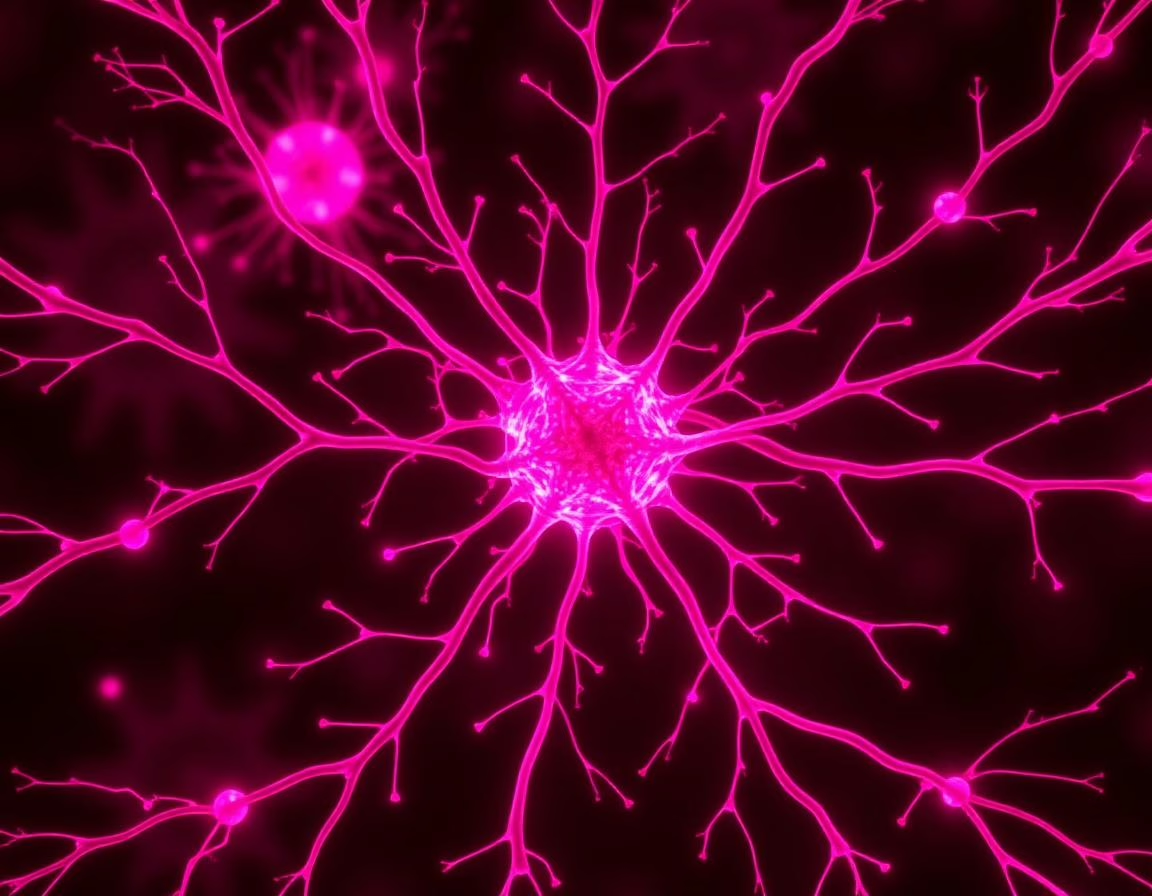
Understanding Neuron Specialization
The nervous system comprises a multitude of neuron types, each with unique characteristics that dictate their roles in the body. These attributes include their morphology, anatomical positioning, and connectivity patterns. The emergence of distinct neuron subtypes is a result of intricate differentiation processes, guiding immature stem cells into specialized neurons. Such specificity is vital, as certain neuron types are particularly susceptible to damage from neurodegenerative diseases and injuries.
The Need for Accurate Models
Kadir Ozkan, a co-lead author of the study, emphasizes the necessity of reliable models to simulate diseases and to test potential treatments. Traditional models often fail to capture the unique vulnerabilities of neuron subtypes, which limits research into conditions like ALS and spinal cord injuries.
Corticospinal neurons, which are essential for voluntary movement, are among the first to deteriorate in ALS. Damage to their long axons disrupts communication between the brain and spinal cord, resulting in significant motor impairment. Therefore, creating accurate in vitro models is crucial for understanding and addressing these conditions.
Discovering Progenitor Cells
The research team, led by Jeffrey Macklis, built upon previous findings that identified molecular programs controlling neuron differentiation. They discovered a subset of progenitor cells in the postnatal and adult cortex that could be differentiated into corticospinal-like neurons in the laboratory setting. Co-lead author Hari Padmanabhan explains that these progenitors retain the potential to develop into functional neurons, which could be pivotal for modeling diseases and developing regenerative therapies.
The NVOF System: A Breakthrough in Differentiation
To harness the potential of these progenitor cells, the team developed a sophisticated gene-expression system named “NVOF.” This multi-component system allows for precise regulation of the differentiation process, guiding progenitor cells towards becoming corticospinal neurons. By employing this method, the researchers successfully produced mature neurons with characteristics that closely resemble those of native corticospinal neurons.
The results were promising; the NVOF programming yielded neurons with the expected morphology, molecular markers, and electrical connectivity. In contrast, conventional methods that activate a single gene, Neurogenin2, resulted in a heterogeneous mix of neuron-like cells, showcasing the advantages of the NVOF approach.
Future Research Directions
While the findings are groundbreaking, they also highlight the need for continued investigation. The study’s editors point out that the research was conducted in vitro, meaning further studies are necessary to determine how these reprogrammed neurons integrate and function in living organisms, particularly in models of neurodegeneration or injury.
The identification of SOX6+/NG2+ cortical progenitor cells as a source for developing specialized neurons is a significant step forward. These cells are widely dispersed in the cortex, often located near areas affected by neurodegeneration, enhancing their potential for therapeutic application.
Potential Impact on Regenerative Medicine
The implications of this research extend beyond basic science. The ability to generate corticospinal-like neurons from progenitor cells could revolutionize the study of ALS and spinal cord injuries. It provides a platform for testing new treatments and understanding the underlying mechanisms of neuron degeneration.
Key Takeaways
- Researchers have cultivated a specialized group of nerve cells essential for studying ALS and spinal cord injuries.
- The new NVOF gene-expression system allows for precise differentiation of progenitor cells into corticospinal-like neurons.
-
This breakthrough may lead to more relevant in vitro models for testing treatments and understanding the mechanisms of neurodegenerative diseases.
-
SOX6+/NG2+ progenitor cells are promising candidates for future research into regenerative therapies due to their proximity to sites of degeneration.
In conclusion, the cultivation of specialized nerve cells marks a pivotal moment in neuroscience, offering hope for better understanding and tackling challenging neurological disorders. Continued exploration of these findings could pave the way for innovative treatments that restore function and improve the quality of life for individuals affected by motor neuron diseases and spinal cord injuries.
Read more → elifesciences.org



