
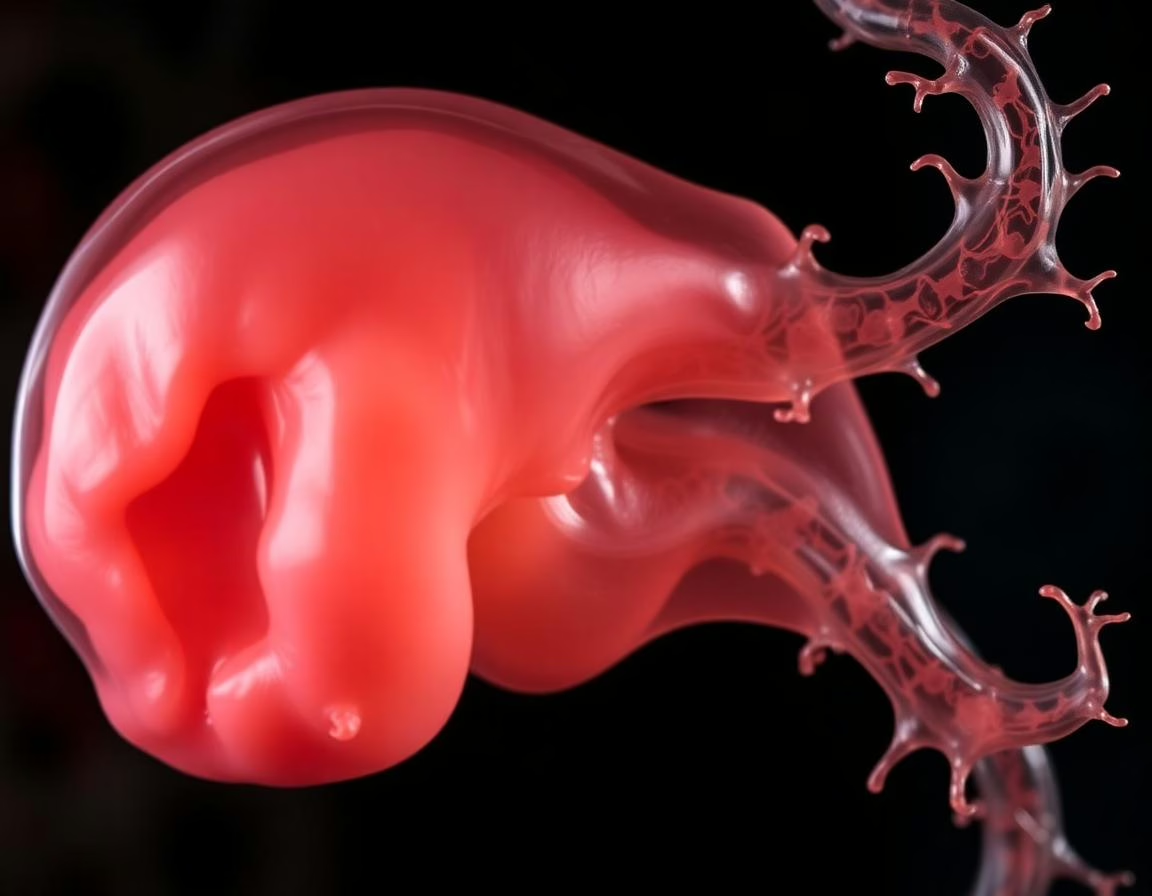
In a remarkable advancement for liver research, scientists have engineered fetal liver-like organoids (FLOs) from pluripotent stem cells, creating a sophisticated model that mimics hepatic tissue while integrating a functional hematopoietic system. This pioneering approach offers a unique human model, enabling researchers to investigate the intricate relationship between immune responses and liver development. The potential applications of this innovation are vast, paving the way for deeper insights into developmental biology and a better understanding of liver-related diseases.
The Challenge of Existing Liver Models
Previous liver organoid systems struggled to recreate the complex microenvironments essential for hematopoiesis. To address this limitation, researchers introduced a dual approach by co-developing hemogenic mesoderm alongside hepatic endoderm. This strategic combination led to the generation of FLOs that encompass various cell types, including hepatobiliary, mesenchymal, and endothelial tissues, while harboring multipotent hematopoietic progenitor cells (HPCs). Notably, these HPCs exhibit a predominant myeloid lineage but retain the potential for B- and T-cell differentiation.
Unveiling Hematopoietic Development Mechanisms
One of the pivotal discoveries within the FLO niche is the CXCL12–CXCR4 signaling pathway, which plays a crucial role in facilitating hematopoietic development akin to that occurring in vivo during fetal liver formation. By supplementing the system with a tailored small-molecule and cytokine cocktail, researchers were able to steer the expansion of immune cell lineages, successfully generating granulocytes and polarized macrophages equipped with specific effector functions.
Functional Insights into Immune Responses
The FLO-derived immune cells demonstrated a remarkable capacity to respond to inflammatory stimuli. Under conditions of steatotic-lipotoxic stress, these organoids effectively mirrored an IL-8–driven cascade of neutrophil injury, shedding light on the mechanisms through which the innate immune system influences fatty liver pathology. This insight is invaluable for understanding the interplay between immune responses and liver health, particularly in the context of diseases exacerbated by inflammation.
A Versatile Platform for Research and Development
Researchers advocate for the FLO system as a scalable and physiologically relevant model for investigating human fetal liver development. Its potential extends beyond basic research; it offers a platform for modeling pediatric liver diseases and evaluating regenerative therapies. Given that FLOs produce immune-competent liver tissue, they are ideally suited for drug screening and precision medicine applications. This includes the exploration of gene-edited cell replacements, tolerance induction, and personalized toxicity profiling of drug candidates.
Implications for Future Therapeutics
The advancements represented by FLOs hold significant promise for drug development and therapeutic interventions for immune-mediated hepatic injuries. By providing a realistic simulation of human liver interactions with the immune system, these organoids may facilitate the identification of novel therapeutic targets and strategies that can be tailored to individual patient needs.
Key Takeaways
- Innovative Design: FLOs integrate hematopoietic and hepatic systems, mimicking human fetal liver development.
-
Mechanistic Insights: The CXCL12–CXCR4 pathway is essential for supporting hematopoietic cell development within organoids.
-
Functional Relevance: FLOs respond effectively to inflammatory conditions, offering insights into liver disease mechanisms, particularly fatty liver disease.
-
Versatile Applications: This model can be utilized for studying liver diseases, drug screening, and regenerative medicine.
-
Future Directions: FLOs may pave the way for novel therapeutic approaches in treating liver diseases and enhancing drug safety profiles.
In essence, fetal liver organoids represent a groundbreaking advancement in biomedical research, offering new insights into liver and immune system interactions. As this technology progresses, it holds the potential to transform our approach to liver diseases and elevate patient care.
Read more on emjreviews.com



