
The landscape of oncology is rapidly evolving, and at the forefront of this transformation are antibody drug conjugates (ADCs). These innovative therapies blend selectivity with high potency, offering a promising approach to targeted cancer treatment.
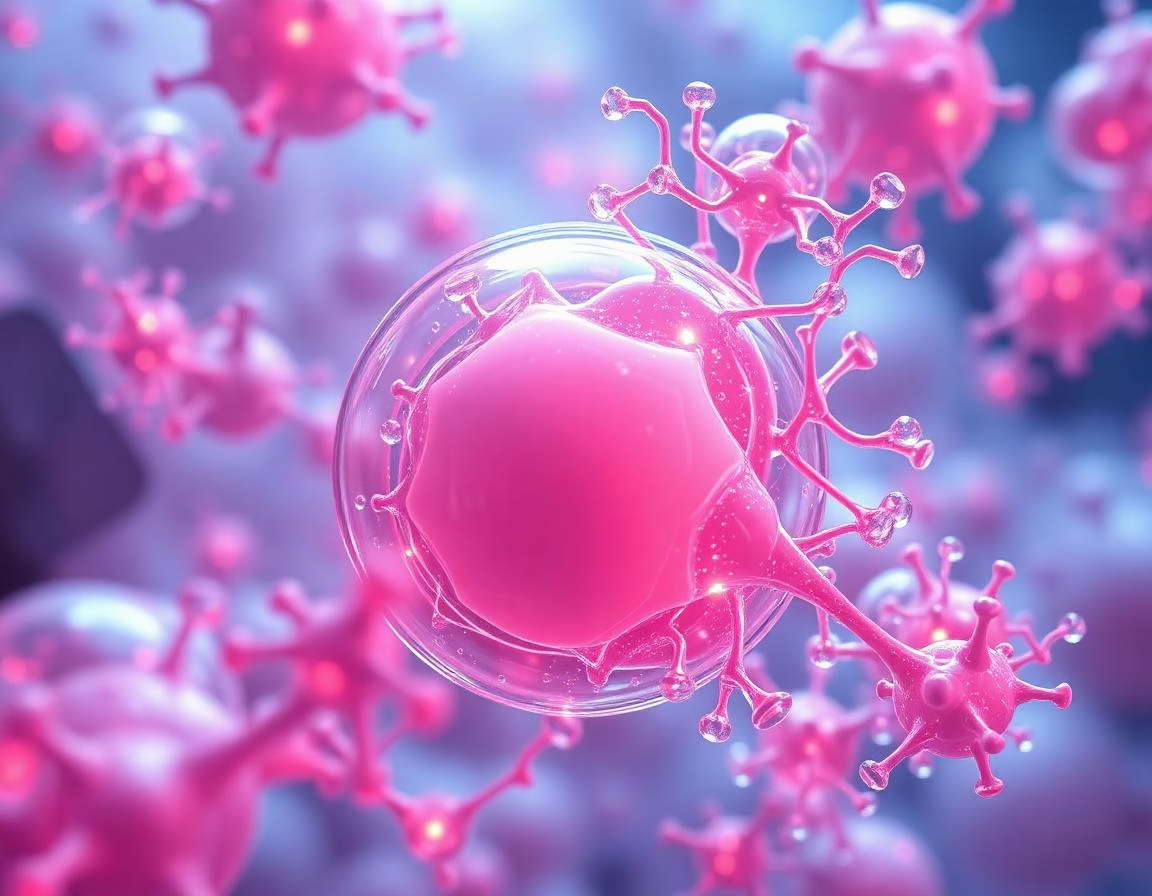
ADCs are designed by linking a tumor-targeting antibody to a potent small-molecule payload via a specialized chemical linker. This strategic design aims to deliver the therapeutic payload primarily to cancer cells expressing specific antigens, minimizing exposure to healthy tissues and enhancing the therapeutic index. The success of ADCs hinges on the intricate alignment of biological and chemical principles.
Rising Importance of Targeted Cancer Therapies
The complexity of cancer biology presents significant challenges, as many tumors can evade treatment through various mechanisms, even when advanced biomarker selection is employed. ADCs address this challenge effectively by utilizing a multi-faceted approach. Rather than relying solely on blocking cellular signals, ADCs bind to tumor surfaces and facilitate internalization. This process allows the release of the cytotoxic payload within the cancer cell, ultimately inducing cell death.
Effective target selection is paramount and extends beyond merely confirming the presence of an antigen. It requires an in-depth understanding of antigen density, expression consistency across different lesions, and the efficiency of the antibody-antigen complex’s internalization. Furthermore, high levels of antigen shedding can deplete the drug in circulation, reducing the amount available for tumor targeting. Similarly, antigens expressed on vital normal tissues can pose safety concerns, necessitating careful consideration during target selection.
Understanding Bystander Effect and Resistance
ADCs can leverage a bystander effect, which is particularly advantageous in heterogeneous tumors. The cytotoxic payload released from targeted cells can also affect nearby cells with lower antigen expression. However, this phenomenon can also lead to increased off-target toxicity if the payload is released outside the tumor environment.
Resistance mechanisms present another layer of complexity in ADC development. These can arise from various factors, including antigen downregulation, impaired internalization, and altered lysosomal processing. Early exploration of these resistance pathways during ADC development is essential to mitigate potential failures in clinical efficacy.
The Role of Bioconjugation in Consistency
Bioconjugation is a critical factor in determining the consistency of ADCs across different batches. Traditional conjugation methods often attach payloads to accessible lysines or reduced interchain cysteines; however, these approaches can result in heterogeneous mixtures that complicate stability and analytics.
In contrast, site-specific bioconjugation techniques aim to enhance uniformity. Techniques such as engineered cysteines, enzymatic tagging, and glycan-directed methods have the potential to produce more predictable conjugates, which is vital as production scales up. This uniformity can lead to improved stability and potency, ultimately benefiting patient outcomes.
Linker Chemistry and Its Implications
Linkers in ADCs are classified as cleavable or non-cleavable, with significant implications for therapeutic action. Cleavable linkers may respond to various intracellular conditions, such as the presence of lysosomal proteases or acidic environments, while non-cleavable linkers depend on antibody catabolism to release active metabolites. The choice of linker chemistry influences the identity of metabolites and the nature of impurities, which must be meticulously tracked throughout ADC development.
Drug-to-Antibody Ratio: A Critical Parameter
The drug-to-antibody ratio (DAR) is a vital attribute of ADCs that significantly influences their therapeutic efficacy. While a higher DAR can enhance cytotoxicity, it can also lead to increased hydrophobicity and aggregation, potentially accelerating clearance. Conversely, a lower DAR may improve stability and tolerability but could necessitate higher dosing or more potent payloads.
It is important to recognize that the average DAR alone does not provide the full picture. The distribution of loaded species—whether 0, 2, 4, 6, or 8 loaded species—can also affect aggregation and antigen binding. Therefore, managing the distribution of DAR is as critical as controlling its mean.
ADC Manufacturing: From Design to Production
The manufacturing of ADCs integrates biologics processing with high-potency chemistry and stringent containment measures. Both upstream production and purification processes must yield antibodies with controlled aggregates and charge variants, as these factors impact conjugation efficiency and stability. The conjugation process itself must be carefully controlled to maintain low levels of free payload.
Mixing and mass transfer considerations play a significant role in ADC manufacturing. Rapid addition of the payload can lead to local overloading, resulting in unwanted high-DAR species and aggregation. Additionally, variations in pH, temperature, and reaction time can influence the final DAR profile.
Analytical Strategies for Safety and Quality
The analytical framework for ADCs encompasses both biologics and small-molecule testing. Techniques such as intact mass analysis and peptide mapping are essential for confirming identity and characterizing conjugation. Other methods, including hydrophobic interaction chromatography and liquid chromatography-mass spectrometry, help quantify the DAR and its distribution, thereby reducing safety risks associated with free drug and aggregation.
An integrated ADC services model connects discovery, conjugation, and analytics. This approach enables early detection of subtle shifts in product quality, supporting comparability across process updates.
Conclusion: The Future of ADCs in Precision Oncology
The development of antibody drug conjugates represents a significant advancement in targeted cancer therapy. By harmonizing biology, chemistry, and manufacturing processes, ADCs can deliver precision medicine that enhances tumor targeting while minimizing off-target effects. As the industry continues to refine these processes, the potential for ADCs to change the landscape of oncology remains promising, paving the way for more effective and personalized treatments.
Key Takeaways:
- ADCs combine a tumor-targeting antibody with a potent drug, enhancing specificity in cancer treatment.
- Effective target selection is crucial for maximizing the therapeutic potential of ADCs.
- Bioconjugation methods and linker chemistry significantly influence ADC consistency and efficacy.
- The drug-to-antibody ratio is a critical determinant of ADC performance, affecting both stability and potency.
- Rigorous analytical strategies are essential for ensuring safety and quality in ADC development.
Read more → www.pharmaceutical-technology.com



