
Three-dimensional (3D) bioprinting is transforming the landscape of tissue engineering by facilitating the intricate in vitro assembly of cells, proteins, and microenvironments into meticulously designed 3D biostructures. This innovative technology offers unparalleled precision, scalability, and reproducibility in tissue production, laying the groundwork for significant advancements in regenerative medicine.
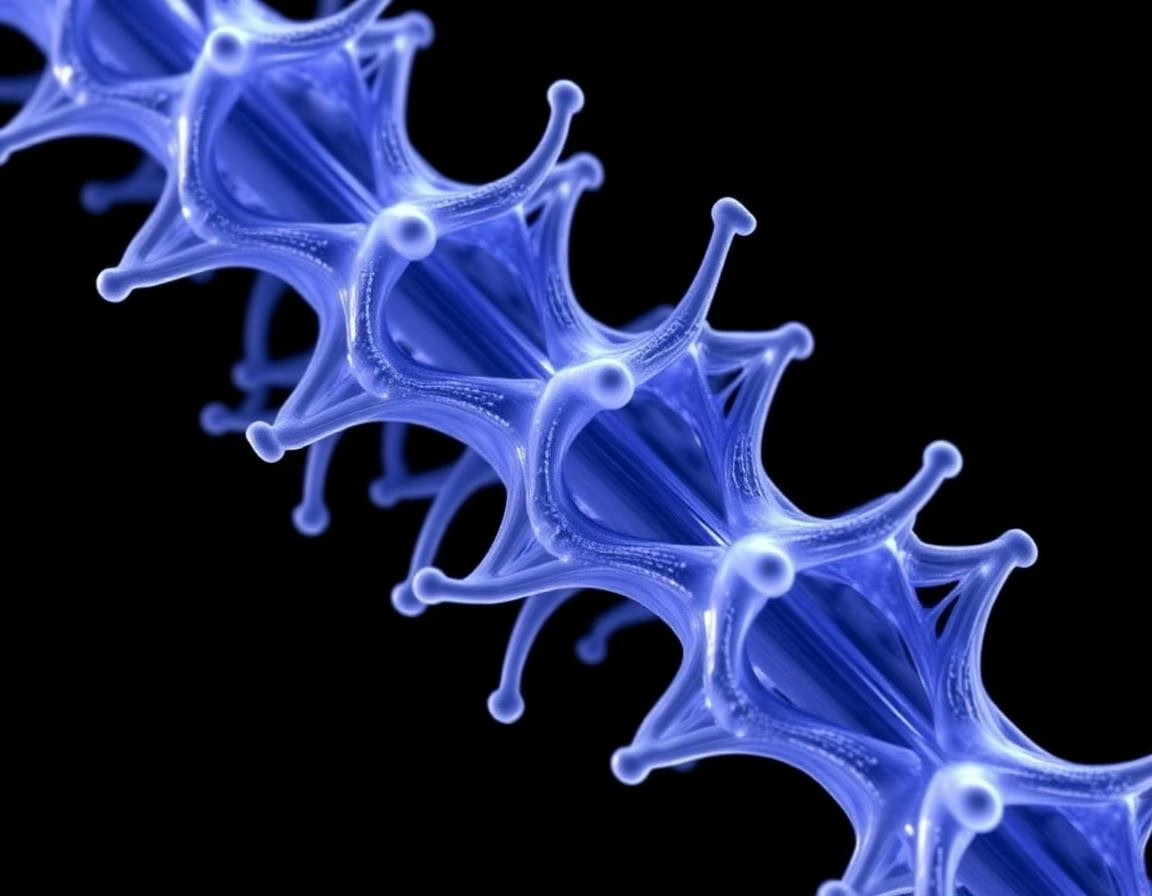
The Role of 3D Bioprinting
The emergence of 3D bioprinting has introduced a new paradigm in the fabrication of biological tissues. By leveraging digital modeling and additive manufacturing techniques, researchers can create complex tissue architectures that closely resemble native biological structures. This capability is essential for developing functional tissues that can be used in transplantation, drug testing, and disease modeling.
Research Frontiers in 3D Bioprinting
The field of 3D bioprinting encompasses a wide array of research topics, from the development of bioinks to the optimization of bioprinting techniques. Researchers are continuously exploring novel bioinks that support cell viability and function while providing the necessary mechanical properties for tissue scaffolding. Furthermore, advancements in bioprinter technology are enhancing the precision and efficiency of tissue fabrication, crucial for clinical applications.
Notable Contributors to the Field
Prominent researchers are making significant strides in 3D bioprinting, each contributing unique perspectives and expertise.
Alok Kumar, PhD
At Harvard Medical School, Dr. Alok Kumar leads a pioneering project aimed at creating biomimetic cardiac tissue. By employing DeepFreeze 3D bioprinting technology, he is crafting cardiac constructs that replicate the alignment and architecture of natural heart tissue. This approach not only preserves cellular viability but also enables the long-term storage of functional cardiac tissue, presenting a breakthrough for on-demand tissue production.
Manasa Nune, PhD
Dr. Manasa Nune, an Associate Professor at the Manipal Institute of Regenerative Medicine, focuses on innovative substrates and 3D bioprinted constructs for reproductive and nerve tissue engineering. Her research addresses the challenges of peripheral nerve demyelination and aims to develop liver tissue engineering solutions, including in vitro 3D liver organoid models for various liver conditions. Dr. Nune’s work is pivotal in expanding the therapeutic potential of 3D bioprinting.
Swee Leong Sing, PhD
An Assistant Professor at the National University of Singapore, Dr. Swee Leong Sing is dedicated to advancing material development for 3D bioprinting applications. His research blends mechanical engineering with bioprinting technology, striving to create materials that enhance the performance and utility of bioprinting in clinical settings. Dr. Sing’s contributions are vital to bridging the gap between research and industry.
The Future of 3D Bioprinting
As 3D bioprinting technology continues to evolve, its potential applications are expanding. The ability to create personalized tissue constructs could revolutionize transplantation practices, allowing for patient-specific solutions that minimize rejection risks. Moreover, the integration of bioprinted tissues into existing medical frameworks could facilitate the development of advanced therapeutic strategies for various diseases.
Challenges and Considerations
Despite the promise of 3D bioprinting, several challenges remain. Ensuring the mechanical stability and functional integration of bioprinted tissues within the human body is critical. Additionally, ethical considerations around bioprinting human tissues must be addressed, particularly as the technology progresses towards potential applications in human trials.
Conclusion
The advancements in 3D bioprinting for tissue engineering are reshaping the future of regenerative medicine. With the collaborative efforts of researchers and the continuous evolution of technology, the dream of creating functional, living tissues is becoming increasingly attainable. As the field progresses, it holds the potential to significantly improve patient outcomes and redefine the standards of medical care.
- Takeaways:
- 3D bioprinting enables the precise creation of complex tissue structures.
- Research focuses on developing bioinks and optimizing bioprinting techniques.
- Key contributions from experts like Dr. Kumar, Dr. Nune, and Dr. Sing are propelling the field forward.
- The technology presents both opportunities and challenges in clinical applications.
- Ethical considerations will play a crucial role in the future of bioprinted tissues.
Read more → www.nature.com



