
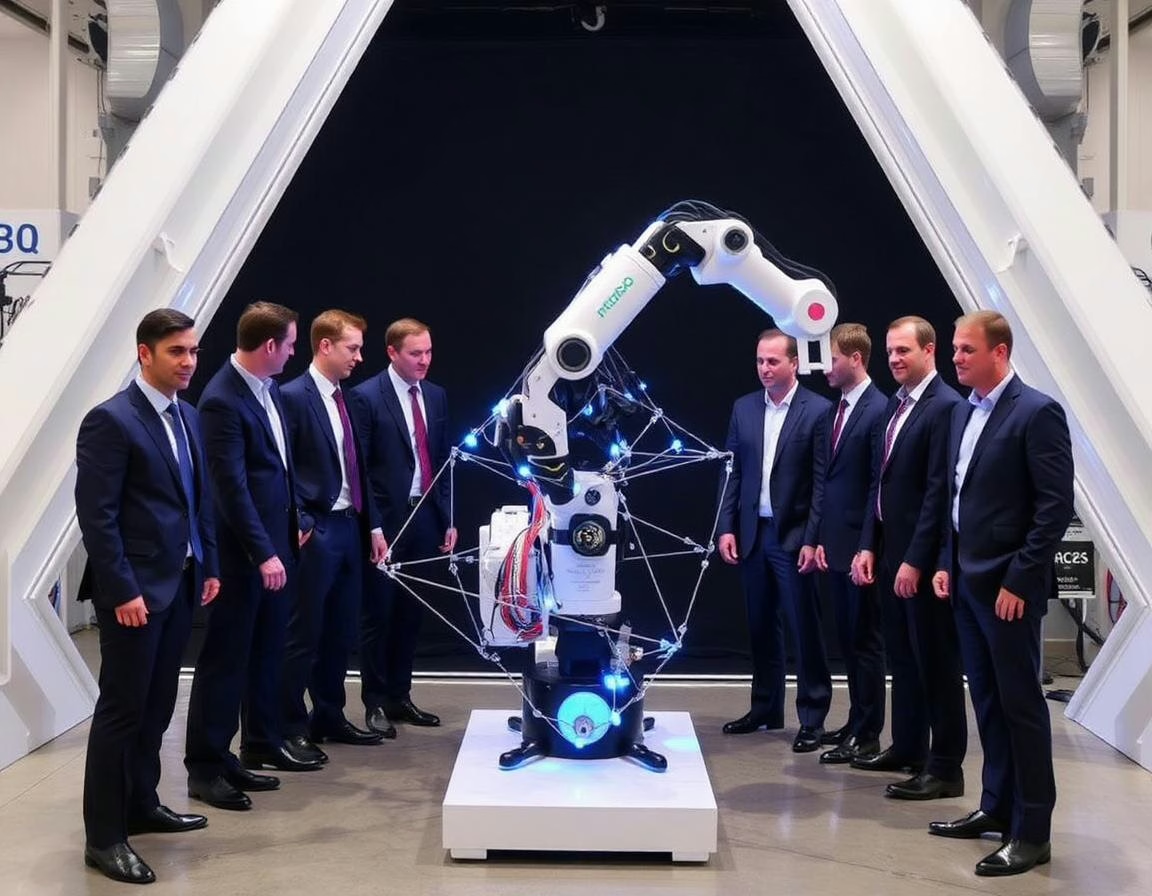
AAA20 Group is set to unveil its latest innovation, the CP-66-WD wash-down collaborative palletizer, at the International Production & Processing Expo (IPPE) in Atlanta. This cutting-edge automation system specifically targets the challenges faced by food manufacturers, particularly in the beef processing sector.
Addressing Industry Challenges
The food industry has long struggled with space limitations and rigorous sanitation requirements, complicating the deployment of automation solutions. Marcus Kurle, co-founder of AAA20 Group, highlights that these factors have exacerbated labor shortages in protein processing. The CP-66-WD was developed to break through these barriers, providing a compact and compliant method for automating one of the most demanding tasks in the production process.
A Smart Solution for Labor Shortages
The need for efficient automation has become increasingly evident, especially during the COVID-19 pandemic, when protein processors faced significant workforce constraints. These constraints not only raised production costs but also hindered overall throughput. By employing wash-down-ready collaborative robots, producers can enhance operational efficiency, minimize dependence on hard-to-fill labor positions, and stabilize costs throughout the food supply chain.
Quick and Flexible Deployment
Traditional automation systems often require extensive safety measures, significant construction, and hefty capital investments. In contrast, the CP-66-WD is designed for rapid deployment, utilizing a month-to-month leasing model that alleviates financial pressures. This flexible approach allows food and beef processors to automate processes at a lower cost compared to manual labor while also accommodating shifts in production demands.
Ensuring Cleanliness in Food Processing
The CP-66-WD is engineered for environments where cleanliness is paramount. With a waterproof, IP69K rating, this collaborative robot can withstand high-pressure wash-downs, maintaining stringent sanitation standards essential for beef, poultry, and other food operations. Priced at around $5,000 per month, this system offers an economical solution for manufacturers aiming to enhance their automation capabilities without compromising on hygiene.
Federal Support for Automation
The launch of the CP-66-WD aligns with a growing national focus on enhancing the U.S. food system through automation. Recently, AAA20 Group hosted a visit from members of the U.S. Small Business Administration (SBA), including Administrator Kelly Loeffler. This visit underscored the federal government’s increasing interest in technologies that bolster domestic protein production and improve food system resilience.
Live Demonstrations at IPPE
At the upcoming IPPE, AAA20 Group will showcase the CP-66-WD, highlighting its applicability for facilities that prioritize sanitary automation, minimal footprint, and rapid integration into existing production lines. The company invites food manufacturers and beef processors attending the expo to stop by Booth A2745 to witness the CP-66-WD in action. Attendees will have the opportunity to learn how wash-down robotics can effectively tackle labor challenges, ensure compliance, and manage costs.
Key Takeaways
- The CP-66-WD is a wash-down collaborative palletizer designed for the food industry, specifically beef processing.
- It addresses labor shortages and operational inefficiencies exacerbated during the pandemic.
-
The robot’s rapid deployment and flexible leasing model reduce barriers to automation.
-
With a focus on sanitation, the CP-66-WD meets hygiene standards essential for food processing environments.
-
Federal interest in automation technologies is growing, as evidenced by recent SBA visits.
In conclusion, AAA20 Group’s CP-66-WD represents a significant advancement in food processing automation. By addressing crucial industry challenges, this innovative solution paves the way for enhanced efficiency, improved sanitation, and a more resilient food supply chain. This launch not only reflects the company’s commitment to modernizing the food industry but also signifies a brighter future for protein production.
Read more → www.therobotreport.com



