
Climate change poses a significant threat to coral reefs worldwide, particularly through events like mass bleaching and mortality caused by marine heatwaves. While the immediate impacts of these events are evident, predicting the long-term fate of coral reefs in the face of rapid climate change remains a challenge. To gain insights into the enduring effects of climate change, it is crucial to study how coral populations have responded to past climate shifts. In this context, the study of the reef-building coral Acropora digitifera provides a valuable opportunity to explore the genetic mechanisms underlying adaptation to changing environmental conditions.
Unveiling Genetic Diversity and Population Dynamics
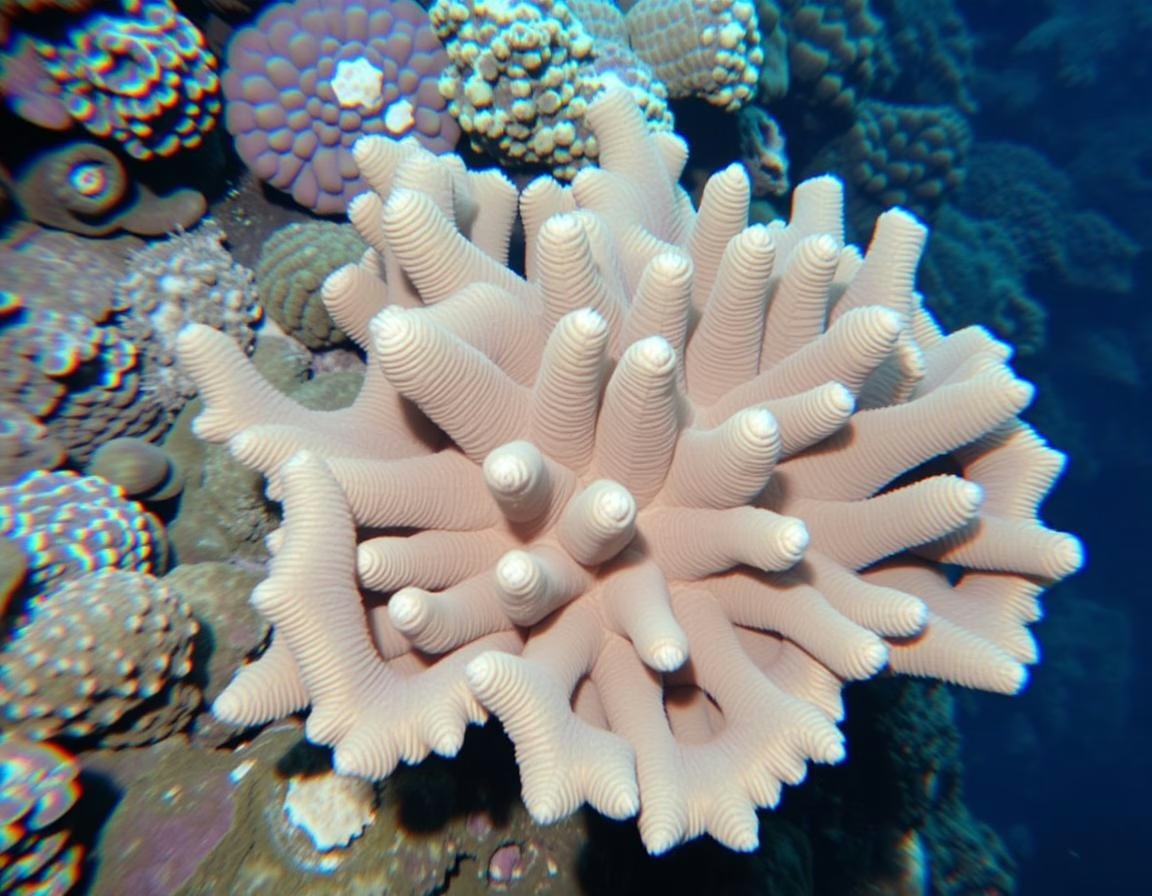
Analytical techniques empowered by haplotype-phased whole genomes offer a profound understanding of Acropora digitifera’s genetic landscape. The study reveals the presence of three genetically distinct populations in northwestern Australia, each exhibiting rapid divergence since the last glacial maximum. The divergence can be attributed to founder effects and restricted gene flow, leading to the formation of unique genetic clusters. Notably, selective sweeps, indicative of strong natural selection, were observed in all three populations, particularly in genes associated with different functional enrichments between inshore and offshore habitats. This highlights the role of natural selection in shaping the genetic makeup of coral populations in response to environmental pressures.
Insights into Glacial Cycling and Biodiversity Dynamics
The Pleistocene era’s glacial cycling is recognized as a significant driver of biodiversity dynamics, with profound implications for species’ demography, connectivity, and diversity. By applying population genetic tools to Acropora digitifera in northwestern Australia, the study sheds light on the species’ historical responses to past climate shifts. The findings suggest that the populations experienced bottlenecks and subsequent expansions coinciding with the rapid sea-level rise at the end of the last glacial maximum. Such demographic changes have sculpted the genetic diversity and structure of coral populations, highlighting the impact of past climatic events on shaping present-day genetic variation.
Advanced Techniques for Demographic Inference
In reconstructing the demographic history of Acropora digitifera populations, sophisticated techniques such as SMC++ and fastsimcoal2 have been instrumental. These methods provide detailed insights into changes in effective population size, divergence times among populations, and migration patterns. The results indicate a recent split among the three populations, with varying degrees of genetic differentiation and gene flow. Understanding the demographic trajectories of coral populations in the context of past climatic fluctuations is crucial for predicting their resilience to future environmental changes.
Unraveling Selective Pressures and Adaptation Mechanisms
Investigating the genetic basis of adaptation in Acropora digitifera has unveiled signatures of selective sweeps across the genome. These regions of low genetic diversity suggest strong positive selection acting on specific genes, potentially driving adaptation to local environmental conditions. The study identifies genes associated with membrane G protein-coupled receptors enriched in offshore populations, reflecting potential adaptations to distinct ecological niches. In contrast, genes linked to transcription factor activity and the regulation of apoptotic processes show enrichment in inshore populations, indicating responses to unique selective pressures in these habitats.
Implications for Conservation and Management
Understanding how corals like Acropora digitifera have responded to past climate change is crucial for their conservation and management in the Anthropocene era. The study’s findings provide valuable insights into the genetic mechanisms underpinning coral adaptation to changing environmental conditions. By elucidating the interplay between demographic history, natural selection, and symbiont dynamics, the research offers a comprehensive understanding of the evolutionary responses of reef-building corals to climate change. These insights can inform conservation strategies aimed at preserving coral reef ecosystems in the face of ongoing environmental challenges.
Key Takeaways:
- Genetic analysis reveals three distinct populations of Acropora digitifera in northwestern Australia, reflecting rapid divergence since the last glacial maximum.
- Selective sweeps indicate strong natural selection acting on genes associated with different functional enrichments between inshore and offshore habitats.
- Demographic modeling suggests recent splits among populations, with varying degrees of genetic differentiation and gene flow.
- Enrichment of genes related to membrane receptors in offshore populations and transcription factors in inshore populations highlights distinct adaptive mechanisms.
- Understanding coral adaptation to past climate shifts is essential for effective conservation and management strategies in the Anthropocene.
Tags: regulatory, bioinformatics, quality control
Read more on pmc.ncbi.nlm.nih.gov