
In the realm of European health, a resounding consensus echoes through the corridors of expertise—a staggering 90% of health professionals in Europe assert that the current levels of meat consumption are soaring too high, casting shadows of concern over public health. This revelation stems from a recent study revealing the sentiments of 600 healthcare luminaries across Italy, Germany, France, Spain, and the UK, orchestrated by the esteemed international climate advocacy entity, Madre Brava.
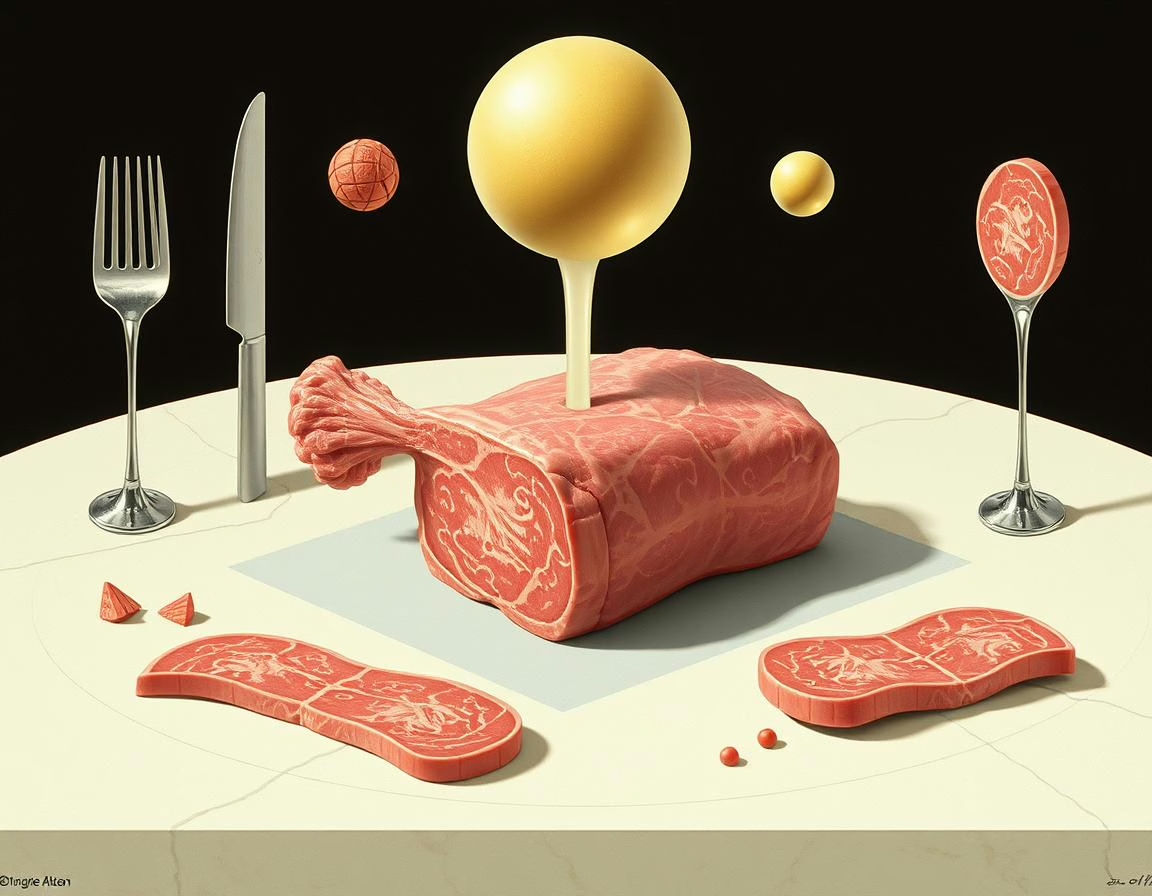
Delving into the gastronomic habits of Europeans, an average annual meat consumption of 66 kilograms per individual emerges as the norm, albeit fluctuating across different regions. For instance, a recent survey illuminated the meat-eating frequency in Spain to be approximately four times a week. Contrastingly, a study conducted by Quorn in 2021 unveiled that one in five Britons indulges in meat during every meal, painting a diverse culinary landscape across the continent.
In a harmonious symphony of expert voices, the study unraveled a unanimous agreement among healthcare connoisseurs in every surveyed country, emphasizing the imperative need to curtail the intake of red and processed meats for the betterment of public well-being. These carnivorous delights have been intricately linked to heightened risks of chronic maladies such as heart disease, colon cancer, and type 2 diabetes, casting a somber shadow over the gastronomic choices of many.
Moreover, the Madre Brava inquiry unearthed a compelling revelation—about 95% of experts advocate for the inclusion of health warnings on packaging of red and processed meats. Additionally, a staggering 90% concur that establishments like schools and hospitals should veer towards serving fewer meat-centric meals, while 82% clamor for governmental initiatives promoting plant-based lifestyles—a verdant oasis of health and sustainability in the culinary desert.
Embarking on a journey towards a plant-centric diet unveils a cornucopia of health benefits, with plant-based whole foods emerging as stalwart guardians against the onslaught of chronic ailments. Laden with a treasure trove of vitamins, minerals, fiber, antioxidants, and other protective compounds, these botanical delights stand as beacons of vitality and well-being in the tumultuous sea of dietary choices.
While the spotlight shines brightly on Europe, akin calls for meat reduction reverberate across the Atlantic in the United States. Initiatives like the “Bean New Deal” in Massachusetts and the eradication of processed meats from New York City agency menus by 2026 underscore a global shift towards embracing plant-based proteins and relegating meat from its culinary throne.
As the culinary narrative unfurls, a poignant plea echoes—a call to action resonating from both the hallowed aisles of supermarkets shaping our sustenance and the corridors of power in governmental spheres. The clarion call is not to banish meat entirely, but to orchestrate a delicate dance towards a diet abundant in plant proteins. Health professionals stand as sentinels, advocating for a paradigm shift towards lesser meat consumption and the embrace of plant-rich diets for the collective well-being of humanity.
In the tapestry of European health, the discourse on meat consumption unravels as a gastronomic dilemma, urging a strategic reevaluation of dietary choices and a harmonious alignment with nature’s bounty to forge a path towards vitality and longevity.
Key Takeaways:
- A resounding 90% of European health experts advocate for a reduction in meat consumption for the betterment of public health.
- Red and processed meats have been linked to higher risks of chronic conditions, prompting experts to call for curtailment in their intake.
- Initiatives promoting plant-based lifestyles are gaining traction globally, aiming to shift towards a diet rich in plant proteins for enhanced well-being.



