
Researchers have delved into the intricate connection between the gut and diet in postpartum depression, shedding light on how consuming soy, fermented foods, and seaweed could foster beneficial gut bacteria and safeguard the mental well-being of mothers.
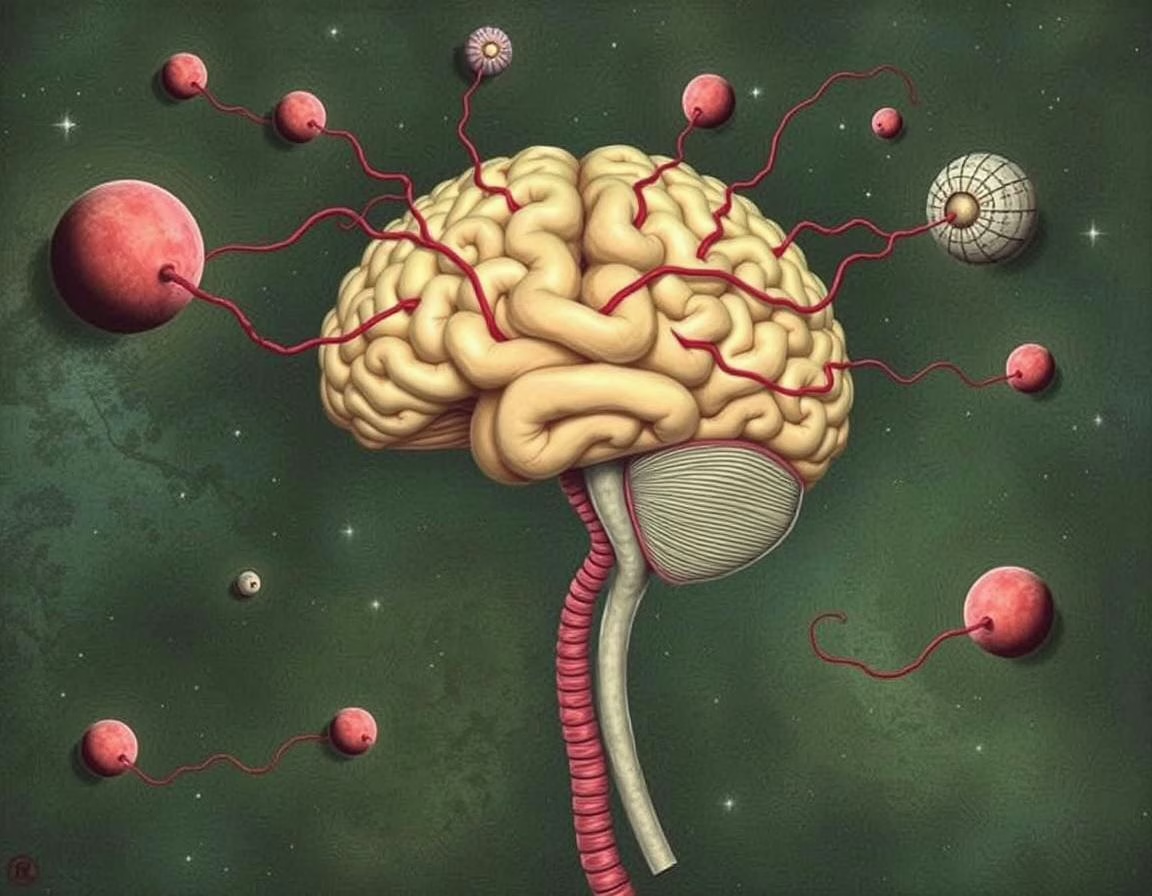
In a landscape where the correlation between the gut microbiome and mental health is increasingly recognized, scientists are now exploring how cultivating a healthy microbiome can ameliorate conditions such as depression in real-world scenarios.
A recent study spearheaded by Kyoto University has delved into the interplay between gut bacteria, dietary habits, and postpartum depression among Japanese mothers.
Driven by the imperative to unravel the intricate web linking intestinal microbiota, physical health, and dietary patterns to maternal mood, Michiko Matsunaga, an associate professor in developmental psychology and neuroscience at Kyoto University and the lead author of the study, emphasized the significance of understanding these dynamics even among mothers not clinically diagnosed with mental disorders.
Postpartum depression (PPD) affects approximately 10% to 20% of women globally, manifesting as a spectrum of symptoms including mood swings, loss of interest, sleep disturbances, and changes in appetite. In Japan, cultural nuances such as stigma, reluctance to seek external assistance, and a preference for self-reliance pose significant barriers to women accessing mental health support.
The research team recruited 344 mothers with children up to four years old, devoid of diagnosed psychiatric or physical ailments, for the study. Participants’ depression severity was gauged using the Beck Depression Inventory-II (BDI-II), with scores exceeding 20 indicative of a heightened risk for depression. Additionally, mothers reported on their sleep patterns, physical well-being, and dietary preferences. Analysis of stool samples through RNA sequencing unveiled insights into microbiota diversity and the prevalence of specific bacteria.
Two distinct dietary patterns surfaced among participants: a vegetable and meat diet (VMD) characterized by abundant vegetables, meat, and fish, and a soy and fermented food diet (SFD) rich in soy products, fermented foods, seaweed, mushrooms, and fruits.
Surprisingly, despite being deemed “healthy,” approximately 14% of mothers exhibited elevated depression scores. Diminished gut microbiota diversity correlated with heightened depression levels. Notably, beneficial butyrate-producing bacteria, pivotal for fermenting dietary fibers into butyrate, a short-chain fatty acid (SCFA), were less prevalent in mothers experiencing depressive symptoms, underscoring their role in bolstering gut and immune health.
Depressed mothers reported inferior sleep quality and overall physical condition. Strikingly, those adhering to the SFD exhibited lower depression scores, enhanced physical well-being, and a healthier gut microbiota. While the VMD was associated with certain physical health benefits, it did not translate to reduced depression levels. Mothers grappling with depression displayed a lower consumption of yogurt, dairy, and pickled vegetables compared to their counterparts with milder depressive symptoms.
Highlighting the profound implications of traditional Japanese dietary practices on mental health, Masako Myowa, Ph.D., the study’s co-author, underscored the significance of the findings.
Despite its merits, the study’s cross-sectional design limits its ability to establish causal relationships, merely hinting at associations. Furthermore, the reliance on self-reported dietary intake encompassing a modest 18 food categories, devoid of distinctions between processed and fresh foods, and the absence of data on marital status, exercise habits, or family mental health history, introduce potential biases. The outcomes might be nuanced by unique facets of the Japanese diet, warranting caution in generalizing the findings.
Nevertheless, the study beckons a compelling notion: the preventive potential of dietary interventions. Embracing a diet rich in soy, fermented foods, seaweed, mushrooms, and vegetables could mitigate the risk of postnatal depression, partly by nurturing gut bacteria that yield beneficial fatty acids. The research accentuates the critical role of the gut-brain axis in maternal mental health, proposing non-pharmacological interventions like dietary modifications or probiotics as avenues to fortify long-term well-being.
The researchers are poised to embark on further investigations to scrutinize how targeted dietary modifications could enhance both gut microbiota and mental health outcomes in postpartum women, heralding a holistic approach to mental health support.
In the quest to decipher emotional states and evolve comprehensive mental health interventions, Matsunaga’s contemplation on the integrated perspective underscores the profound impact of understanding the gut-brain axis.
Published in the journal PNAS Nexus, this study signifies a pivotal step towards unveiling the intricate dynamics underpinning maternal mental health and underscores the transformative potential of dietary interventions in fostering well-being.
- Embracing a diet rich in soy, fermented foods, seaweed, mushrooms, and vegetables could mitigate the risk of postnatal depression.
- Beneficial butyrate-producing bacteria play a crucial role in bolstering gut and immune health.
- Postpartum depression prevalence globally stands at approximately 10% to 20%.
- The traditional Japanese dietary culture holds significant mental health benefits.
- Non-pharmacological interventions like dietary modifications or probiotics show promise in supporting maternal mental well-being.
Tags: probiotics, microbiome
Read more on newatlas.com



