
In the realm of biotechnology, the investigation of human gut microbiota dynamics is a critical area of study. The impact of molecules on gut microbiota composition and function can be studied in vitro without the host’s implications. However, existing models like the Simulator of Human Intestinal Microbial Ecosystem (SHIME®) are costly, time-consuming, and require specialized personnel. Homemade in vitro models, though addressing some of these challenges, lack sufficient evidence of humanlike functionality. This study introduces a novel low-cost, user-friendly bioreactor model designed to replicate human gut microbiota growth and response to prebiotics effectively.
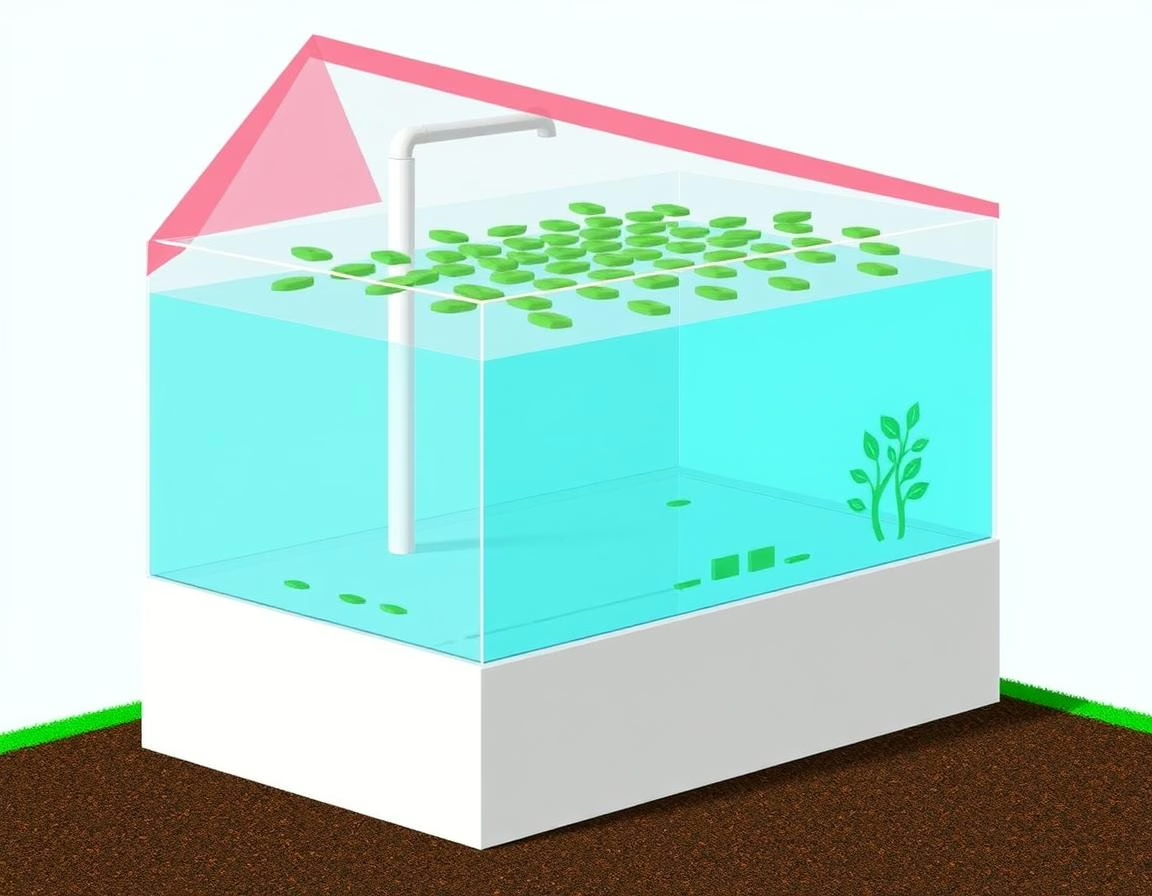
The developed bioreactor model showcases stability in pH, temperature, and anaerobic conditions, cultivating bacterial communities over a 48-hour period. The model successfully mimicked the composition of gut microbiota and their metabolite production response to a prebiotic, resistant starch type 2 (RS2). The addition of RS2 led to an increase in beneficial bacteria like Bifidobacterium adolescentis and Bifidobacterium faecale, along with enhanced production of short-chain fatty acids, such as acetate, propionate, and isobutyrate. These results validate the bioreactor’s capacity to offer a conducive environment for human gut microbiota growth and the simulation of responses to prebiotics.
Understanding the significance of intestinal microbiota on overall health is imperative, given its association with various disorders like type 2 diabetes and inflammatory bowel diseases. Factors like diet, age, sex, and geographic location influence the composition of gut microbiota significantly, showcasing high inter-individual variability. Dietary components, especially fibers like resistant starch, play a crucial role in modulating gut microbiota and promoting beneficial effects on host health through the production of short-chain fatty acids.
In vitro models, like the one presented in this study, provide a valuable approach to study dietary components’ effects on gut microbiota. Unlike complex and resource-intensive models like SHIME®, the newly developed bioreactor offers a cost-effective and easily accessible alternative. By maintaining stable culture conditions and enabling the investigation of specific nutrients’ impacts on gut microbiota composition, this model opens new avenues for research in understanding the intricate relationship between diet, gut microbiota, and overall health outcomes.
The validation of the bioreactor’s anaerobic environment and its capability to support the growth of human gut microbiota over a 48-hour period underscores its potential as a reliable tool for studying microbiota dynamics. The model’s ability to respond to the addition of compounds like RS2 and the subsequent modulation of gut microbiota composition and short-chain fatty acid production further solidifies its utility in exploring the intricate mechanisms underlying dietary impacts on gut health.
The study’s findings not only highlight the functional similarities of the bioreactor model to the human colon environment but also shed light on its modular nature, allowing for versatile applications and experimental setups. By enabling researchers to study the effects of specific nutrients on gut microbiota in a controlled and reproducible setting, this bioreactor model holds promise in advancing our understanding of the complex interplay between diet, gut microbiota, and overall health.
In conclusion, the innovative bioreactor model presented in this study represents a significant advancement in the field of gut microbiota research. Its low-cost, user-friendly design, coupled with its ability to replicate human gut microbiota dynamics and responses to prebiotics, positions it as a valuable tool for researchers seeking to unravel the complexities of gut health and dietary influences. Moving forward, further exploration of multi-donor responses and diverse dietary components will enhance the model’s applicability and broaden its impact on advancing biotechnological research in the realm of human gut microbiota dynamics.
- The novel bioreactor model offers a cost-effective and user-friendly solution for studying human gut microbiota dynamics and responses to prebiotics.
- By replicating the composition of gut microbiota and their metabolite production response to a prebiotic, the bioreactor demonstrates its efficacy in mimicking human gut microbiota functionality.
- Understanding the role of dietary components, such as resistant starch, in modulating gut microbiota composition and promoting beneficial effects on host health is crucial.
- The bioreactor’s validation of an anaerobic environment and its ability to support human gut microbiota growth over a 48-hour period highlight its reliability for microbiota research.
- The model’s modular nature and capacity to respond to specific nutrients like RS2 underscore its versatility and potential for investigating the intricate mechanisms underlying dietary impacts on gut health.
- Future exploration of multi-donor responses and diverse dietary components will enhance the bioreactor model’s applicability and broaden its impact on advancing biotechnological research in gut microbiota dynamics.
Tags: bioreactor, chromatography, yeast, clinical trials
Read more on pmc.ncbi.nlm.nih.gov



