
Exosomes and exosome-inspired vesicles are at the forefront of cutting-edge drug delivery systems, offering a promising avenue for targeted therapeutics. The striking similarities shared between exosomes and liposomes, coupled with the exceptional organotropism exhibited by certain exosome types, have spurred the development of engineered-exosomes or exosome-mimetics. These advanced platforms, whether artificial or cell-derived, hold immense potential for precise drug delivery. This article delves into the current state-of-the-art utilization of exosomes and exosome-inspired systems for drug delivery, exploring various approaches, identifying limitations, and highlighting the challenges that persist in this rapidly evolving field.
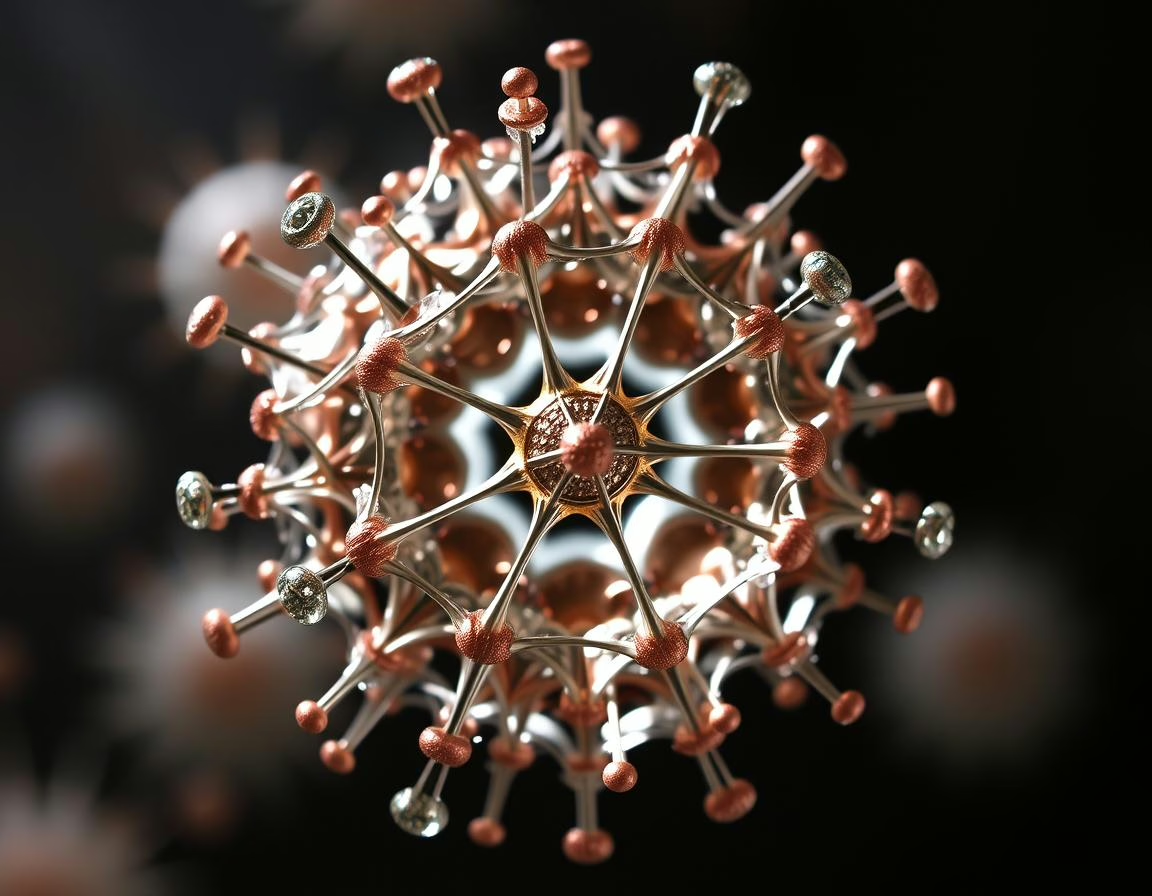
The realm of extracellular vesicles, particularly exosomes, is unveiling captivating insights into intercellular communication pathways. These nano to micron-sized vesicles, including exosomes, play pivotal roles in cell-to-cell communication, material transfer pathways, and even long-distance cellular interactions. The exceptional organotropism exhibited by certain exosomes presents a coveted attribute for nano-based drug delivery systems, yet to be fully realized. The burgeoning field of exosomes is catalyzing the design of novel nanovesicles tailored as targeted drug carriers for therapeutic applications, offering a paradigm shift in drug delivery strategies.
Understanding the fundamental definition, biogenesis, and primary functions of extracellular vesicles and exosomes is imperative to grasp their potential as targeted drug carriers. Extracellular vesicles encompass a spectrum of small vesicles secreted by various cell types, with exosomes emerging as a distinct subtype. Exosomes, ranging from 50 nm to 120 nm, are intricately involved in intercellular lipid, RNA, and protein transfer, serving as critical mediators of cellular communication under physiological and pathological conditions. The multifaceted functions of exosomes underscore their significance in diverse therapeutic and diagnostic applications, including anti-tumor therapy, immune modulation, regenerative medicine, and targeted drug delivery.
Nanoparticle-assisted targeted drug delivery has traversed a significant evolutionary path, with liposomes reigning as one of the pioneering nano-based drug delivery systems. The biocompatibility and low toxicity profile of liposomes, attributed to their phospholipid and cholesterol composition akin to cell membranes, have positioned them as stalwart drug delivery vehicles. However, despite the substantial therapeutic impact of liposomes, challenges persist in enhancing their active targeting efficiency to diseased sites, especially in translational endeavors. The integration of targeting ligands into liposomal formulations, intended to bolster drug delivery precision, has encountered hurdles concerning disease-specific barriers, formulation stability, and target receptor accessibility, impeding their clinical translation.
The quest for superior targeted drug carriers has intensified, particularly in light of the burgeoning biopharmaceutical landscape necessitating refined delivery systems. Biopharmaceuticals, characterized by their specificity and efficacy in treating unmet medical needs, underscore the critical role of efficient drug formulation and delivery. The intricate challenge of traversing the blood-brain barrier to facilitate drug delivery to the central nervous system has emerged as a pressing concern, underscoring the urgent need for innovative delivery methodologies. The convergence of biopharmaceutical advancement and targeted drug carriers heralds a new era in therapeutic precision and efficacy.
The intriguing parallels between exosomes and liposomes underscore their complementary attributes as potential drug delivery vehicles. Exosomes and small unilamellar vesicle (SUV)-type liposomes share structural similarities, albeit differing in surface composition primarily marked by protein arrays unique to exosomes. Leveraging the advantages of both systems to engineer hybrid vesicles holds promise in unlocking advanced drug targeting systems, transcending the limitations of individual vesicle types. The ongoing exploration of exosome-mimetics, inspired by exosomes’ organotropic properties, offers a novel avenue for enhanced drug delivery efficiency, surpassing the boundaries of conventional liposomal formulations.
The sources, isolation methods, and in vivo kinetics of unmodified exosomes form a critical foundation in harnessing their potential for drug delivery applications. A diverse array of cell types and physiological fluids contribute to the exosome pool, each imprinting distinct functional characteristics on the exosomes based on their cellular origin. The intricate methods employed for exosome isolation, ranging from ultracentrifugation to immunoaffinity capture and size-based separation techniques, underscore the complexity of purifying exosomes from a milieu of extracellular vesicles and biological contaminants. The quest for high-yield, pure exosome isolation methods remains a persistent challenge, necessitating innovative strategies to enhance production efficiency and purity.
In conclusion, the burgeoning landscape of exosomes and exosome-inspired vesicles heralds a transformative era in targeted drug delivery, offering a nuanced approach to precision therapeutics. The convergence of cutting-edge bioengineering principles, advanced drug delivery technologies, and innovative formulations underscores the potential for exosome-based drug carriers to revolutionize therapeutic interventions. As research delves deeper into refining exosome isolation methodologies, enhancing drug loading capacities, and optimizing in vivo kinetics, the horizon of targeted drug delivery stands poised for groundbreaking advancements.
Key Takeaways:
- Exosomes and exosome-inspired vesicles present a promising frontier in targeted drug delivery, leveraging unique organotropic properties for precise therapeutics.
- The convergence of exosomes and liposomes as potential drug carriers offers complementary attributes, fostering hybrid vesicle systems with enhanced drug targeting efficiency.
- Challenges in exosome isolation methodologies and production yield underscore the need for innovative strategies to optimize exosome-based drug delivery systems.
- The evolution of nanoparticle-assisted drug delivery, propelled by advancements in biopharmaceuticals and central nervous system drug delivery, highlights the imperative for superior targeted drug carriers.
- The multifaceted functions of exosomes, from intercellular communication to therapeutic applications, underscore their pivotal role in revolutionizing drug delivery paradigms.
Tags: formulation, chromatography, immunotherapy, clinical trials, cell culture, drug delivery, secretion, filtration, scale up, regulatory
Read more on pmc.ncbi.nlm.nih.gov