
In a world where air travel is booming and the aviation industry is a linchpin for global connectivity and economic prosperity, the pressing issues surrounding America’s airport infrastructure can no longer be ignored. From aging terminals to limited gate capacity, airports are grappling with the challenge of meeting today’s demands while preparing for the future.
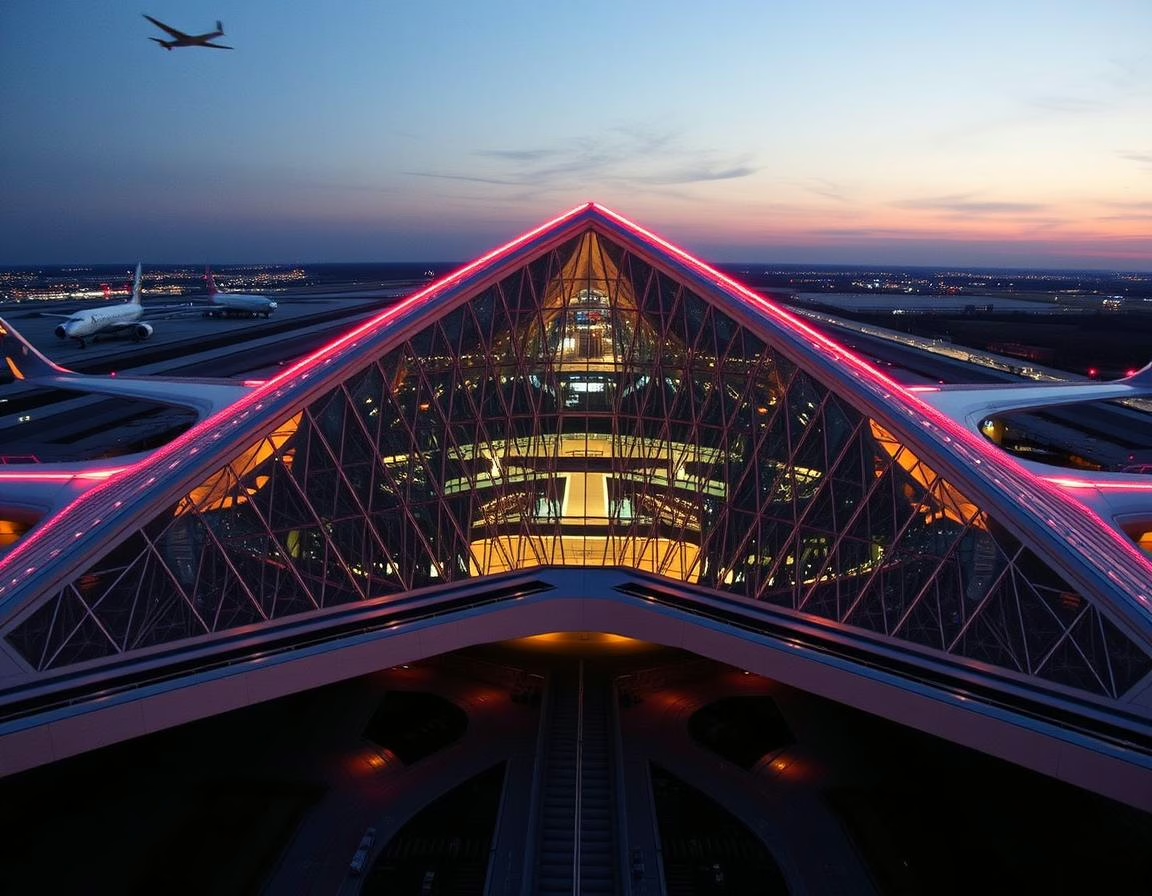
Recent findings from Airports Council International (ACI) North America underscore the crucial role of airports in supporting nearly 13 million jobs, contributing $619 billion to annual payroll, and driving a whopping $1.8 trillion in economic output annually. This data paints a clear picture: airports are not just transit points but integral parts of their communities. However, years of underinvestment have left them struggling. ACI estimates that U.S. airports will need $174 billion in infrastructure investments over the next five years. To ensure long-term benefits for passengers and the aviation sector, airports must pursue growth that enhances efficiency, expands capabilities, ensures financial viability, and upholds environmental sustainability.
The foremost challenge facing airports is the urgent need to boost system capacity to cope with escalating demand. This entails expanding terminal space, adding gates, enhancing security checkpoints, and upgrading baggage handling systems. These upgrades are essential to accommodate the surge in passenger numbers and ensure seamless operations.
Before diving into costly expansion endeavors, airports must maximize the utility of existing infrastructure. By optimizing gate usage, streamlining passenger flows, and improving turnaround times, they can delay the necessity for capital-intensive projects while aligning with environmental objectives to reduce congestion and emissions.
Funding remains a critical issue, as U.S. airports rely heavily on government grants and revenue bonds to finance infrastructure initiatives. While existing federal programs like the Airport Improvement Program (AIP) and Passenger Facility Charges (PFCs) cover only a fraction of project costs, the rest must be sourced from airport revenue bonds, generated revenues, and potentially public-private partnerships (P3s).
Despite challenges in raising the PFC cap due to airline and legislative resistance, P3s emerge as a potent yet underutilized mechanism to bridge funding gaps and expedite project execution. Successful cases like the LaGuardia and JFK Airport redevelopments in New York showcase how private investment can swiftly and efficiently modernize critical infrastructure.
The repercussions of outdated infrastructure are already manifesting in the form of delays, disruptions, and economic drag. With minimal operational slack, even minor incidents can trigger widespread disruptions. As air travel demand continues to escalate, the industry is operating at or above capacity in many regions, hindering the ability to sustain economic growth. Moreover, external shocks like IT failures, air traffic challenges, cyber threats, and extreme weather events are testing airport resilience. A modern, well-equipped airport infrastructure is not just crucial for efficiency, resilience, and sustainable growth but also for national security and economic stability.
Embracing innovation is key for airports seeking to modernize infrastructure. Technologies like artificial intelligence (AI) offer a transformative avenue to enhance performance without necessitating complete overhauls. By integrating AI into existing systems, airports can unlock efficiencies and enhance passenger experiences.
A unified, intelligent data strategy forms the bedrock for successful AI integration. Connecting and governing operational data across gate management, baggage systems, passenger flows, and commercial operations breaks down silos and enables real-time visibility—crucial for deploying AI effectively.
Once the foundational AI elements are in place, airports can target high-impact areas such as aircraft turnaround, queue management, and predictive maintenance. AI-driven solutions like Dynamic Call-to-Gate optimize passenger movement, reduce delays, and boost retail revenue. Similarly, tools such as Deep Turnaround leverage AI to monitor and predict turnaround performance, thereby reducing last-minute gate changes that often lead to delays.
Advanced AI capabilities empower airports to predict equipment failures, manage congestion, and allocate resources dynamically. These enhancements not only bolster operational efficiency but also align with sustainability objectives by minimizing waste and energy consumption.
However, technology alone is insufficient. Airports must invest in upskilling their workforce and instilling trust in AI systems. Transparent deployment, clear accountability, and structured change management are imperative to ensure that AI complements human judgment rather than replacing it.
Simulated training environments like digital twins, creating virtual replicas, enable staff to practice responding to AI insights in a controlled setting. This empowers teams to make informed decisions and instills confidence in new tools. By involving employees in the AI journey, airports can foster a culture of innovation and resilience.
The aviation sector represents a convergence of innovation and infrastructure, underscoring the need to align infrastructure investments with broader strategic goals. By harnessing AI, embracing public-private partnerships, optimizing existing assets, and evaluating community impact, airports can unlock enduring value for passengers, airlines, and the wider economy.
Bold leadership and collaborative action are essential for airports to thrive in the evolving global aviation landscape. Strategic investments today will position airports to excel amidst industry changes and advancements.
Revolutionizing Airport Infrastructure: The Missing Tech Piece in the Biden Infrastructure Bill
Maximizing Efficiency and Minimizing Disruption: A Strategic Approach to Passenger Boarding Bridge Replacement
The Weather Company Debuts Smart NOTAMs to Save Time in the Cockpit
FAST Global Solutions and Fortbrand Unite for a Cause at GSE Expo
AI-Enabled Technology Automates and Optimizes Airport Parking Systems
In conclusion, modernizing U.S. airport infrastructure is not just a necessity but a national imperative. As air travel surges and airports face mounting challenges, embracing innovation, securing funding through strategic partnerships, and prioritizing efficiency are key to ensuring sustainable growth, resilience, and economic stability. By investing in advanced technologies like AI, upskilling the workforce, and fostering a culture of innovation, airports can navigate the complexities of the aviation landscape and emerge as leaders in the global arena. The time for transformation is now, and airports that seize this opportunity will chart a course for success in the dynamic world of aviation.
Read more on source



