
Cellular communication is a fascinating realm of biological information exchange, predominantly facilitated by the transfer of proteins and RNAs through extracellular vesicles. Among these, exosomes stand out as pivotal mediators, carrying distinct repertoires of molecules that reflect intricate cargo sorting mechanisms. Understanding the processes governing exosome secretion, cargo sorting, and subsequent interactions with recipient cells is paramount for unraveling the physiological and pathological roles of these vesicles, as well as for exploring their therapeutic potential.
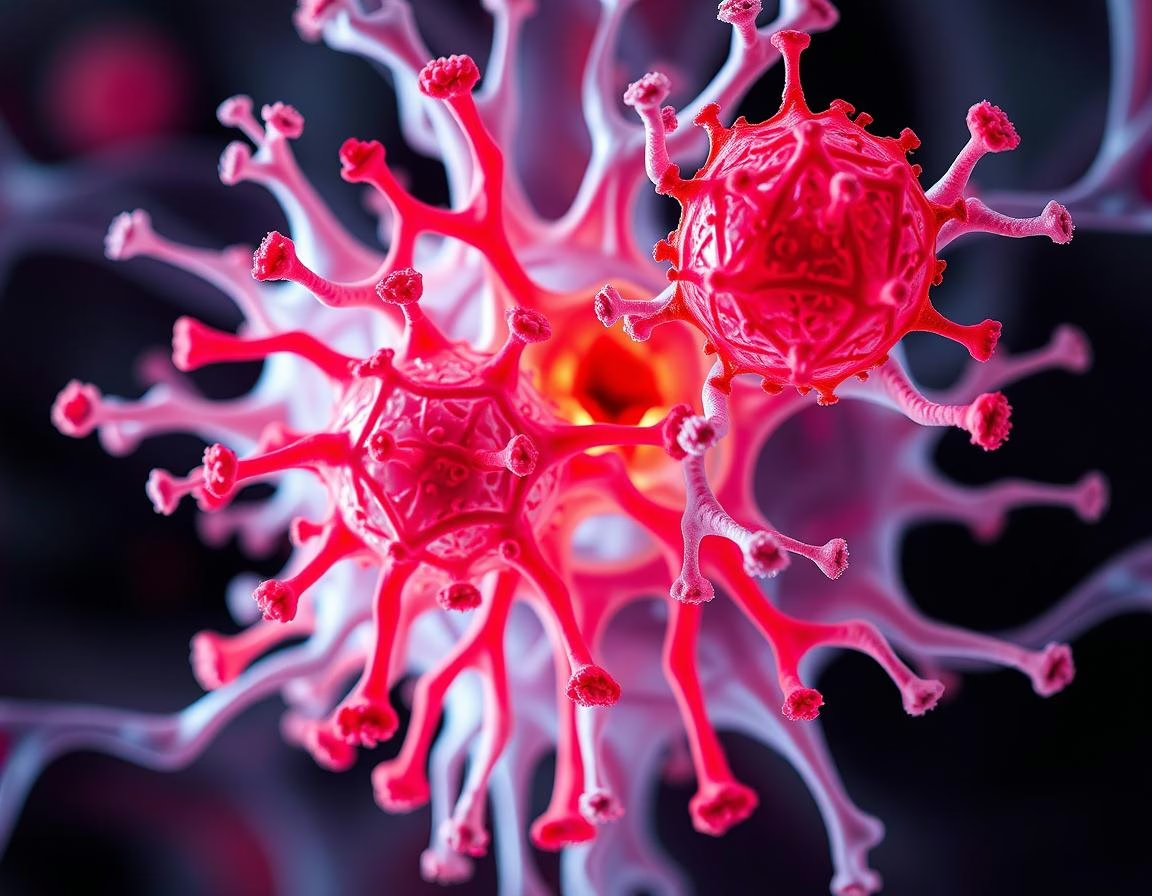
The Diversity of Extracellular Vesicles and Exosome Biogenesis
Cells exhibit the remarkable capacity to release various types of extracellular vesicles (EVs), including exosomes, microvesicles, and apoptosis bodies. Exosomes, typically ranging from 30 to 150 nm in size, are intricately formed within endosomes, eventually released into the extracellular milieu. These vesicles encapsulate a myriad of molecular components, mirroring the host cell’s composition and serving as messengers for intercellular communication.
Exosome isolation methods play a crucial role in elucidating their mechanisms. Techniques such as centrifugation, ultrafiltration, and size-exclusion chromatography enable the purification of exosomes with high specificity. Notably, the choice of isolation method significantly impacts subsequent analyses, necessitating a careful selection based on the intended applications.
Challenges in Assessing Exosome Purity and Characterization
Accurately determining exosome purity remains a significant challenge in the field. Various analytical techniques, including nanoparticle tracking analysis, dynamic light scattering, and transmission electron microscopy, offer insights into exosome properties such as size, shape, and surface charge. However, a comprehensive characterization encompassing these diverse aspects is crucial for understanding their biological functions effectively.
Insights into Exosome Biogenesis: ESCRT-Dependent and Independent Pathways
Exosome formation predominantly involves the endosomal sorting complexes required for transport (ESCRT) machinery. The ESCRT complexes orchestrate cargo sorting into intraluminal vesicles (ILVs) within multivesicular bodies (MVBs), culminating in exosome secretion. Additionally, ESCRT-independent pathways, such as those mediated by ceramides and tetraspanins, contribute to the heterogeneity of exosome populations, showcasing the complexity of their biogenesis.
Regulatory Mechanisms Governing Exosomal Cargo Sorting
The intricate sorting of proteins, RNAs, and lipids into exosomes is governed by a multitude of regulatory mechanisms, including post-translational modifications (PTMs) and specific protein interactions. Ubiquitination, sumoylation, phosphorylation, and other PTMs play crucial roles in directing cargo selection and loading into exosomes, highlighting the sophistication of the sorting process.
Emerging Exosome-Based Strategies for Therapeutics
Exosomes, enriched with a diverse array of molecules reflective of their cellular origin, hold immense potential for therapeutic applications. Their unique protein, RNA, and lipid content can be leveraged for targeted drug delivery, diagnostics, and disease modulation. Understanding the intricacies of exosome cargo sorting provides a foundation for developing exosome-based strategies with enhanced efficacy and specificity.
Key Takeaways:
- Exosome production and cargo sorting mechanisms are intricate processes essential for intercellular communication.
- Understanding the regulatory pathways governing exosome biogenesis is crucial for harnessing their therapeutic potential.
- Challenges in assessing exosome purity and characterizing their cargo highlight the need for comprehensive analytical approaches.
- Regulatory mechanisms, including PTMs and protein interactions, play a pivotal role in directing cargo sorting into exosomes.
- Exosome-based strategies hold promise for personalized medicine, targeted drug delivery, and disease diagnostics.
Tags: secretion, drug delivery, regulatory, theranostics, chromatography
Read more on pmc.ncbi.nlm.nih.gov