
DNA supercoiling is not just about genes and genetic information; it’s a dynamic regulator of bacterial gene expression. The underwound state of DNA in bacterial cells plays a crucial role in storing DNA in the nucleoid and driving essential DNA transactions like transcription, replication, and recombination. This structural property influences DNA’s interactions with binding proteins, impacting gene expression. The ATP-dependent topoisomerase DNA gyrase underwinds DNA, creating a link between metabolic activity, DNA topology, and gene expression that shapes the global genome response to internal and external cues.
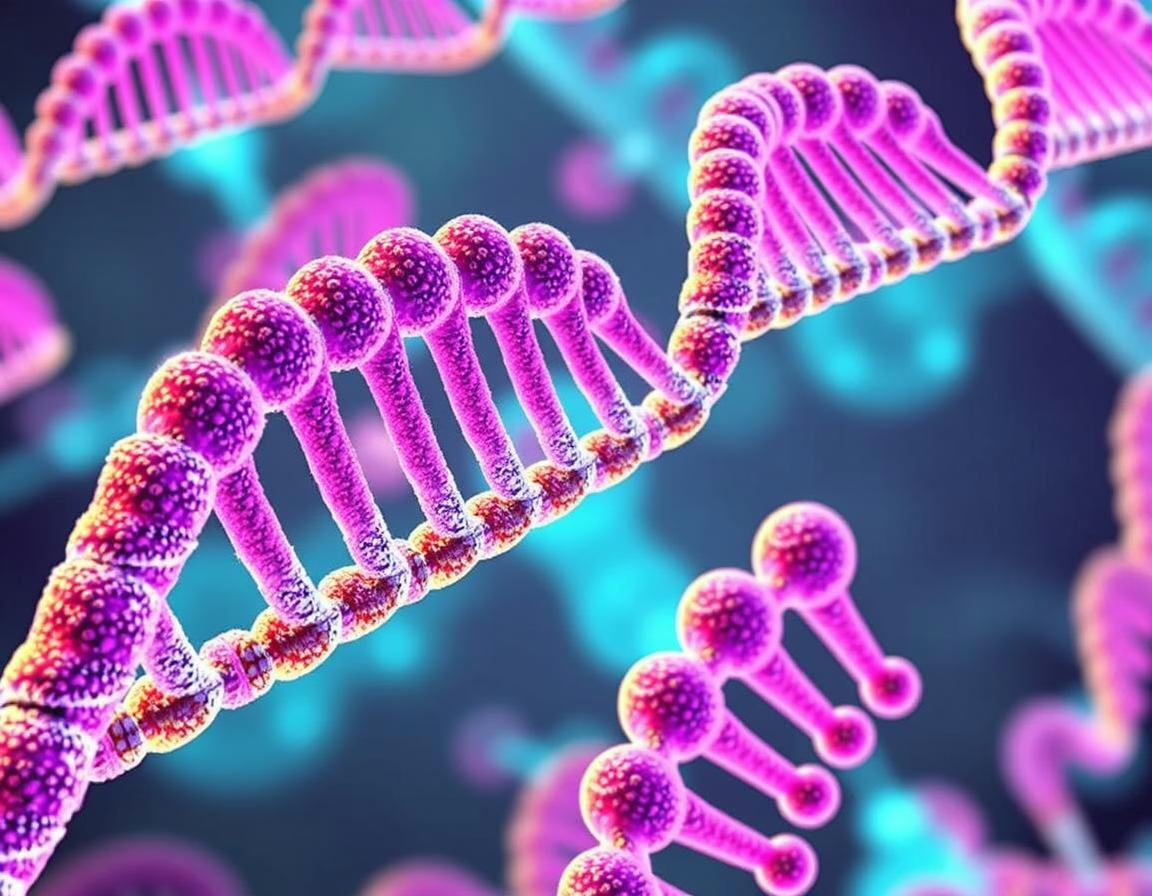
The Power of DNA Supercoiling:
- DNA supercoiling is a fundamental regulatory principle in bacterial gene expression
- Underwound DNA state influences crucial DNA transactions
- DNA gyrase connects metabolic flux, DNA topology, and gene expression
The control of gene expression at the transcription initiation level is a key regulatory mechanism in bacterial cells. While protein regulators have historically been the focus of gene expression control, the active contribution of DNA itself through its topological dynamism is often overlooked. DNA’s underwound state in cells reflects the energy content of DNA, influenced by metabolic activity. This underwound state leads to negative supercoiling, which impacts essential DNA processes and gene expression.
Unwinding the Mysteries of DNA Supercoiling:
- DNA’s underwound state is a reflection of its energy content
- DNA gyrase’s activity is sensitive to metabolic flux in rapidly growing bacteria
- Transcription contributes to DNA topological changes at a local level
Transcription-induced DNA supercoiling plays a significant role in gene expression regulation. The movement of RNA or DNA polymerase along the DNA introduces topological distortions, creating zones of differentially supercoiled DNA. Failure to relax these zones can impact polymerase movement, leading to potential transcription roadblocks. Topoisomerases like DNA gyrase and DNA topoisomerase I play crucial roles in relaxing overwound and underwound DNA regions, respectively, ensuring smooth transcription processes.
Decoding the DNA-Polymerase Dance:
- Transcription-induced DNA supercoiling affects polymerase movement
- Topoisomerases play a vital role in relaxing supercoiled DNA regions
The interplay between DNA topology and gene expression is a two-way street. Environmental factors influencing transcription can modulate DNA supercoiling, impacting gene expression. Dynamic DNA supercoiling serves as a global regulatory system, allowing bacteria to adjust their gene expression profiles in response to changing environmental cues. Understanding the intricate relationship between DNA topology and gene expression sheds light on bacterial adaptability and evolution.
Environmental Influence on DNA Supercoiling:
- DNA topology serves as a global regulatory system
- Transcription influences DNA supercoiling, shaping gene expression
- Bacterial adaptability is influenced by DNA supercoiling dynamics
Horizontal gene transfer and DNA supercoiling play critical roles in bacterial evolution and pathogenesis. Newly acquired genes must integrate into the host’s regulatory landscape, often leading to altered gene expression patterns. DNA topology differences between bacterial species can drive unique gene expression responses, contributing to evolutionary trajectories. Pathogenic bacteria leverage DNA supercoiling to modulate the expression of virulence genes, adapting to changing host environments and evading host defenses.
Evolutionary Implications of DNA Supercoiling:
- Horizontal gene transfer impacts bacterial evolution
- Bacterial pathogenesis involves DNA supercoiling-mediated gene expression
- DNA topology influences gene expression in bacterial pathogens
In conclusion, DNA supercoiling is a fundamental regulatory principle that governs bacterial gene expression. Understanding the intricate relationship between DNA topology and gene regulation provides insights into bacterial adaptability, evolution, and pathogenesis. The dynamic nature of DNA supercoiling serves as a powerful mechanism for bacteria to respond to environmental cues and fine-tune their gene expression profiles for survival and proliferation.
Tags: secretion, synthetic biology, regulatory, upstream, downstream
Read more on pmc.ncbi.nlm.nih.gov



