
Breaking news has stirred the food industry as Texas faces a legal challenge over its recent ban on cell-cultured meat, effective since September 1. The Institute for Justice (IJ) has teamed up with Wildtype and UPSIDE Foods, startups in the alternative meat sector, to contest the prohibition in the Lone Star State. This lawsuit mirrors a similar one filed against Florida, marking a pivotal moment in the regulation of cultivated meat in the United States.
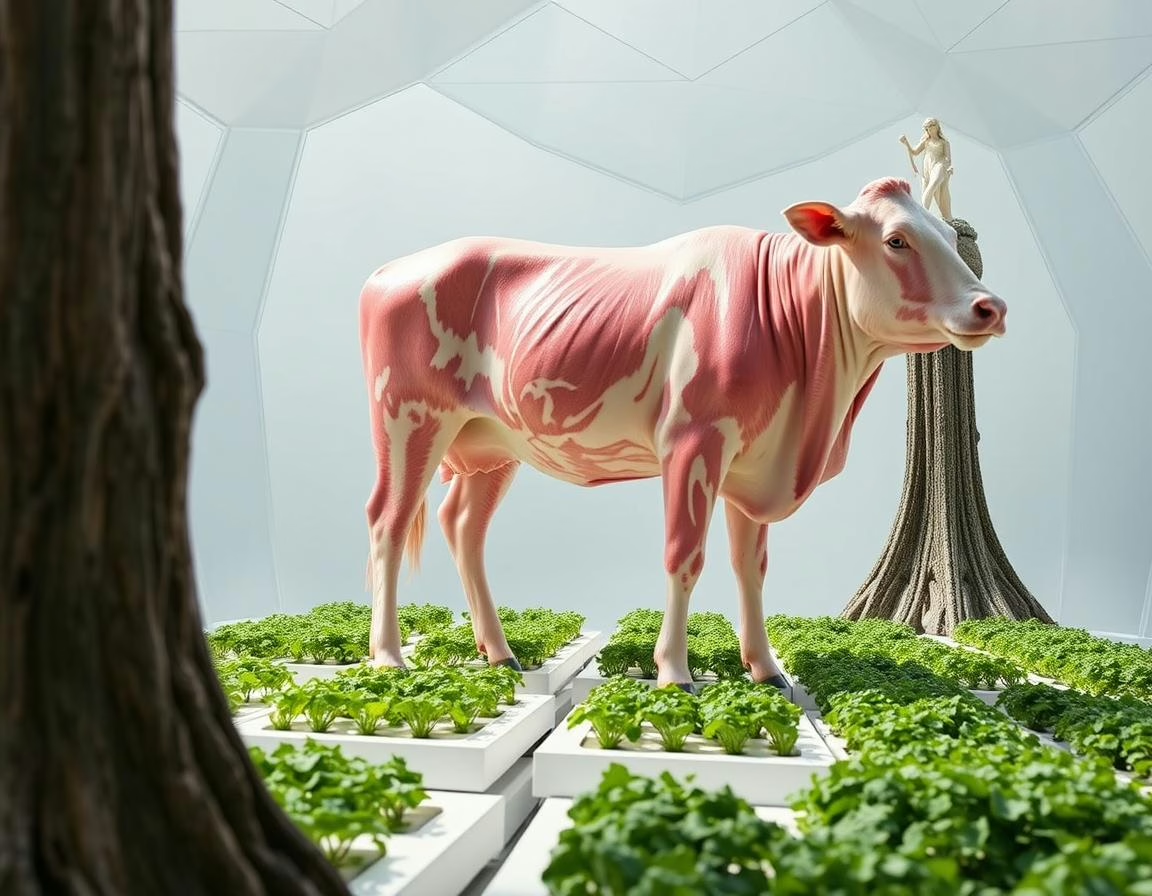
The legal action has unfolded in the U.S. District Court for the Western District of Texas, with IJ and UPSIDE Foods arguing that Texas’s SB 261 violates the principles of free trade by imposing unjust economic protectionism. Uma Valeti, CEO of UPSIDE Foods, emphasizes that consumers should have the autonomy to choose their food preferences without governmental intrusion. The filing includes a request for a preliminary injunction to prevent Texas from enforcing the ban during the litigation, enabling Wildtype and UPSIDE Foods to continue serving willing consumers in the state.
Governor Greg Abbott signed SB 261 into law on June 20, ushering in a blanket ban on the sale of cultivated meat products in Texas. This move has significant repercussions, with penalties ranging from hefty fines to potential imprisonment for violators. Wildtype and UPSIDE Foods, among the few approved alt-meat producers under FDA and USDA oversight, are determined to challenge the constitutionality of Texas’s legislation, citing violations of the Commerce Clause and the Supremacy Clause of the U.S. Constitution.
In a bid to protect consumer choice and interstate commerce, the lawsuit against Texas highlights the broader implications of state-level bans on cell-cultured products. The legal landscape is further complicated by the involvement of multiple regulatory bodies and the intricate interplay between federal and state regulations. The impending legal battle not only shapes the future of cultivated meat but also sets a precedent for the evolving regulatory framework governing novel food technologies.
Meanwhile, the legal saga extends beyond Texas, with several states enacting laws to regulate or ban cell-cultured foods in recent years. Montana, North Dakota, South Carolina, South Dakota, and Utah have all introduced legislation addressing various aspects of lab-grown proteins, from labeling requirements to outright prohibitions on their sale. This patchwork of state laws underscores the need for a cohesive regulatory approach at the federal level to ensure consistency and clarity in the oversight of emerging food technologies.
The legal showdown in Texas and other states reflects the broader societal debate surrounding the future of food production and consumption. As technology advances enable the creation of alternative protein sources, policymakers grapple with balancing innovation and tradition in the food industry. The outcome of these legal battles will not only shape the trajectory of cultivated meat but also influence the broader discourse on sustainable agriculture, food security, and consumer choice in the 21st century.
As the legal battle unfolds, stakeholders across the food industry are closely monitoring the developments and implications of the lawsuits challenging cultivated meat bans. The outcome of these legal challenges will have far-reaching consequences for the nascent alternative protein sector, setting precedents that could either catalyze innovation or stifle progress in the quest for sustainable and ethical food production.
In conclusion, the legal battle over cultivated meat bans in the United States represents a pivotal moment in the evolution of the food industry. The clash between state regulations and federal oversight underscores the complexities of regulating novel food technologies and balancing consumer choice with public health concerns. The outcome of these legal challenges will not only shape the future of alternative protein sources but also inform broader discussions on sustainability, innovation, and regulatory frameworks in the global food system.
Key Takeaways:
– The legal battle over cultivated meat bans highlights the clash between state regulations and federal oversight in the food industry.
– Stakeholders are closely watching the outcome of these lawsuits, which could shape the future of alternative protein sources.
– The implications of these legal challenges extend beyond the realm of food regulation, influencing broader discussions on sustainability and innovation in the food system.
Tags: regulatory
Read more on foodsafetynews.com



