
In the quaint town of Dighton, Massachusetts, nestled between Marion Avenue and the intersection of Main and Elm streets, lies the picturesque Muddy Cove Pond. For two decades, Drew Harris has called this serene oasis his neighbor, a place where the community gathers for moments of joy and connection across the changing seasons.
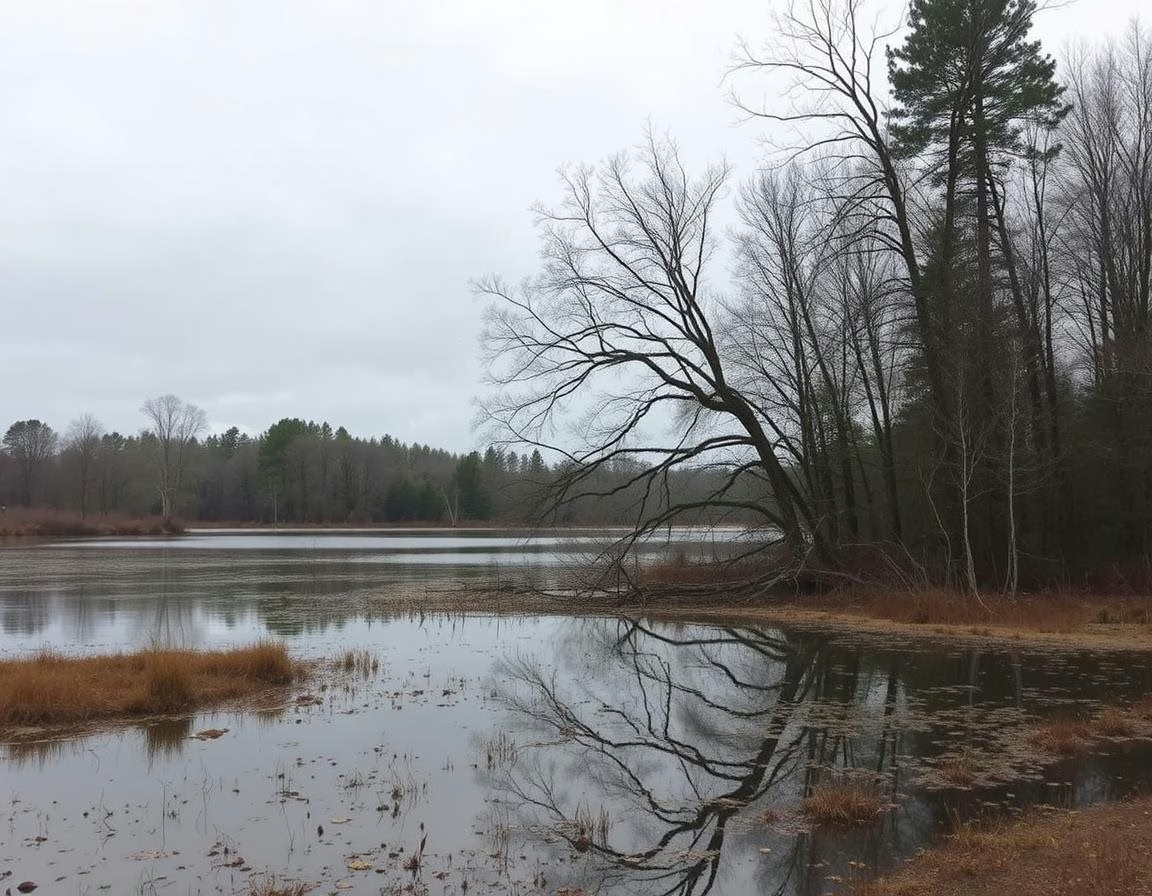
During the crisp winters, the pond transforms into a playground for Harris and his friends, echoing with the laughter and cheers of locals engaged in spirited games of ice hockey. As the warmer months usher in their gentle embrace, Muddy Cove Pond becomes a hub of activity, with families and fishing enthusiasts casting lines, canoes gliding across the water, and the air filled with the sounds of nature and human enjoyment.
However, a shadow has fallen over this idyllic scene, casting a pall of uncertainty and concern. A notice of intent sent out by AstraZeneca, Inc., the current owner of the property and dam that sustains Muddy Cove Pond, has sparked distress among residents like Harris. The proposal to drain the pond and remove the dam has stirred emotions of loss and worry, prompting reflections on the social and environmental implications of bidding farewell to a beloved local landmark.
The roots of this dilemma trace back to the mid-20th century when the dam was first erected by Imperial Chemical Industries to serve practical water utilization purposes. Subsequent transitions in ownership led to AstraZeneca, Inc. acquiring the property in the early 1990s, eventually ceasing all operational activities by the late 90s. Despite the passage of time, the company continued to oversee the dam’s maintenance, a responsibility that has now become burdensome with no productive use of the land in sight.
As the dam ages and the pressure of compliance with dam safety regulations mounts, AstraZeneca finds itself at a crossroads, faced with the decision to dismantle the structure that no longer aligns with its strategic interests. The long-term vision entails not just the removal of the dam but a comprehensive approach that includes draining Muddy Cove, conducting environmental remediation efforts, and ultimately relinquishing ownership to transform the area into open space for the benefit of the town.
The contemplation of bidding farewell to Muddy Cove Pond evokes a poignant nostalgia for the memories and moments woven into its fabric. Beyond being a mere body of water, the pond symbolizes a source of communal joy, a sanctuary for recreational pursuits like ice fishing, canoeing, and picnicking, and a vital ecosystem teeming with diverse wildlife. Turtles sunning on the shore, deer quenching their thirst, and migratory birds finding solace in its waters paint a vivid picture of a harmonious coexistence between humans and nature.
Amidst the debate and deliberation surrounding the fate of Muddy Cove Pond, the community stands at a crossroads, grappling with conflicting interests of preservation and progress. The concerns raised by residents like Harris echo a collective sentiment of loss and apprehension, underscoring the emotional attachment and ecological significance of this cherished locale. The impending decision to drain the pond serves as a poignant reminder of the delicate balance between industrial legacy and environmental stewardship, urging stakeholders to navigate a path forward that honors both the past and the future.
In the face of these challenges, AstraZeneca has emphasized its commitment to public safety and environmental integrity, outlining a structured approach to mitigate the seepage issues at the dam while exploring sustainable solutions through a transparent permitting process. The company’s willingness to engage with local authorities and community feedback reflects a recognition of the deep-rooted connection between Muddy Cove Pond and the town of Dighton, underscoring a shared responsibility towards safeguarding natural habitats and preserving communal heritage.
As the Conservation Commission convenes to deliberate on the fate of Muddy Cove Pond, the echoes of concern and care reverberate through the halls of decision-making. The decision to bid adieu to this beloved landmark reverberates with a sense of loss and transformation, signaling a new chapter in the intertwined narratives of human recreation and environmental conservation. While the future of Muddy Cove Pond hangs in the balance, the legacy of its memories and moments lingers on, a testament to the enduring bond between community and nature.
Takeaways:
- The story of Muddy Cove Pond in Dighton is a poignant tale of community, conservation, and change.
- The proposal to drain the pond and remove the dam reflects a delicate balance between industrial history and environmental impact.
- Residents express concerns over the potential loss of a cherished recreational spot and thriving ecosystem.
- AstraZeneca’s plan for controlled pond lowering and dam removal underscores a commitment to public safety and environmental stewardship.
- The decision-making process highlights the complexities of balancing heritage preservation with corporate responsibility and regulatory compliance.
- The fate of Muddy Cove Pond serves as a poignant reminder of the interconnectedness between human activities and natural ecosystems.
Read more on yahoo.com



