
In a bid to tackle the global issue of food waste and its environmental impact, a Pittsburgh startup has emerged with a revolutionary solution. Since 2019, Ecotone Renewables has been deploying innovative systems known as Zero Emission Upcycling Systems (ZEUS) in vibrantly painted shipping containers across Pittsburgh. These systems utilize anaerobic digestion to break down food waste, transforming it into liquid fertilizer and renewable energy.
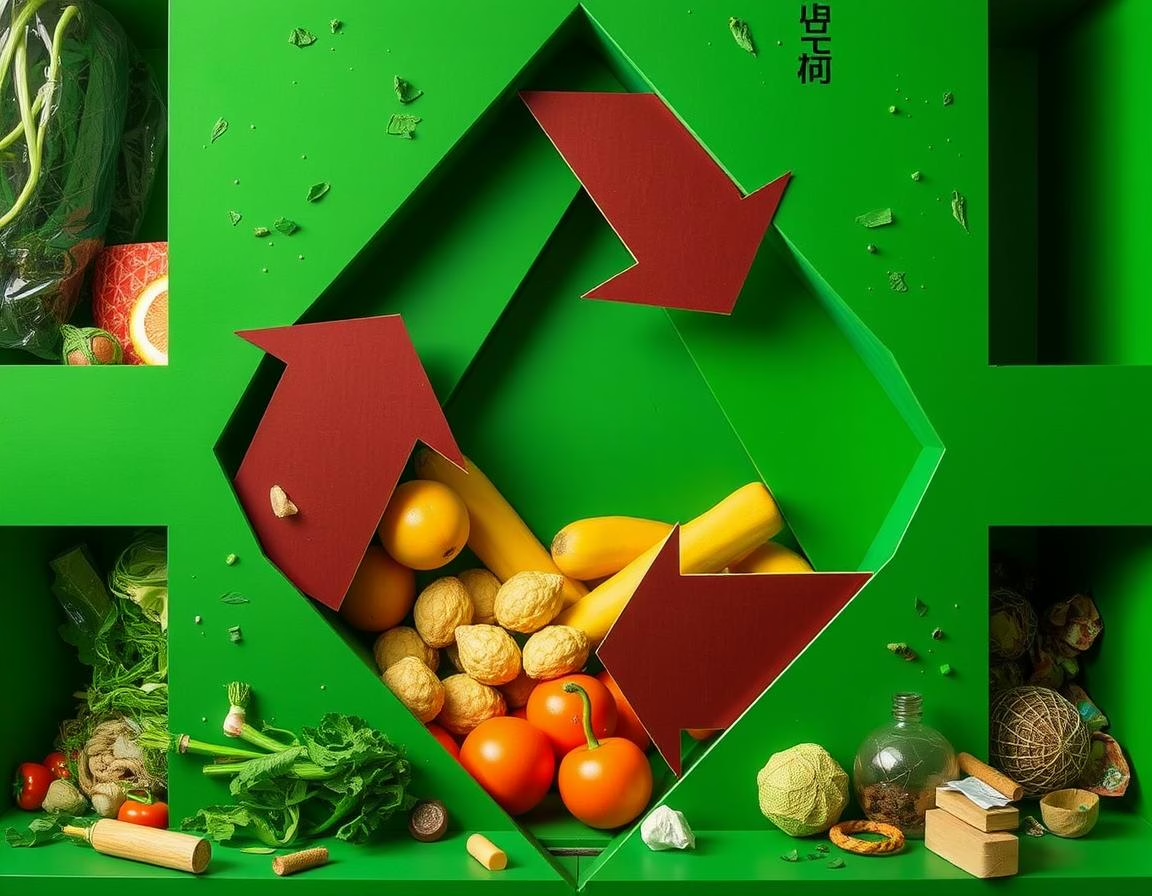
The significance of this initiative lies in addressing the substantial contribution of food waste to global greenhouse gas emissions, amounting to about 10%. Research indicates that redirecting food waste from landfills to composting and anaerobic digestion methods could prevent nearly 40 million metric tons of carbon dioxide equivalents annually. This underscores the critical role that Ecotone Renewables plays in mitigating environmental harm.
Originating from a group of students from renowned universities such as Carnegie Mellon and the University of Pittsburgh, Ecotone Renewables evolved from experimenting with aquaponics to developing on-site anaerobic digesters. The company recognized the challenges associated with existing food waste solutions, particularly the operational complexities and cost barriers. In response, they designed ZEUS to be user-friendly, cost-effective, and automated, thus streamlining the recycling process for commercial kitchens.
By automating dosing, feeding, and regulating factors like temperature and pH, Ecotone Renewables has simplified the operation of the ZEUS system. Commercial kitchen staff need only collect food waste in compostable bags and deposit them into the ZEUS chute, where the waste undergoes digestion akin to a natural process. The resultant byproducts include a liquid organic fertilizer called ‘Soil Sauce’ and a methane-rich biogas used to power the system, illustrating the circular and sustainable nature of the process.
The impact of ZEUS extends beyond environmental benefits to encompass financial advantages for partnering organizations. By leasing the systems and making fixed payments over several years, clients can offset costs associated with waste hauling. This economic incentive, coupled with the environmental gains, positions ZEUS as a compelling solution for entities with commercial kitchens, such as restaurants, coffee shops, hospitals, and senior centers.
Through strategic partnerships and funding initiatives, Ecotone Renewables has rapidly scaled its operations, deploying ZEUS digesters in various locations. The company’s receipt of grants from entities like the United States Department of Agriculture and Pennsylvania’s Agricultural Innovation Grant Program underscores the recognition and support garnered by their innovative approach. Moreover, accolades such as the University of Pittsburgh’s Sustainability Challenge award attest to Ecotone Renewables’ commitment to sustainability and technological advancement.
Looking ahead, the company envisions widespread deployment of ZEUS systems, with a goal of reaching 10,000 units and expanding manufacturing capacity. Regions with higher waste hauling and landfill costs, such as New England and Southern California, represent promising markets for Ecotone Renewables. By catalyzing a shift in the cultural norms of how food waste is managed, the company aims to establish a global presence, with millions of systems worldwide converting waste into valuable resources.
In summary, Ecotone Renewables epitomizes the intersection of innovation, sustainability, and economic viability in the realm of food waste recycling. By reimagining anaerobic digestion through automation and user-centric design, the company is spearheading a transformative approach to waste management. Through strategic alliances, funding support, and a clear vision for scalability, Ecotone Renewables is poised to revolutionize the landscape of food waste recycling on a global scale.
Tags: fungi, automation
Read more on alleghenyfront.org



