
Introduction:
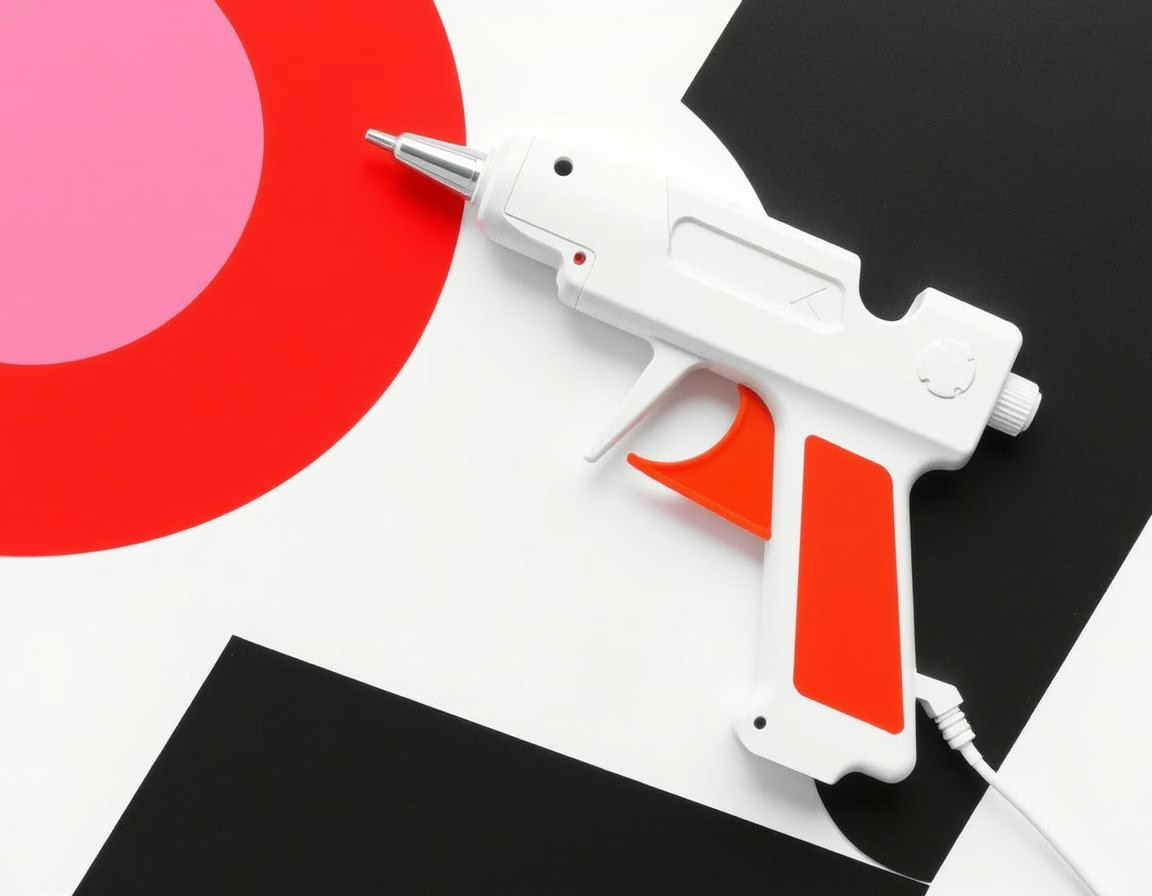
In the realm of surgical innovation, a groundbreaking development has emerged in the form of a modified glue gun capable of printing synthetic bone grafts directly onto a patient’s living tissue during surgery. This cutting-edge technology represents a significant advancement in the field of medical procedures, offering a revolutionary approach to bone grafting that promises enhanced precision, efficiency, and patient outcomes. By seamlessly integrating 3D printing technology with surgical interventions, researchers have unlocked a new realm of possibilities in the realm of regenerative medicine.
The Conception of the Modified Glue Gun:
The genesis of this remarkable invention lies in the fusion of traditional surgical techniques with state-of-the-art 3D printing technology. By harnessing the principles of additive manufacturing, researchers have devised a novel approach to creating synthetic bone grafts that can be customized to fit the precise dimensions of a patient’s anatomy. This modified glue gun serves as the conduit through which this innovative process is actualized, allowing surgeons to deposit biocompatible materials directly onto the patient’s tissue with unparalleled accuracy and control.
Development of the Printing Process:
The development of the printing process involves a meticulous orchestration of various components, each playing a crucial role in ensuring the success and efficacy of the procedure. At the heart of this process lies the design of the synthetic bone graft itself, which is meticulously crafted to mimic the structural and compositional properties of natural bone tissue. Through advanced imaging techniques such as CT scans and MRIs, surgeons can obtain detailed insights into the patient’s anatomy, enabling them to tailor the design of the graft to suit their specific needs.
Incorporating Biocompatible Materials:
Central to the success of this innovative approach is the utilization of biocompatible materials that are not only safe for implantation but also possess the necessary mechanical properties to support bone regeneration. By employing a diverse array of materials such as bioactive ceramics, polymers, and growth factors, researchers can fine-tune the composition of the synthetic graft to promote optimal healing and integration with the surrounding tissue. This meticulous selection process ensures that the graft not only serves as a temporary scaffold but also actively contributes to the regenerative process.
Precision Printing onto Living Tissue:
One of the most remarkable aspects of this modified glue gun technology is its ability to print synthetic bone grafts directly onto a patient’s living tissue with unparalleled precision and accuracy. Unlike traditional grafting methods that rely on pre-fabricated implants, this approach enables surgeons to customize the graft in real-time during the surgical procedure, ensuring a perfect fit and alignment with the surrounding tissue. This level of precision not only enhances the aesthetic outcome of the procedure but also minimizes the risk of post-operative complications.
Enhancing Surgical Efficiency and Patient Outcomes:
By streamlining the bone grafting process and integrating it seamlessly into the surgical workflow, this modified glue gun technology offers a host of benefits in terms of efficiency and patient outcomes. Surgeons can now perform complex reconstructive procedures with greater ease and precision, reducing the overall duration of the surgery and minimizing the risk of intraoperative complications. This translates into shorter recovery times for patients, reduced post-operative pain, and improved functional outcomes, ultimately enhancing the overall quality of care provided.
Future Implications and Potential Applications:
Looking ahead, the implications of this innovative technology extend far beyond the realm of bone grafting, opening up a myriad of possibilities for its application in various surgical specialties. From orthopedic procedures to maxillofacial surgeries, the ability to print customized implants directly onto living tissue holds immense promise for enhancing patient care and advancing the frontiers of regenerative medicine. Moreover, as 3D printing technology continues to evolve and become more accessible, we can expect to see further refinements and innovations in the realm of surgical interventions, paving the way for a new era of personalized medicine.
Conclusion:
In conclusion, the development of a modified glue gun for printing synthetic bone grafts directly onto living tissue represents a paradigm shift in the field of surgical innovation. By combining the precision of 3D printing technology with the artistry of surgical craftsmanship, researchers have unlocked a new frontier in regenerative medicine that holds immense promise for improving patient outcomes and advancing the standard of care. As we look towards the future, it is imperative that we continue to push the boundaries of medical technology, harnessing the power of innovation to revolutionize the way we approach surgical interventions and patient care.
Key Takeaways:
- The modified glue gun technology enables the direct printing of synthetic bone grafts onto a patient’s living tissue during surgery, revolutionizing the field of regenerative medicine.
- By customizing the design and composition of the graft to suit the patient’s anatomy, surgeons can enhance the precision and efficacy of reconstructive procedures.
- The integration of biocompatible materials and advanced imaging techniques ensures optimal healing and integration of the synthetic graft with the surrounding tissue.
- This innovative approach not only improves surgical efficiency and patient outcomes but also paves the way for personalized medicine and future advancements in surgical interventions.



