
In the realm of combating SARS-CoV-2, the evolution of monoclonal neutralizing antibodies has encountered challenges due to the virus’s dynamic nature, leading to reduced efficacy and immune escape. In this landscape, the emergence of bispecific antibodies (bsAbs) has garnered significant attention for their potential in enhancing antiviral activities and curbing immune evasion. This review delves into the critical role of bispecific antibodies in addressing the challenges posed by SARS-CoV-2, exploring their functions, mechanisms, design formats, and associated advantages and limitations. By analyzing a spectrum of representative bispecific antibodies targeting SARS-CoV-2, this review aims to provide profound insights that can shape the future strategies in bispecific antibody design and advance antiviral therapeutic development.
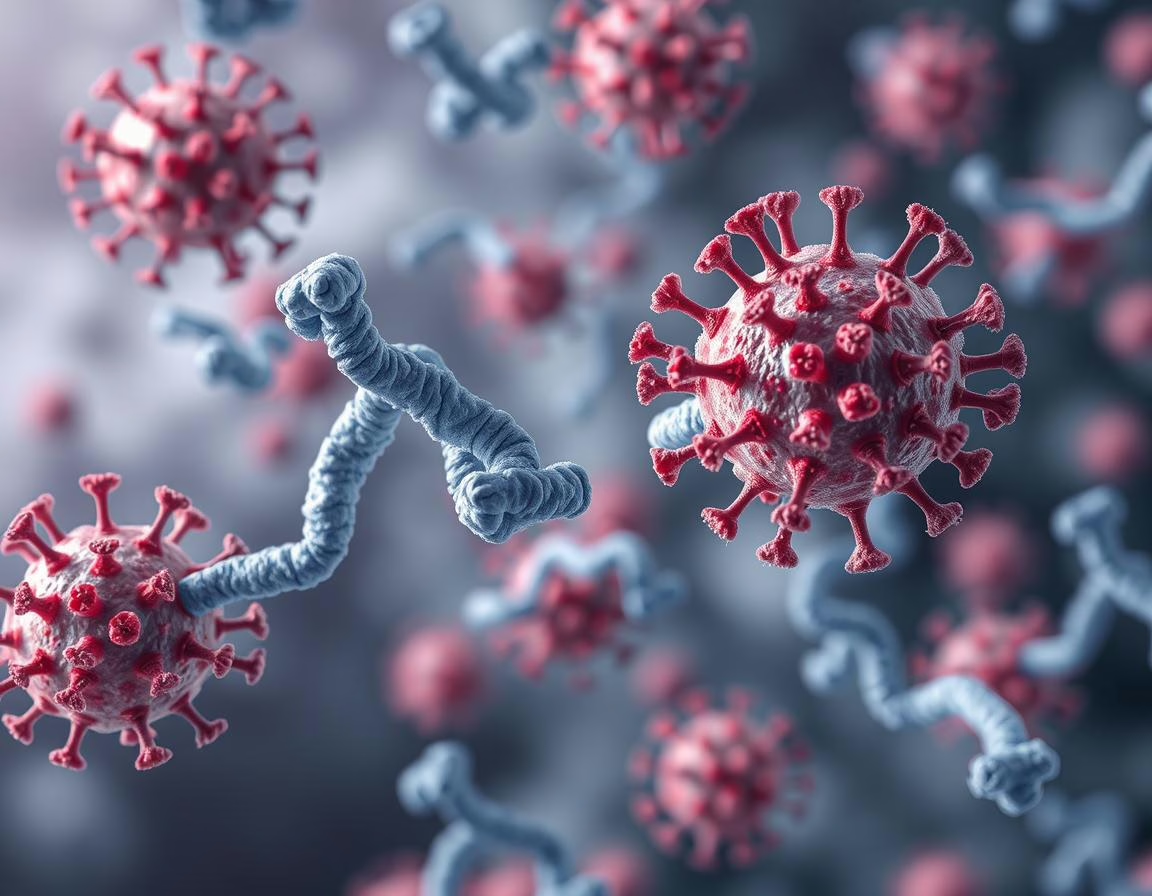
The persistent impact of the SARS-CoV-2 outbreak, even after more than four years since its onset, underscores the urgency for specific therapies for infected individuals and those ineligible for vaccination. Monoclonal antibodies have emerged as a potent treatment option, showcasing high specificity and efficacy. However, the rapid mutations in the virus, leading to variants of concern and interest, have challenged the consistency of monoclonal antibody therapies. This fluid landscape has paved the way for bispecific antibodies as a promising strategy to address the evolving variants of SARS-CoV-2. The design principles of bispecific antibodies, drawing from their success in combating various viral infections, offer a beacon of hope in the battle against the ever-changing SARS-CoV-2.
The strategic selection of parental antibodies significantly influences the mechanism, neutralization efficacy, and cross-neutralization activity of bispecific antibodies. The integration of antibodies targeting distinct epitopes, inducing specific conformational changes in the spike protein, or inhibiting immune escape mechanisms showcases the adaptability and versatility of bispecific antibodies. By combining antibodies with complementary functionalities, the resulting bispecific antibodies exhibit enhanced neutralization activity, broader cross-neutralization capabilities, and increased potency against variants. The intricate interplay between the binding epitopes, functional mechanisms, and design formats of bispecific antibodies underscores the complexity and precision required in their development for optimal efficacy.
By dissecting the mechanistic insights of bispecific antibodies targeting SARS-CoV-2, this review sheds light on their superior antiviral activity compared to monoclonal antibodies and cocktails. The disruption of the RBD-ACE2 interaction, multivalent antigen binding, induction of spike conformational changes, and cross-neutralization effects are pivotal mechanisms through which bispecific antibodies exert their antiviral effects. Leveraging these distinct mechanisms, bispecific antibodies demonstrate a multifaceted approach in neutralizing viral particles, impeding viral infection, and preventing immune escape.
The evolution of bispecific antibodies targeting SARS-CoV-2 offers a glimpse into the future of antiviral therapeutic development. The intricate design formats, strategic selection of parental antibodies, and diverse mechanisms of action collectively contribute to the efficacy and potency of bispecific antibodies in confronting the challenges posed by SARS-CoV-2 variants. As researchers delve deeper into the nuances of bispecific antibody design, focusing on enhancing neutralization activity, broadening cross-neutralization capabilities, and minimizing immune escape, the potential for these innovative therapeutic agents to revolutionize antiviral treatments grows exponentially.
Key Takeaways:
- Bispecific antibodies present a promising strategy in addressing the challenges posed by evolving SARS-CoV-2 variants.
- Strategic selection of parental antibodies, distinct design formats, and multifaceted mechanisms contribute to the efficacy of bispecific antibodies.
- Bispecific antibodies disrupt RBD-ACE2 interactions, induce spike conformational changes, and exhibit cross-neutralization effects against SARS-CoV-2 variants.
- Designing bispecific antibodies with complementary functionalities enhances their neutralization activity and broadens their cross-neutralization capabilities.
- The evolving landscape of bispecific antibodies targeting SARS-CoV-2 offers insights into future antiviral therapeutic advancements.
Tags: formulation, immunotherapy, monoclonal antibodies
Read more on pmc.ncbi.nlm.nih.gov



