
The realm of cancer therapy has witnessed a surge in interest in nano-drug delivery systems (Nano-DDS) that specifically target the tumor microenvironment (TME) to combat multidrug resistance (MDR). By honing in on the TME and manipulating its unique characteristics such as hypoxia, acidic pH levels, and atypical protein expression, these Nano-DDS offer a promising avenue for the effective delivery of therapeutic agents and the reversal of MDR. The scientific community has ramped up its efforts in diversifying these systems and exploring their potential in circumventing drug resistance. Thus, a comprehensive review of the recent advancements in TME-targeted Nano-DDS is paramount. This review delves into the intricacies of TME and MDR in tumors, sheds light on the design principles and structures of liposomes, polymer micelles, and inorganic nanocarriers, and elucidates their roles as TME-targeted nanocarriers. Furthermore, it explores how these systems combat cancer MDR through various targeting mechanisms, highlighting their synthetic innovations, research outcomes, and resistance mitigation strategies. The review culminates in a reflection on the primary challenges and future prospects in leveraging TME-targeted Nano-DDS for cancer therapy.
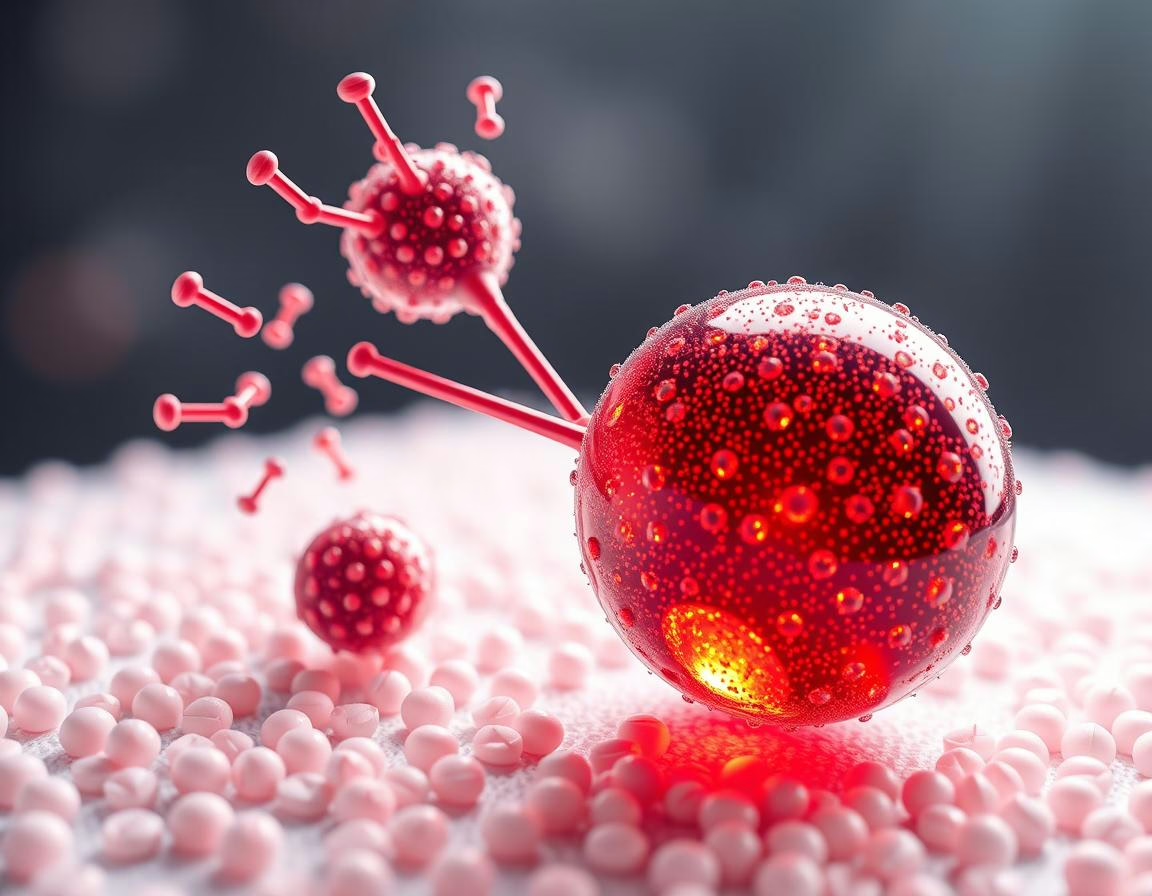
The TME-targeted Nano-DDS represent a paradigm shift in cancer treatment strategies, with a primary focus on overcoming MDR. These systems are designed to navigate the complex and dynamic landscape of the TME, where traditional therapies often fall short due to acquired resistance mechanisms. By harnessing the unique features of the TME, such as its aberrant pH and oxygen levels, Nano-DDS can enhance drug delivery efficiency and therapeutic efficacy. The precision targeting of these systems allows for localized drug release, minimizing off-target effects and maximizing the therapeutic impact on tumor cells. Moreover, the adaptability of Nano-DDS in modulating their physicochemical properties enables tailored strategies to tackle specific challenges within the TME, offering a personalized approach to cancer treatment.
Innovative Design Principles of TME-Targeted Nano-DDS
The design of TME-targeted Nano-DDS hinges on a meticulous understanding of the intricacies of the TME and the mechanisms underlying MDR. Liposomes, polymer micelles, and inorganic nanocarriers serve as the cornerstone of these innovative drug delivery systems, each offering unique advantages in targeting the TME. Liposomes, with their lipid bilayer structure, provide a versatile platform for encapsulating a diverse range of therapeutic agents and facilitating their selective delivery to tumor sites. Polymer micelles, on the other hand, offer enhanced stability and prolonged circulation time in the bloodstream, ensuring efficient drug transport to the TME. Inorganic nanocarriers, characterized by their tunable physicochemical properties, exhibit remarkable potential in overcoming biological barriers within the TME and enhancing intracellular drug uptake.
Breakthrough Mechanisms of TME-Targeted Nano-DDS
The efficacy of TME-targeted Nano-DDS in combating MDR stems from their ability to exploit the vulnerabilities of tumor cells within the dynamic TME. These systems leverage various targeting mechanisms, such as ligand-receptor interactions, pH-responsive drug release, and stimuli-responsive behaviors, to enhance drug accumulation in tumor tissues and circumvent resistance pathways. By precisely modulating the interactions between Nano-DDS and the TME components, including cellular and non-cellular elements, these systems can achieve synergistic effects that amplify the therapeutic outcomes. Furthermore, the integration of imaging modalities and therapeutic agents within Nano-DDS enables real-time monitoring of drug distribution and response, paving the way for personalized treatment regimens tailored to individual patient profiles.
Synthetic Innovations and Resistance Overcoming Strategies
The evolution of TME-targeted Nano-DDS is marked by continuous innovation in synthetic methodologies and formulation strategies aimed at enhancing their therapeutic efficacy and biocompatibility. Advanced fabrication techniques, such as microfluidics and nanoprecipitation, allow for precise control over the size, shape, and surface properties of Nano-DDS, optimizing their interactions with the TME. Moreover, the incorporation of smart materials, including stimuli-responsive polymers and biocompatible coatings, empowers Nano-DDS to adapt to the dynamic conditions of the TME and overcome resistance mechanisms. By integrating multidisciplinary approaches encompassing materials science, pharmacology, and bioinformatics, researchers are pushing the boundaries of Nano-DDS design to revolutionize cancer therapeutics.
Challenges and Future Perspectives in TME-Targeted Nano-DDS
Despite the remarkable progress in TME-targeted Nano-DDS, several challenges persist in translating these innovations from the laboratory to clinical settings. Issues related to scalability, reproducibility, and manufacturing cost pose significant hurdles in realizing the full potential of Nano-DDS in combating MDR. Moreover, the complexity of the TME and its heterogeneity across different cancer types necessitate tailored approaches in designing Nano-DDS with optimal targeting efficiency. Future research endeavors should focus on harnessing emerging technologies, such as artificial intelligence and multi-omics integration, to enhance the predictive modeling of Nano-DDS behavior in diverse TME environments. By fostering collaborations between academia, industry, and regulatory bodies, the field of TME-targeted Nano-DDS holds immense promise in reshaping the landscape of cancer therapy and overcoming the challenges posed by drug resistance.
Key Takeaways:
- TME-targeted Nano-DDS offer a promising strategy for overcoming multidrug resistance in cancer therapy.
- Liposomes, polymer micelles, and inorganic nanocarriers play pivotal roles as TME-targeted nanocarriers, leveraging their unique properties for effective drug delivery.
- The breakthrough mechanisms of TME-targeted Nano-DDS involve precise targeting strategies and stimuli-responsive behaviors to enhance therapeutic outcomes.
- Synthetic innovations and resistance overcoming strategies drive the evolution of TME-targeted Nano-DDS, paving the way for personalized cancer treatments.
- Overcoming challenges in scalability, reproducibility, and cost, while harnessing emerging technologies, are crucial for the future success of TME-targeted Nano-DDS in clinical applications.
Read more on pubmed.ncbi.nlm.nih.gov



