
In the realm of combatting infectious diseases, messenger RNA (mRNA) vaccines have emerged as a pivotal technology. Despite their potential, optimizing the immunogenicity and longevity of mRNA vaccines presents a challenge. The integration of antigen-encoding mRNA and immunostimulatory adjuvants into a unified formulation offers a promising avenue to enhance mRNA vaccine efficacy. This article delves into an innovative adjuvant strategy that harnesses interleukin-7 (IL-7) to augment the potency of mRNA vaccines. By co-loading mRNA encoding the antigen (such as the rabies virus glycoprotein, RABV-G) with IL-7 mRNA into lipid nanoparticles, this study achieves a synergistic delivery to antigen-presenting cells. A single immunization with this combined G&IL-7 mRNA vaccine triggers robust humoral immune responses in murine models, conferring complete protection against RABV challenge. Noteworthy is the sustained high levels of neutralizing antibodies induced by the G&IL-7 mRNA vaccine, persisting for at least 6 months and providing mice with prolonged, significant protection against RABV. Importantly, IL-7 also enhances antibody responses against the SARS-CoV-2 virus. These findings underscore IL-7 as a potent adjuvant for mRNA vaccines, capable of eliciting robust and enduring immune responses across various formulations.
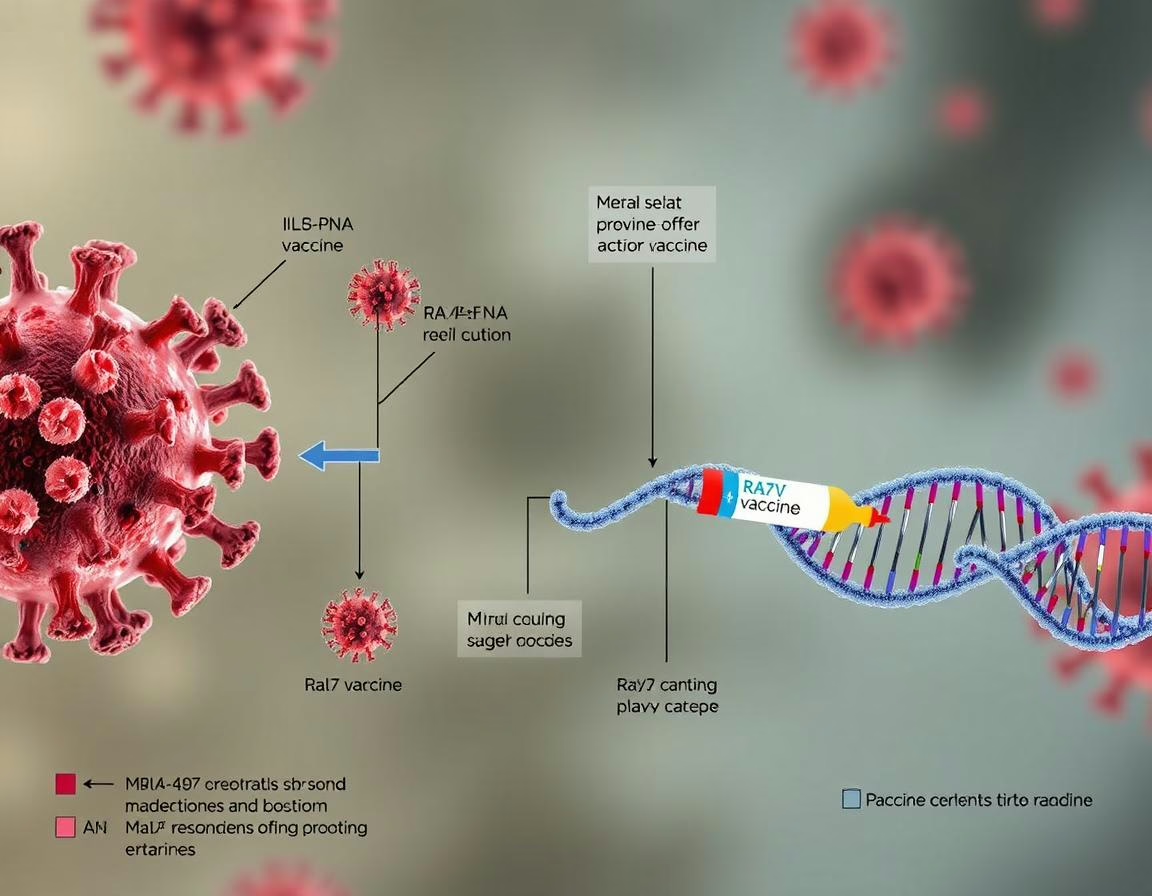
Rabies, a fatal zoonotic disease caused by the neurotropic rabies virus (RABV), poses a considerable public health burden, with a mortality rate near 100%. The prevention of RABV relies on rapid antibody-mediated neutralization before the virus infiltrates the central nervous system. While existing vaccines have shown efficacy, the need for multiple doses and associated costs have hindered complete protection in endemic regions, leading to thousands of global fatalities annually. The quest for single-dose, highly immunogenic RABV vaccines becomes imperative, particularly for resource-constrained settings. mRNA vaccines, exemplified by their success in combating SARS-CoV-2, offer a promising avenue for RABV vaccination. The delivery of RABV-G mRNA via lipid nanoparticles has enhanced immunogenicity in preclinical models and early clinical trials. However, optimizing dosing strategies to surpass conventional vaccines and ensuring sustained immunity remain focal points. Leveraging innovative adjuvant strategies, such as IL-7 incorporation, holds the promise of elevating mRNA vaccine efficacy and durability.
Interleukin-7 (IL-7), a pivotal cytokine, plays a crucial role in the proliferation and differentiation of lymphocyte subsets, notably T and B cells. Exogenous IL-7 has been shown to bolster humoral immunity by fostering the development of T follicular helper (Tfh) cells, pivotal in generating high-affinity antibodies in germinal centers. IL-7’s capacity to enhance mRNA immunogenicity through protein expression in T cells underscores its potential as a novel adjuvant for mRNA vaccines. In this study, IL-7 is harnessed as a stimulatory adjuvant, co-delivering IL-7 mRNA alongside RABV G mRNA in lipid nanoparticles for synergistic immunization. Subsequent evaluation post-vaccination reveals heightened RABV virus-neutralizing antibody levels, germinal center reactions, and prolonged protection against RABV challenge in murine models. Furthermore, IL-7 amplifies antibody responses against the SARS-CoV-2 virus, showcasing its versatility across diverse pathogens and underscoring its role as a promising mRNA vaccine adjuvant.
The design and characterization of the mRNA vaccine expressing both RABV-G and IL-7 exhibit the meticulous engineering required for optimal antigen expression and immune stimulation. Co-encapsulation of G mRNA and IL-7 mRNA within lipid nanoparticles streamlines vaccine production and enhances encapsulation efficiency. Subsequent analyses confirm the integrity, purity, and efficient expression of G and IL-7 post-transfection, validating the successful formulation of the G&IL-7 mRNA vaccine. Immunization with varying IL-7 mRNA doses co-encapsulated with G mRNA unveils the adjuvant effect of IL-7 on RABV mRNA vaccine immunogenicity. IL-7 positively impacts vaccine-induced antibody titers, driving sustained high levels of neutralizing antibodies and augmenting the overall antibody responses, as evidenced by robust humoral immune responses elicited in murine models.
Further exploration into the transcriptomic changes in inguinal lymph nodes post-vaccination sheds light on the profound impact of IL-7 on immune responses. Transcriptome analysis reveals significant transcriptional alterations, enriching pathways associated with adaptive immunity, oxidative stress, and inflammatory responses. IL-7-induced upregulation of key genes and pathways, notably the JAK-STAT pathway, signifies its role in modulating immune cell activation and proliferation. Enhanced proliferation of Tfh cells, GC B cells, and plasma cells in vaccinated mice underscores the potency of the IL-7 mRNA vaccine formulation in bolstering key immune cell populations crucial for sustained immune protection. The augmented formation of memory B cells and the robust secondary antibody responses observed post-immunization further underscore IL-7’s efficacy in inducing durable immune memory and protection.
In assessing the long-term protective efficacy of the G&IL-7 mRNA vaccine against lethal RABV challenge, murine models demonstrate sustained immunity and enhanced survival rates, highlighting the enduring prophylactic benefits of IL-7-adjuvanted mRNA vaccines. Preliminary safety assessments affirm the favorable safety profile of the G&IL-7 mRNA vaccine, underscoring its potential for clinical translation. The extension of IL-7’s adjuvant potential to SARS-CoV-2 mRNA vaccines unveils potent immune responses elicited by IL-7 incorporation, showcasing its broad applicability across diverse antigens and pathogens. Elevated antibody responses, including S-specific IgG levels, IgG2a, IgG1 isotypes, and pseudovirus neutralization titers, underscore IL-7’s instrumental role in enhancing vaccine immunogenicity and durability. The study’s comprehensive findings position IL-7 as a versatile adjuvant for mRNA vaccines, offering a promising avenue to bolster immune responses against emerging and re-emerging infectious pathogens.
In conclusion, the integration of IL-7 as an adjuvant in mRNA vaccines presents a compelling strategy to enhance immunogenicity, durability, and long-term protection against infectious diseases. The meticulous design and characterization of IL-7-adjuvanted mRNA vaccines, coupled with in-depth immune response assessments in preclinical models, underscore the transformative potential of IL-7 in augmenting mRNA vaccine-induced immune responses. From bolstering antibody titers and sustaining high levels of neutralizing antibodies to fostering the formation of key immune cell populations, IL-7 emerges as a potent adjuvant with broad applicability across diverse pathogens. The study’s insights into IL-7’s mechanisms of action, transcriptomic alterations, and long-term protective efficacy lay a robust foundation for further investigations and clinical translation of IL-7-adjuvanted mRNA vaccines. By harnessing the immunostimulatory prowess of IL-7, mRNA vaccines stand poised to achieve enhanced efficacy, durability, and immune memory, heralding a new era in vaccine development and infectious disease control.
- IL-7 as an adjuvant in mRNA vaccines enhances immunogenicity and long-term protection against infectious diseases.
- Co-loading IL-7 mRNA with antigen mRNA in lipid nanoparticles synergistically boosts immune responses and sustains high antibody levels.
- IL-7 augments key immune cell populations, including Tfh cells, GC B cells, and plasma cells, fostering durable immune memory.
- Transcriptomic analyses reveal IL-7-induced transcriptional alterations and pathway enrichments, elucidating its immune-modulatory effects.
- IL-7-adjuvanted mRNA vaccines demonstrate potent immune responses against diverse pathogens, exemplified by enhanced antibody titers and neutralizing antibodies.
- The safety and efficacy profile of IL-7-adjuvanted mRNA vaccines underscores their transformative potential in vaccine development.
Tags: vaccine production, formulation, nanobiotechnology, lipid nanoparticles, clinical trials
Read more on pmc.ncbi.nlm.nih.gov



