
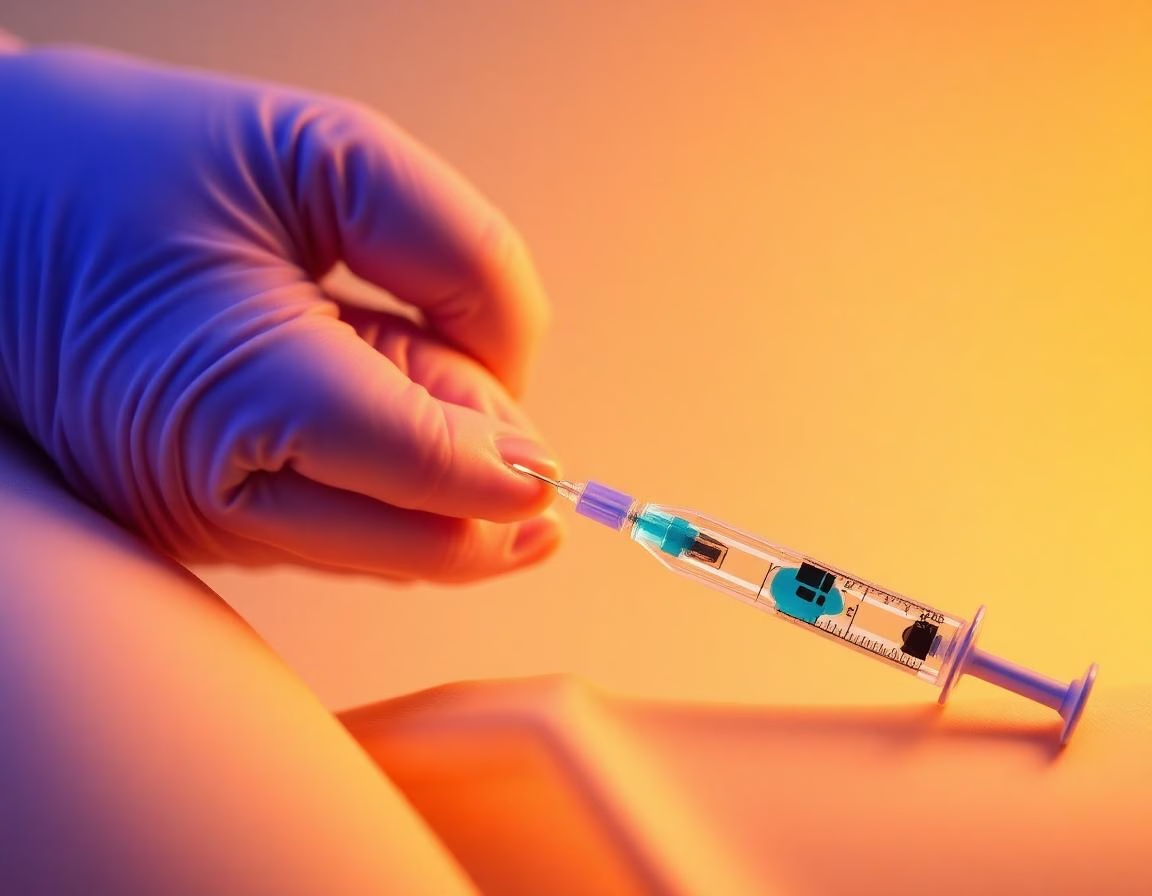
A groundbreaking research team from the University of Florida is at the forefront of developing an injectable neural implant designed to provide pain relief without the need for batteries or wires. This innovative approach has the potential to transform the treatment landscape for chronic pain and various neurological disorders.
Wireless Energy Transmission
The implant is administered via injection and is powered wirelessly through a small, removable transmitter worn externally. This transmitter, which is smaller than a baseball card, adheres to the skin near the implant and utilizes the body’s natural ability to conduct electricity to deliver energy through the tissue.
Promising Results in Animal Studies
In their recent study, the researchers demonstrated that the implant could be effectively placed adjacent to the sciatic nerve in rats. The device successfully activated the nerve, eliciting muscle responses while maintaining its position with minimal tissue reaction. Adam Khalifa, Ph.D., the project lead and assistant professor in UF’s Department of Electrical & Computer Engineering, expressed excitement about the findings.
Advantages Over Traditional Stimulators
Traditional spinal and peripheral nerve stimulators require invasive surgical procedures to accurately position leads on nerves, often involving bulky batteries and long electrodes. In contrast, this new wireless device offers a much less invasive option, allowing patients to return home the same day without the discomfort associated with traditional surgeries.
Collaborative Efforts for Innovation
The research team includes notable experts such as Baibhab Chatterjee, Ph.D., Erin Patrick, Ph.D., and Shriya Srinivasan, Ph.D., who leads the BIONICs Lab at Harvard University. Their collective efforts aim to advance the development of minimally invasive treatments that can be implemented with a simple needle point, reducing the need for extensive surgical intervention.
Miniaturization for Clinical Applications
Srinivasan highlighted the importance of miniaturization in medical technology, emphasizing that smaller devices can facilitate scar-free procedures performed by procedural specialists rather than neurosurgeons. This approach not only makes treatment more accessible but also enhances patient comfort and outcomes.
Broader Implications for Neurological Disorders
Collaboration with UF Health neurosurgeon Serban Negoita, MD, has opened up discussions regarding the potential applications of these injectable devices across various medical conditions. Negoita believes the technology could be beneficial for a wide range of issues, from epilepsy to stroke detection and even treating disorders of consciousness.
Future Directions and Human Testing
The next phase of research involves testing the device in humans or larger animals. Khalifa noted that the team is working to reduce the implant’s size by half to facilitate these trials. This advancement follows a significant $1.5 million grant awarded by the National Institutes of Health, aimed at fostering the development of minimally invasive implants.
Long-Term Vision for Pain Relief
Khalifa articulated a compelling vision for the future: creating smaller, battery-free microchips that can be injected throughout the body. The ongoing research is a pivotal step towards realizing this vision, and the team is actively seeking additional funding to support further advancements.
In conclusion, this revolutionary approach to pain management through injectable, battery-free neural implants holds immense promise. By making electrical stimulation therapies more accessible and less invasive, researchers are paving the way for innovative solutions to chronic pain and other neurological disorders.
- Key Takeaways:
- The injectable neural implant can wirelessly stimulate nerves, offering a non-invasive alternative to traditional treatments.
- The wearable transmitter powers the implant without bulky batteries, enhancing patient comfort.
- Collaborative research aims to miniaturize devices for easier implementation and broader clinical applications.
- Future testing will focus on human applications, with ongoing efforts to secure funding for further development.
Read more → news.ufl.edu