
Mayo Clinic has become a key clinical collaborator in a significant project that has received an award of up to $27.7 million from the Advanced Research Projects Agency for Health (ARPA-H). This initiative aims to develop affordable and scalable gene-editing therapies specifically designed for children suffering from rare inherited immune disorders.
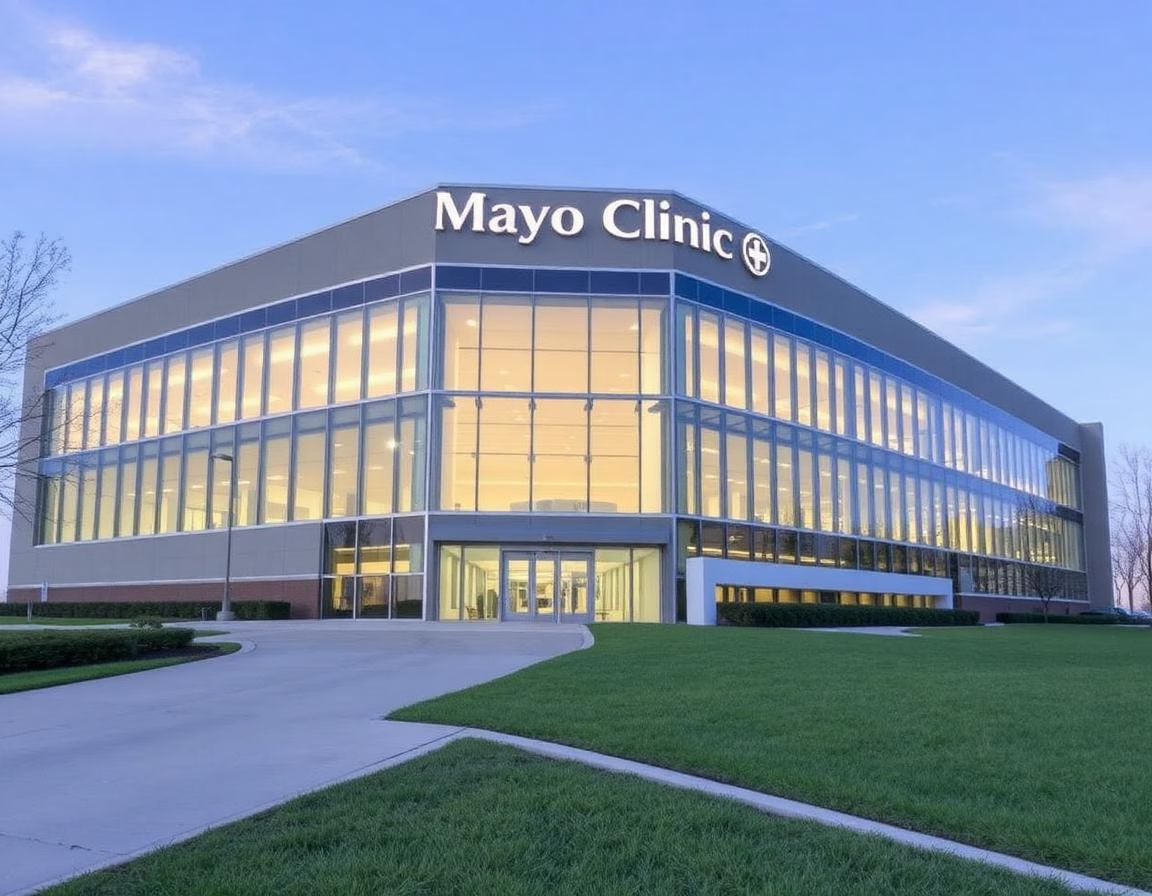
Overview of the AEGIS Project
The project, dubbed AEGIS, is spearheaded by the Innovative Genomics Institute at the University of California, Berkeley. It brings together a diverse consortium that includes academic institutions, clinical experts, nonprofit organizations, and industry partners, united in a common goal.
Over the next five years, AEGIS plans to push the boundaries of gene-editing treatments for children affected by inborn errors of immunity. This category encompasses over 500 rare genetic disorders that leave affected children vulnerable to severe infections, autoimmune diseases, and various life-threatening complications. Unfortunately, many of these conditions have limited treatment options and, in some cases, no available cure.
Role of Mayo Clinic
Mayo Clinic will act as one of three clinical sites involved in the program’s clinical trials. Its responsibilities will include identifying, enrolling, and caring for children who may benefit from these investigational therapies.
Dr. Avni Joshi, chair of the Division of Pediatric Allergy and Immunology at Mayo Clinic and the lead principal investigator for the project, emphasized the transformative potential of gene editing. “By integrating advancements in gene editing with innovative treatment delivery methods, we aim to create therapies that not only address the symptoms of diseases but tackle their root causes. Our ultimate goal is to relieve patients from the ongoing burden of treatment and enhance the quality of life for both patients and their families.”
Gene Editing and CRISPR Technologies
The cutting-edge approach in AEGIS will focus on correcting the genetic mutations responsible for these disorders. Researchers will employ CRISPR-based technologies to amend disease-causing errors found in blood-forming stem cells responsible for the immune system. The objective is to develop one-time treatments that can restore normal immune function, thereby providing lasting benefits to children with these rare conditions.
This award also underscores Mayo Clinic’s burgeoning leadership in genomic medicine, pediatric immunology, and next-generation therapies. As an essential clinical center in this initiative, Mayo Clinic will contribute to evaluating how emerging gene-editing technologies can be safely integrated into patient care, extending their reach to more children facing rare diseases.
Expertise and Collaboration
Mayo Clinic’s extensive experience in rare immune disorders, pediatric transplantation, and advanced cellular and gene therapies makes it uniquely equipped for this project. As a member of the Primary Immune Deficiency Treatment Consortium and a FACT-accredited transplant center, Mayo will guide the clinical evaluation of these novel gene-editing methods.
The AEGIS team aims to combine advances in CRISPR technology with innovative manufacturing techniques and new delivery systems. The goal is to make precision genetic medicines more accessible and affordable for patients with ultra-rare diseases, establishing a scalable framework to expedite the development of treatments for a wide array of rare immune disorders.
A Broader Impact
The consortium consists of a wide range of researchers and clinicians from prestigious institutions, including UCLA, Stanford University, the University of Utah, Princeton University, the University of California San Diego, Emory University, Danaher Corporation, and the Immune Deficiency Foundation, among others.
The project’s alignment with ARPA-H’s mission reflects a commitment to accelerating breakthroughs that enhance health outcomes. Additionally, its integration into ARPA-H’s THRIVE program aims to broaden access to transformative genetic medicines. Although initial efforts will prioritize several severe inherited immune disorders, the researchers are optimistic that this platform could ultimately facilitate the development of treatments for hundreds of rare genetic diseases, thereby expanding access to precision therapies for patients with limited options.
Conclusion
The Mayo Clinic’s involvement in the AEGIS project represents a significant advancement in the intersection of gene editing and pediatric medicine. By harnessing innovative technologies and collaborative expertise, this initiative has the potential to transform the treatment landscape for children with rare immune disorders, offering hope where there was previously little. As the project unfolds, it may pave the way for a future where gene-editing therapies become a standard care option for a broader range of genetic conditions.
- Key Takeaway 1: AEGIS focuses on developing gene-editing therapies for over 500 rare immune disorders affecting children.
- Key Takeaway 2: The project aims to create one-time treatments using CRISPR technologies for lasting immune function restoration.
-
Key Takeaway 3: Mayo Clinic’s expertise in rare disorders and gene therapies will be vital for the clinical trials and evaluation of these new approaches.
Read more → www.news-medical.net