
The Balearic Islands are taking significant steps to adapt carob cultivation to the challenges posed by climate change. The Department of Agriculture, Fisheries, and Natural Environment has launched a long-term research program aimed at enhancing the resilience of this vital crop. This initiative, managed through the Institute of Agricultural and Fisheries Research and Training (IRFAP), has begun its first trial using clonal rootstocks at the experimental farm of Sa Granja.
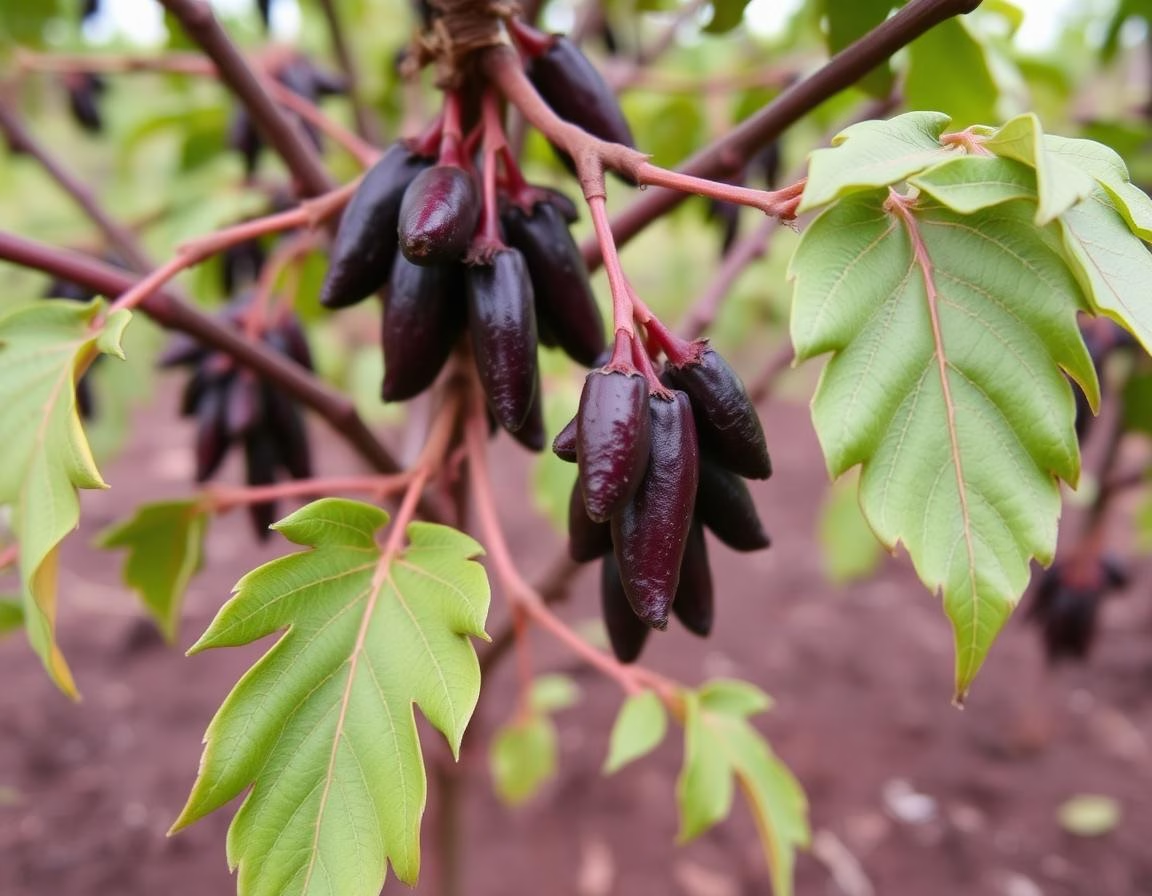
Importance of Clonal Rootstocks
Clonal rootstocks are produced through vegetative propagation, ensuring genetically identical plants and uniformity across fruit orchards. This project aims to identify plant material that exhibits greater resistance to drought, high temperatures, and the increasingly erratic weather patterns characteristic of the Mediterranean region. By doing so, it prepares for water scarcity and the rising incidence of extreme climate events.
Strategic Goals for Agriculture
Joan Simonet, the Minister of Agriculture, emphasized the strategic importance of this initiative for the agricultural sector in the Balearics. He stated, “Research is essential to anticipate the challenges our sector will face. We cannot wait for problems to arise before seeking solutions; we must begin working today to understand which crops and plant materials will be better suited for future conditions.”
Modernizing Carob Cultivation
The research program represents a significant step towards modernizing carob cultivation, a species that has gained economic value in recent years. It focuses on comparing two selected clonal rootstocks against the traditional seedling system. Through in vitro cultivation techniques, IRFAP technicians will have access to genetically identical plants, allowing for a rigorous analysis of crucial variables such as tree vigor, compatibility with different varieties, productivity, and uniformity of the plantations.
Advancing Agricultural Science
According to Simonet, this trial exemplifies the scientific management model promoted by the regional government. The goal is to transform research into practical solutions for the agricultural sector. “If we can develop trees that are more drought-resistant or capable of thriving under challenging conditions, we will provide better tools for our farmers,” he remarked.
Focus on Resilience and Sustainability
The study not only emphasizes productive yield but also the resilience of the crop in poor soils and increasingly limited water availability. These factors are anticipated to shape Mediterranean agriculture in the coming decades.
Pioneering Research in the Region
With this initiative, the Balearics position themselves as pioneers in the study of carob rootstocks, reinforcing their commitment to applied research that is closely linked to local conditions and aimed at providing practical solutions for producers in the archipelago. Simonet concluded, “This trial is an example of the type of research we wish to promote from the government: applied and oriented towards addressing present and future challenges in the primary sector.”
In conclusion, the Balearic Islands are proactively addressing the implications of climate change on agriculture through innovative research and development. This initiative not only aims to enhance the resilience of carob cultivation but also serves as a model for future agricultural practices in the region.
- Key Takeaways:
- The Balearics are launching a long-term program to adapt carob cultivation to climate change.
- Clonal rootstocks offer genetic uniformity and increased resilience.
- Research focuses on drought resistance, productivity, and soil adaptability.
- The initiative aims to provide practical solutions for local farmers.
- The Balearics are positioning themselves as leaders in agricultural research.
Read more → www.diariodemallorca.es



