
Singapore Establishes $60 Million Marine Research Centre to Enhance Conservation and Policy
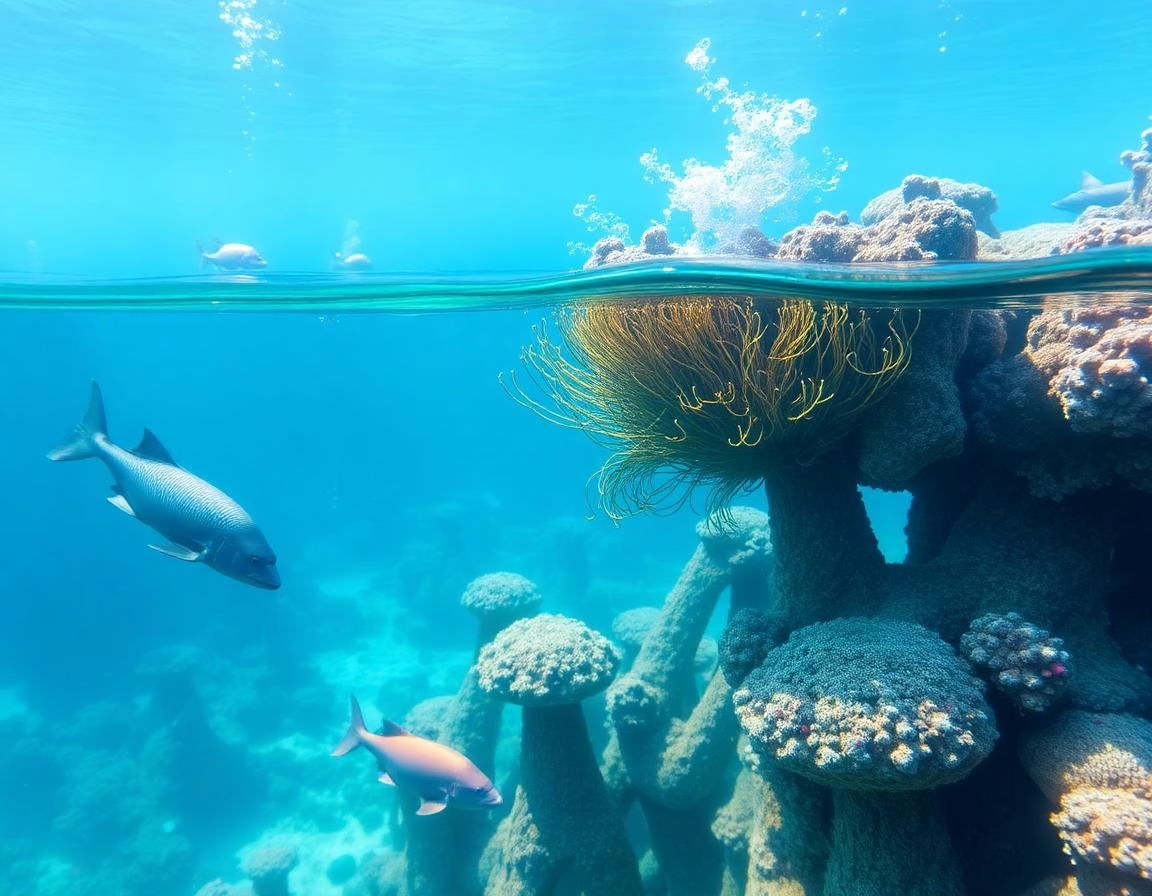
Singapore is set to launch a marine science research centre, backed by a substantial $60 million investment, aimed at bolstering policy decisions through scientific research.
A Coordinated Approach to Marine Resource Management
The new initiative, spearheaded by the National Parks Board (NParks) in collaboration with the National University of Singapore (NUS), aims to provide a systematic, science-driven strategy for managing Singapore’s marine and coastal resources. This response comes in light of increasing environmental challenges, including climate change, urban development, and the loss of biodiversity.
Projected sea level rise in Singapore could reach 1.15 meters by 2100, prompting urgent measures to reinforce coastal defenses through various means, including land reclamation.
Collaborative Efforts Across Sectors
Announced during the 2026 Budget debate, the research centre will be hosted by NUS and will serve as a hub for collaboration among universities, industry stakeholders, government entities, and policy think tanks. Karenne Tun, group director of NParks’ National Biodiversity Centre, emphasized the centre’s role in fostering a unified vision among various stakeholders, including existing marine research institutes.
Dr. Tun, a coral reef biologist, highlighted the importance of forming cross-functional and multidisciplinary teams to leverage the strengths of different institutions effectively.
Understanding Biodiversity for Better Policy
The centre is guided by insights from a 2024 report that evaluated Singapore’s marine science and oceanography landscape. Its primary objective is to create a comprehensive understanding of biodiversity that can inform conservation efforts and policy-making.
In addition to its local focus, the centre will prioritize regional collaboration with international research bodies, facilitating comparative studies of marine health across Southeast Asia. This approach aims to deepen the collective understanding of the interconnected waters of the region.
Significant Funding for Marine Science
The $60 million allocated for this research initiative is notably more than double the funding previously provided to earlier marine science projects, which received $25 million each. Jani Tanzil, director of NUS’ St John’s Island National Marine Laboratory, expressed optimism that this new centre will provide a more sustainable platform for marine science than prior five-year programmes.
Tanzil noted that critical mass in marine science expertise has been achieved in Singapore, and a continued commitment to growth is essential to realize the return on this investment.
Addressing National Challenges and Opportunities
The timing of the centre’s establishment coincides with national plans that demand more from Singapore’s limited marine and coastal resources. Dr. Tanzil, who co-authored the 2024 report advocating for a coordinated research programme, pointed to upcoming projects like the Greater Southern Waterfront reclamation and the Singapore Aquaculture Plan aimed at revitalizing the seafood farming sector.
The report warns that a lack of understanding of the marine environment can hinder Singapore’s ability to extract economic value from its sea space. For instance, the departure of Barramundi Group from the aquaculture sector due to fish diseases underscores the importance of pre-emptive environmental studies.
Balancing Economic and Ecological Needs
Dr. Tanzil stated that effectively balancing competing uses of sea space will require proactive planning and integrated management, informed by robust scientific data pertinent to Singapore’s unique context.
Professor Koh Lian Pin, NUS’s Vice-President for Sustainability and Resilience, praised the government’s commitment to this research programme, which aims to support economic productivity, ecological resilience, and climate adaptation in marine and coastal areas.
The Role of Microbes in Ecosystem Health
Associate Professor Rebecca Case from Nanyang Technological University emphasized the often-overlooked significance of microbes in the ecosystem. Though microscopic, these organisms provide essential services, such as pollutant degradation and interactions with plants and animals that contribute to overall health and resilience.
Case underscored the importance of marine sciences to Singapore, an island nation whose economy heavily relies on shipping and marine resources. Understanding the value of these ecosystems is critical for both quality of life and economic sustainability.
Fostering Local Talent for Future Challenges
To ensure the sustainability of marine science research, the new centre will also focus on developing local talent capable of building expertise across academia, industry, and government sectors. Dr. Tun highlighted that this talent pool will be instrumental in conducting technical assessments and guiding the formulation of science-based policies.
Conclusion
The establishment of Singapore’s marine research centre represents a significant step towards enhancing conservation efforts and informing sound policy decisions. By fostering collaboration and investing in scientific research, Singapore is poised to navigate the complex challenges posed by environmental changes and ensure the sustainability of its marine resources for future generations.
Key Takeaways:
- A $60 million marine research centre will enhance Singapore’s conservation and policy efforts.
- The centre aims to unify various stakeholders in addressing marine resource management.
- Regional collaboration will be emphasized to assess marine health across Southeast Asia.
- Developing local talent is crucial for sustaining marine science research and informing policy.
Read more → www.straitstimes.com