
Outer membrane vesicles (OMVs) have emerged as a promising tool in the fields of vaccination and targeted drug delivery. These nanovesicles, derived from the outer membranes of gram-negative bacteria, are of significant interest due to their natural ability to encapsulate and transport bioactive molecules, including proteins, lipids, and nucleic acids. In this article, we explore the biogenesis, functions, and applications of OMVs, particularly in the context of vaccine development and therapeutic delivery.
Understanding Extracellular Vesicles
Extracellular vesicles (EVs) are cell membrane-derived compartments that are secreted by various cell types. They play crucial roles in intercellular communication and can transport signaling molecules over long distances. Two primary types of EVs exist: exosomes and microvesicles. Unlike synthetic nanoparticles, EVs possess inherent biological properties that facilitate natural intercellular interactions, making them attractive candidates for drug delivery systems.
Biogenesis of Outer Membrane Vesicles
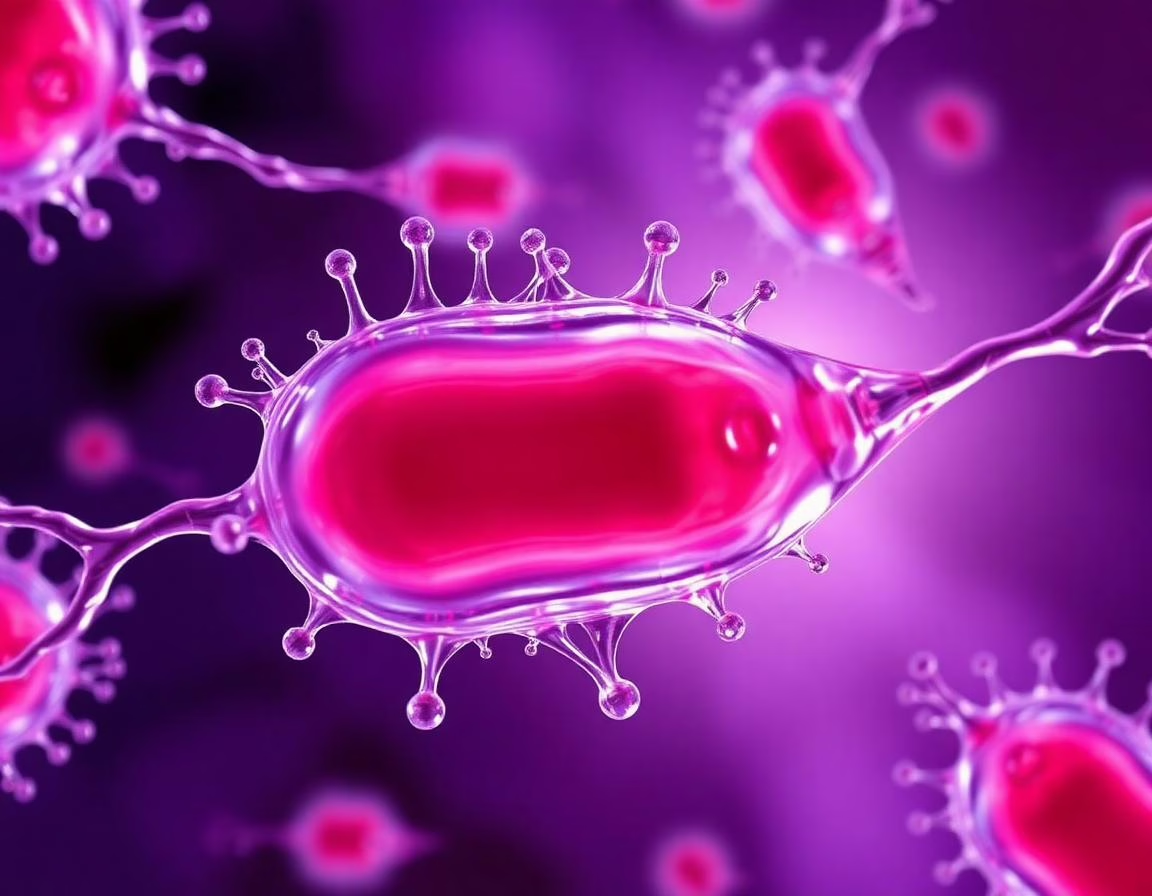
OMVs are produced by gram-negative bacteria through a spontaneous process that does not require ATP. The formation of OMVs begins with the detachment of the outer membrane from the underlying peptidoglycan layer. This detachment allows the outer membrane to bulge and form vesicles, which then encapsulate various cellular components. Factors such as stress and antibiotic exposure can enhance OMV production, indicating their potential role in bacterial survival and pathogenesis.
Functions of OMVs in Bacterial Pathogenesis
OMVs play several critical roles in bacterial physiology and virulence. They facilitate horizontal gene transfer, quorum sensing, nutrient acquisition, and the secretion of toxins. By delivering virulence factors and other bioactive molecules to host cells, OMVs can manipulate host immune responses and contribute to the pathogenicity of bacteria. For instance, OMVs from pathogens like Pseudomonas aeruginosa can induce inflammatory responses in host cells, further enhancing their virulence.
OMVs as Vaccine Platforms
The immunogenic properties of OMVs make them suitable candidates for vaccine development. They can be engineered to present antigens derived from pathogens, thereby stimulating the host immune response. Research has shown that OMVs can activate both innate and adaptive immunity, leading to the production of specific antibodies and T cell activation. Studies involving Escherichia coli-derived OMVs have demonstrated their efficacy in protecting against lethal bacterial infections in animal models.
Targeted Drug Delivery Using OMVs
Beyond vaccination, OMVs can be utilized as vehicles for targeted drug delivery. Their natural composition allows them to encapsulate therapeutic agents, including antibiotics and RNA-based therapeutics like siRNA. This capability can significantly enhance the delivery efficiency of these agents while minimizing potential side effects. The development of techniques to improve the yield and purity of OMVs is essential for their application in clinical settings.
Engineering OMVs for Enhanced Efficacy
Recent advancements in biotechnology have enabled the engineering of OMVs to enhance their immunogenicity and therapeutic potential. By incorporating heterologous antigens or modifying their surface properties, OMVs can be tailored to improve their efficacy as vaccines. Techniques such as the fusion of antigenic proteins to OMV-associated proteins have shown promise in eliciting robust immune responses.
Future Directions in OMV Research
Despite the promising applications of OMVs, several challenges remain. The heterogeneity of OMVs in terms of composition and size can complicate their characterization and standardization. Furthermore, the stability of OMVs in vivo is a critical consideration for their practical use. Research is ongoing to develop novel purification methods and stabilization techniques to enhance the therapeutic potential of OMVs.
Conclusion
OMVs represent a revolutionary approach to vaccine development and targeted drug delivery, leveraging their natural properties for innovative therapeutic strategies. As research continues to unravel the complexities of OMV biology, their applications could transform the landscape of immunization and treatment, offering safer and more effective solutions to combat bacterial infections and other diseases.
- OMVs are derived from gram-negative bacteria and play essential roles in bacterial pathogenesis.
- They can serve as effective vaccine platforms due to their immunogenic properties.
- OMVs have potential applications in targeted drug delivery, enhancing therapeutic efficacy.
- Engineering OMVs by incorporating antigens can improve vaccine performance.
- Ongoing research aims to address challenges related to OMV heterogeneity and stability.
Read more → pmc.ncbi.nlm.nih.gov



