
The balsam bottle market is poised for significant growth from 2025 to 2035, driven by a rising demand for herbal medicine, essential oils, and organic personal care products. As these bottles play a crucial role in maintaining the integrity and shelf life of sensitive liquid formulations, their relevance spans across the pharmaceutical, cosmetic, and wellness industries.
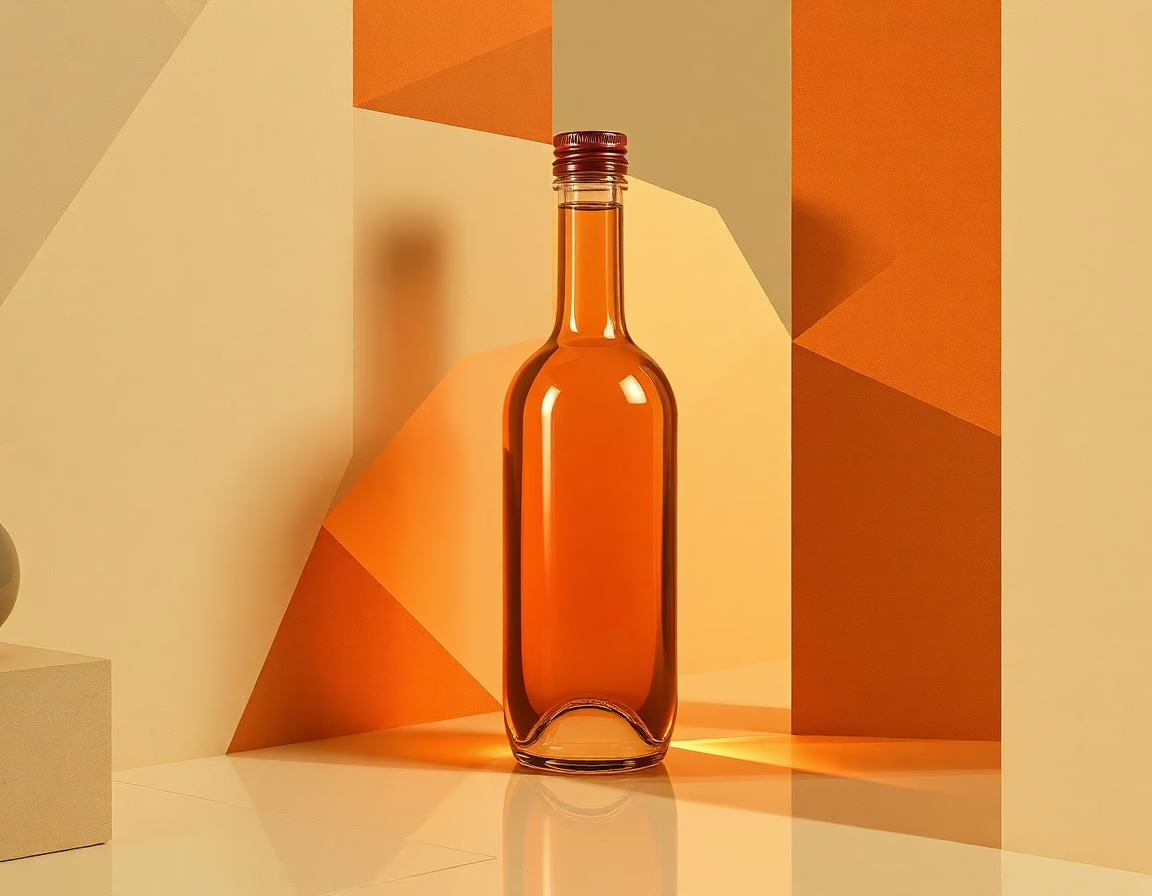
The market is forecasted to increase from USD 950.5 million in 2025 to USD 1,578.1 million by 2035, achieving a compound annual growth rate (CAGR) of 5.2%. This growth is supported by the increasing preference for premium packaging, sustainable materials, and technological advancements in bottle manufacturing.
Key Market Drivers
Several factors are contributing to the expansion of the balsam bottle market. A notable trend is the consumer shift towards herbal and organic products, as more individuals seek chemical-free alternatives. High-quality packaging is essential for these products to ensure stability and prevent contamination.
Regulatory standards are also instrumental in shaping market dynamics. Strict guidelines from organizations like the FDA and EFSA for packaging safety and recyclability are compelling manufacturers to adopt compliant and high-performance packaging solutions.
Sustainability stands at the forefront of market evolution. Companies are increasingly turning to recyclable glass, biodegradable plastics, and refillable packaging designs to meet environmental standards and consumer expectations.
Furthermore, the growth of direct-to-consumer sales and e-commerce is amplifying demand for attractive, durable, and tamper-proof balsam bottles that enhance customer experience and brand perception.
Innovations in Product and Material
The balsam bottle market is characterized by continuous innovation in materials and design. Borosilicate glass has emerged as a preferred choice due to its excellent thermal resistance, chemical stability, and durability. It is particularly favored for storing essential oils and pharmaceutical products.
Innovations such as UV-resistant coatings are being introduced to protect light-sensitive formulations. Lightweight, impact-resistant designs are also gaining traction, improving logistics and handling efficiency.
Smart packaging technologies are revolutionizing the industry. Features like QR codes, NFC-enabled labels, and tamper-evident seals are enhancing product authentication, consumer interaction, and supply chain visibility.
Improvements in performance include airtight sealing systems and ergonomic designs that reduce product wastage and improve usability.
Leading Applications of Balsam Bottles
The personal care and cosmetics segment holds the largest market share, driven by the growing demand for premium packaging in skincare and wellness products. Pharmaceutical applications also represent a significant portion of demand, necessitated by the need for contamination-free storage solutions.
The global popularity of aromatherapy and essential oils is creating a surge in demand for specialized balsam bottles equipped with advanced sealing and dispensing features. Additionally, the laboratory sector and specialty liquid manufacturers are contributing to market growth, particularly for high-performance glass bottles designed for precise handling.
Regional Market Insights
North America continues to be a pivotal market for balsam bottles, bolstered by strong consumer interest in herbal products and sustainable packaging solutions. The U.S. market is projected to grow at a CAGR of 4.9%, driven by innovative bottle designs and compliance with regulatory standards.
Europe is steadily expanding, with countries like Germany, France, and the UK leading the way. The region benefits from stringent environmental regulations and increasing demand for organic healthcare products, reflecting an overall CAGR of 5.2%.
In the Asia Pacific region, rapid industrialization and rising disposable incomes are propelling growth, making it the fastest-growing market. South Korea anticipates a CAGR of 5.4%, while India and China are emerging as high-growth markets, particularly in the cosmetics and pharmaceutical sectors.
Japan exhibits stable growth at a CAGR of 3.9%, supported by demand for premium and minimalist packaging solutions.
Competitive Landscape
The balsam bottle market is moderately fragmented, with numerous global leaders and regional players competing through innovation and customization. Key players include Gerresheimer AG, Bormioli Pharma, and the Stella Glass Group, among others.
Gerresheimer AG leads the market with its expertise in pharmaceutical-grade glass packaging, while Bormioli Pharma emphasizes sustainable and high-performance bottle solutions. Companies are increasingly differentiating themselves through eco-friendly materials and smart labeling technologies tailored to specific industries.
From an analytical perspective, balsam bottles have transcended their role as mere packaging components; they are now strategic brand assets. Packaging significantly influences purchasing decisions, enhances product safety, and fosters customer engagement.
Future Trends and Projections
As we look towards 2035, several transformative trends are set to shape the balsam bottle market. Refillable and reusable packaging systems are expected to see widespread adoption as companies embrace zero-waste initiatives.
Smart packaging will evolve, featuring AI-driven analytics, real-time tracking, and blockchain-based systems to enhance transparency and security. Material innovation will also be paramount, with increased utilization of bio-based plastics and lightweight glass alternatives.
The demand for luxury packaging, particularly in the premium wellness and cosmetics sectors, will continue to grow, signifying a shift towards more sophisticated consumer preferences.
In conclusion, the balsam bottle market is entering a dynamic phase characterized by innovation and sustainability. As consumer demands evolve, businesses must adapt to maintain relevance and competitiveness. The integration of smart technologies, sustainable practices, and premium aesthetics will define the landscape of this market over the next decade.
Key Takeaways
- The balsam bottle market is projected to grow from USD 950.5 million in 2025 to USD 1,578.1 million by 2035, with a CAGR of 5.2%.
- Sustainability and regulatory compliance are key drivers of market growth.
- Innovations in materials, such as borosilicate glass, are enhancing product performance and consumer appeal.
- The Asia Pacific region is anticipated to be the fastest-growing market, led by strong demand in South Korea and India.
- Smart packaging technologies will play a crucial role in enhancing consumer engagement and supply chain transparency.
Read more → www.fmiblog.com



