
Ancient Egypt, a civilization renowned for its profound beliefs and elaborate rituals, held a unique approach to spirituality. Recent archaeological findings reveal that ancient Egyptians consumed psychotropic compounds in specially crafted drinks to facilitate a spiritual connection with the deity Bes. This practice, aimed at achieving altered states of consciousness for divine guidance and healing, has now been substantiated through advanced scientific techniques.
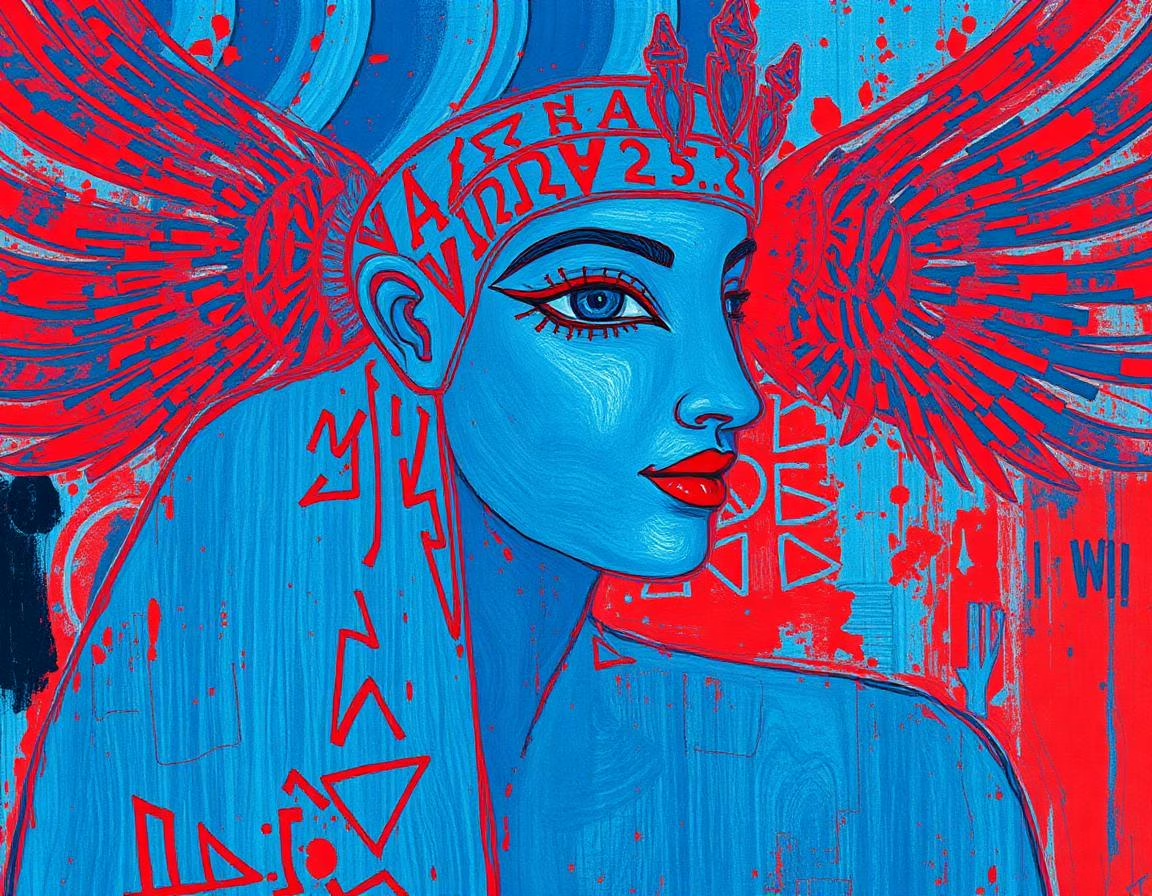
The Discovery of Bes Mugs
Archaeologists have uncovered significant evidence that demonstrates the ritualistic use of Bes mugs, once considered enigmatic artifacts. By employing DNA and chemical analyses, researchers were able to decode the remnants of ingredients found in these mugs. The findings indicate that these vessels were integral to a ritual designed to foster both a spiritual connection and physical well-being.
Lead researcher Dr. Davide Tanasi, an archaeologist at the University of South Florida, suggests that the primary users of these mugs were likely ordinary Egyptian women seeking divine intervention. Many of these women may have hoped to conceive or to ensure a safe pregnancy. They would gather, drink from mugs adorned with the likeness of Bes, and subsequently seek guidance through dreams during sleep.
The Role of Bes in Ancient Egyptian Society
Bes, depicted as a jovial dwarf-like figure with a lion headdress, was revered as a protector against evil spirits and a guardian of mothers and children. His association with joy, fertility, and transformation made him a central figure in the spiritual lives of many Egyptians. The rituals centered around Bes not only aimed at individual healing but also served to strengthen communal ties among participants.
Crafting the Psychotropic Concoction
The meticulous preparation of the psychotropic drink involved an array of natural ingredients. Researchers discovered that the concoction contained bodily fluids and alcohol, along with psychoactive components such as harmaline from Syrian rue and aporphine from the Egyptian lotus. These substances exemplified the ancient Egyptians’ sophisticated understanding of the relationship between the body, nature, and spirituality.
The combination of harmaline and aporphine likely induced vivid visions and a state of relaxation, respectively. This blend would have prepared ritual participants to enter a trance-like state, enhancing their capacity to connect with the divine or receive prophetic messages.
A Broader Context of Psychotropic Use
The use of psychotropic substances to achieve altered states of consciousness is not unique to ancient Egypt. Historical accounts indicate that various cultures globally have employed similar practices. For instance, the Greek cult of Asklepios utilized sacred drugs to receive divine messages regarding healing. In Mesoamerica, the Aztecs and Maya integrated psilocybin mushrooms and peyote into their spiritual rituals.
These practices highlight a universal inclination among humans to seek transcendence and spiritual communion through altered states of consciousness. From the dawn of civilization, individuals have turned to natural substances to alter their perceptions and enhance their spiritual experiences.
The Scientific Analysis
The recent study detailing these findings has provided deeper insights into the rituals surrounding Bes. By meticulously analyzing a Bes mug housed at the Tampa Museum of Art, researchers collaborated with institutions in Italy to reveal the chemical composition of the ancient drink. The presence of honey, sesame seeds, pine nuts, licorice, and grapes suggests that the Egyptians were not only concerned with the effects of the drink but also its taste.
Implications for Understanding Ancient Practices
The implications of these discoveries extend beyond the ancient Egyptian context. They invite a reevaluation of how different cultures have understood and utilized psychotropic substances throughout history. This exploration reveals a shared human experience: the pursuit of deeper spiritual connections and the quest for understanding the mysteries of existence.
Takeaways
- Ancient Egyptians consumed psychotropic concoctions to connect with the deity Bes for healing and guidance.
- Rituals likely involved ordinary women seeking divine intervention during pregnancy.
-
The psychotropic ingredients used reflect an advanced understanding of the relationship between nature and spirituality.
-
Similar practices across cultures indicate a universal human desire for transcendence.
Conclusion
The revelations about ancient Egyptian rituals illuminate the intricate relationship between spirituality and psychotropic substances. These practices not only provided a means for individuals to seek divine connection but also fostered a sense of community among participants. As we delve deeper into these ancient customs, we uncover the timeless human quest for understanding and transcendence, reminding us that the search for spiritual meaning transcends time and geography.
Read more → www.popularmechanics.com



