
Recent research has uncovered a significant molecular switch in neurons that may enhance our understanding of axon regeneration following injury. The Icahn School of Medicine at Mount Sinai has identified the aryl hydrocarbon receptor (AHR) as a key player in limiting the regrowth of damaged axonal fibers. This discovery opens new avenues for potential treatments aimed at restoring function after peripheral nerve or spinal cord injuries.
The Importance of Axons
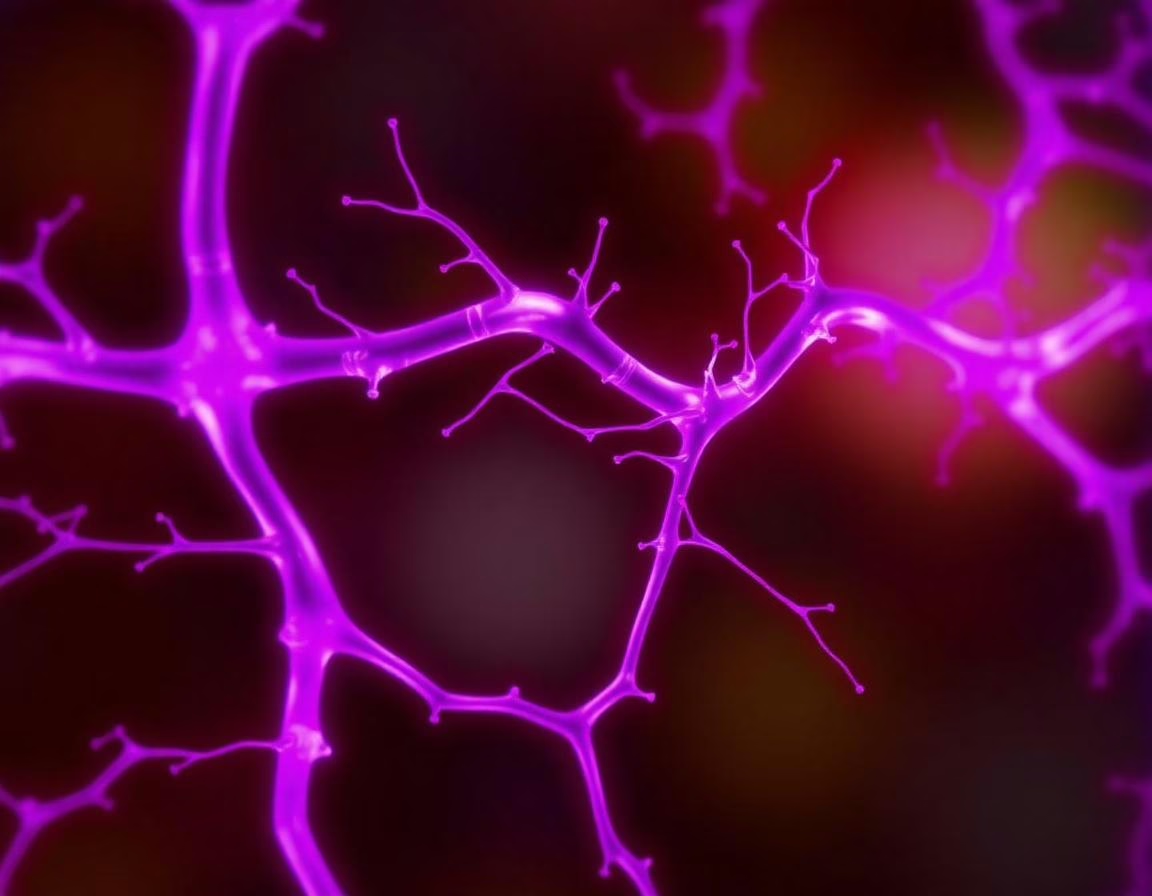
Axons are vital components of the nervous system, functioning as long fibers that transmit signals between neurons in both the central and peripheral nervous systems. Their role in communication is crucial for maintaining movement and sensation. However, adult mammals often struggle with regrowing these axonal connections after injury, leading to prolonged or permanent deficits in function.
Neuronal Repair Mechanisms
The process of neuronal repair is complex and not fully understood. When axons are damaged, neurons face the dual challenge of managing stress while simultaneously attempting to regenerate. Understanding the mechanisms behind this process has been a focus of scientific inquiry for years.
AHR as a Regulator
In their study, researchers found that AHR acts as a regulatory switch that influences how neurons respond to injury. When active, AHR functions like a brake, redirecting neuronal efforts toward stress management rather than axon regrowth. In contrast, inhibiting AHR enhances the ability of axonal fibers to regenerate effectively.
Impact of AHR Inhibition
In experiments involving mouse models of peripheral nerve and spinal cord injuries, the team demonstrated that blocking AHR significantly improved the recovery of both motor and sensory functions. This suggests that AHR is not just a passive player but a critical determinant of neuronal fate after injury.
Proteostasis and Its Implications
Following injury, AHR contributes to a protective response by maintaining proteostasis, which involves ensuring the quality of proteins within the neuron. While this protective mechanism helps neurons withstand stress, it inadvertently limits the production of new proteins necessary for growth. The inhibition of AHR shifts this balance, allowing neurons to prioritize regeneration over mere survival.
The Role of HIF-1α
The study also highlighted the importance of HIF-1α, a factor that regulates genes involved in metabolism and tissue repair. When AHR is inhibited, neurons increase the production of proteins linked to growth and activate pathways that facilitate axon regeneration. This interplay between AHR and HIF-1α is crucial for understanding the regenerative capacity of neurons.
AHR Beyond Environmental Sensing
Originally, AHR was recognized for its role as a sensor for environmental toxins. This research reveals an unexpected function within neurons, suggesting that AHR integrates environmental sensing with the ability to regenerate axons following injury. This dual role could have profound implications for developing therapeutic strategies.
Future Directions for Research
The implications of this research extend toward potential clinical applications. Several AHR-blocking drugs are currently in clinical trials for various diseases, raising the possibility that these agents could also be effective in treating nerve or spinal cord injuries. However, further research is necessary to assess the efficacy of AHR inhibitors across different types of neural damage, identify optimal treatment timing and dosage, and evaluate their effects on surrounding cells after injury.
Next Steps in Treatment Development
The research team at Mount Sinai plans to explore AHR-blocking drugs alongside gene therapy strategies aimed at reducing AHR activity in neurons. This next phase of research will focus on determining whether these interventions can further enhance axon regrowth and improve recovery outcomes after spinal cord injuries, strokes, or other neurological conditions.
Key Takeaways
- AHR functions as a molecular switch that regulates axon regeneration in neurons.
- Inhibiting AHR enhances the ability of neurons to regrow damaged axonal fibers.
- The balance between proteostasis and growth is crucial for neuronal repair.
- Future research will explore the therapeutic potential of AHR inhibitors in treating nerve injuries.
In conclusion, the discovery of AHR’s role in axon regeneration represents a promising step forward in neuroscience. By understanding and potentially manipulating this molecular switch, researchers could unlock new therapies that enhance recovery after nerve injuries, paving the way for a brighter future in neural regeneration.
Read more → www.news-medical.net