
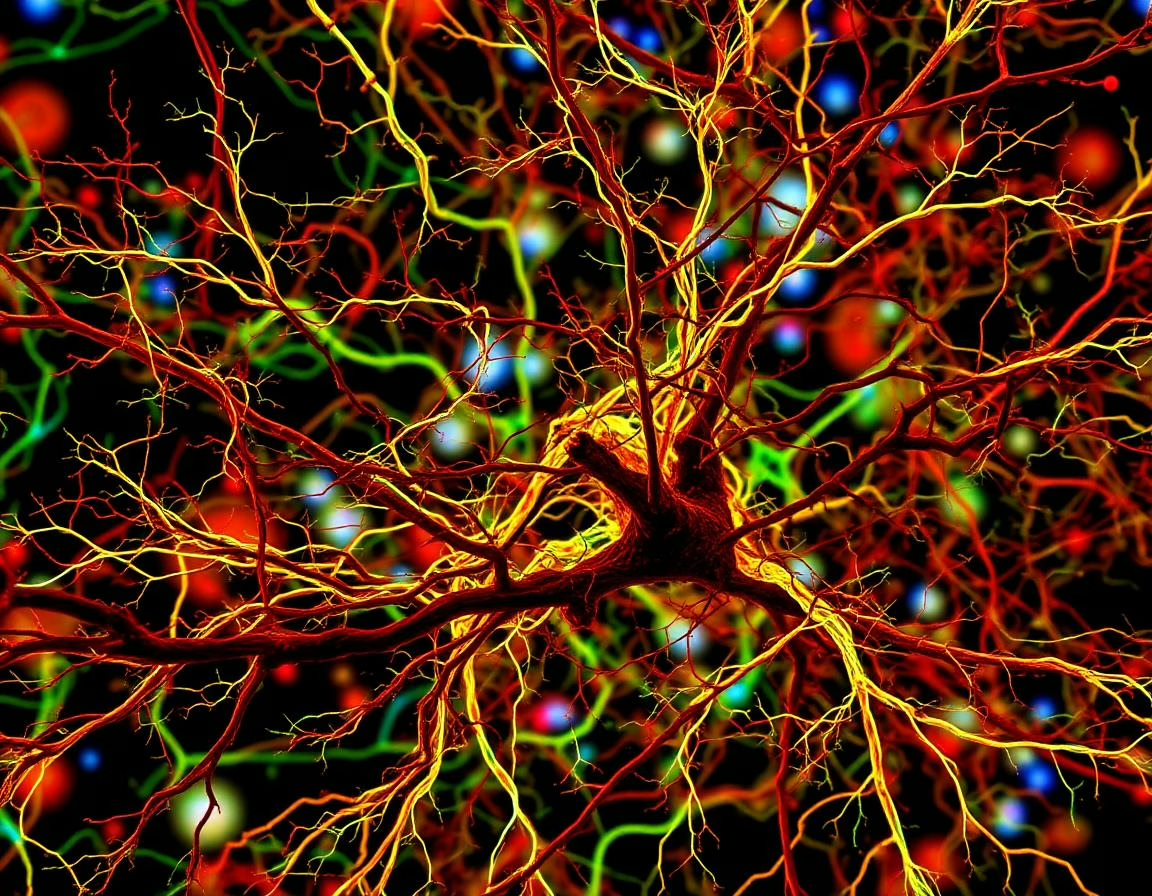
The intricate architecture of the brain is a testament to its complexity and functional diversity. Within its confines, various cell types, including neurons, oligodendrocytes, astrocytes, and microglia, coexist, each playing vital roles in maintaining brain health and functionality. The neuronal population itself is further subdivided into numerous subclasses, which are essential for understanding the myriad of behaviors and systems governed by these cells. The quest to decode this neuronal heterogeneity is a pressing challenge in neuroscience.
Bridging Computational and Experimental Techniques
Andreas Pfenning, an Associate Professor at Carnegie Mellon University, is at the forefront of exploring brain cell diversity. His work integrates advanced computational methods with experimental techniques to illuminate the complexities of neuronal subtypes. This integrated approach is crucial for developing targeted therapeutics aimed at specific cell populations.
Pfenning’s laboratory employs single-nucleus RNA sequencing (snRNA-seq) to profile gene expression across different neuron types. The choice of single-nucleus over single-cell sequencing is strategic; given the diverse shapes and sizes of brain cells, the latter can introduce biases in data collection. SnRNA-seq provides a more accurate representation of cellular identities by analyzing the gene expression levels directly from the nuclei.
Understanding Chromatin Accessibility
In addition to snRNA-seq, Pfenning utilizes single-nucleus ATAC-seq to map open chromatin regions. This technique sheds light on the epigenetic variations between distinct cell types, offering insights into how these differences influence cellular behavior. Collectively, these genomic techniques provide a comprehensive overview of the brain’s cellular landscape.
However, the complexities of the data generated necessitate sophisticated computational tools for analysis. While standard methods exist for processing genomic reads and identifying gene clusters, unique data patterns demand more nuanced statistical approaches. For instance, Pfenning’s lab employs regression discontinuity analysis to distinguish between continuous gradients and discrete cell populations. This ability to refine data interpretation is critical for accurate conclusions about cell type distributions.
The Role of Spatial Transcriptomics
Spatial transcriptomics emerges as a key player in Pfenning’s research, particularly within the BRAIN Armamentarium Consortium. This technology allows scientists to visualize gene expression within the spatial context of brain tissue. By leveraging spatial transcriptomics, Pfenning aims to delineate the functional roles of distinct neuronal subtypes and identify therapeutic targets for neurological disorders.
In the realm of experimental therapeutics, the consortium’s approach focuses on designing regulatory elements—enhancers and promoters—that selectively activate in specific cell types. By mimicking the action of Cre-driver lines commonly used in mouse models, researchers can study the impact of targeted interventions on behavior without the complications of direct genetic modifications in humans.
Overcoming Technical Challenges
Transitioning from computational theory to practical experimentation presents challenges, especially for someone like Pfenning, whose background is rooted in computer science. The integration of wet lab techniques with computational analysis can be daunting, yet Pfenning believes this convergence is crucial for scientific advancement.
His lab has developed AI methodologies to analyze single-cell open chromatin data, guiding the design of specific enhancers. However, the journey from design to testing is labor-intensive. High-throughput screening methods are being explored to streamline this process, although technical issues such as crosstalk among barcoded elements pose significant hurdles. Employing sensitive spatial technologies, like the 10x Xenium, facilitates the disambiguation of signals from various enhancers, enhancing the accuracy of their findings.
Targeted Therapeutics in Pain Management
One of the most promising projects Pfenning is involved in focuses on developing targeted therapeutics for chronic pain, in collaboration with Becky Seal from the University of Pittsburgh. The spinal cord presents a unique challenge due to its heterogeneous cell types responsible for different sensory modalities. The goal is to selectively inhibit chronic pain pathways while preserving normal sensation.
This project began with the creation of a cross-species atlas of spinal cord cell types linked to specific pain behaviors. Machine learning techniques analyze single-cell datasets to identify enhancers that target chronic pain cells specifically. By combining these enhancers with chemogenetic approaches, researchers can inhibit specific neural circuits related to chronic pain without affecting adjacent cells involved in normal sensory processing.
Advancements in Spatial Technologies
The rise of spatial transcriptomics offers exciting opportunities for deeper insights into brain function. Pfenning emphasizes the importance of mastering the analytical tools associated with spatial data. New methodologies allow researchers to differentiate cell types based on spatial patterns and integrate findings from traditional experimental techniques.
As researchers explore various applications of spatial technologies, Pfenning advocates for community building around these advancements. Collaborations among scientists will enhance understanding and utilization of spatial transcriptomics, ultimately driving innovation in neuroscience research.
Future Directions and Innovations
Looking ahead, Pfenning envisions a future where experimental and computational techniques are seamlessly integrated. Automation plays a crucial role in this vision, with automated laboratories capable of executing experiments and analyzing data in real-time. This synergy could revolutionize research methodologies, enabling rapid advancements in our understanding of the brain.
Another avenue of exploration lies in comparative genomics through the Vertebrate Genomes Project. By sequencing the genomes of diverse vertebrates, researchers can uncover evolutionary relationships that inform human disease biology. This expansive approach holds the potential to identify novel model organisms that could provide fresh insights into neural mechanisms.
Conclusion
The intersection of computational analysis and experimental techniques is reshaping our understanding of neuronal heterogeneity and paving the way for targeted therapeutics. As researchers like Pfenning continue to unravel the complexities of the brain, the potential for innovative treatments and deeper biological insights grows exponentially. The future of neuroscience lies in the collaborative integration of technology and biology, promising a new era of discovery.
- Key Takeaways:
- Integration of computational and experimental techniques enhances understanding of neuronal diversity.
- Spatial transcriptomics provides critical insights into the functional roles of specific neuronal subtypes.
- Targeted therapeutics for chronic pain demonstrate the potential of tailored interventions in neuroscience.
- Automation and comparative genomics will play pivotal roles in future research advancements.
- Community collaboration is essential for leveraging new technologies effectively.
Read more → www.biotechniques.com



