
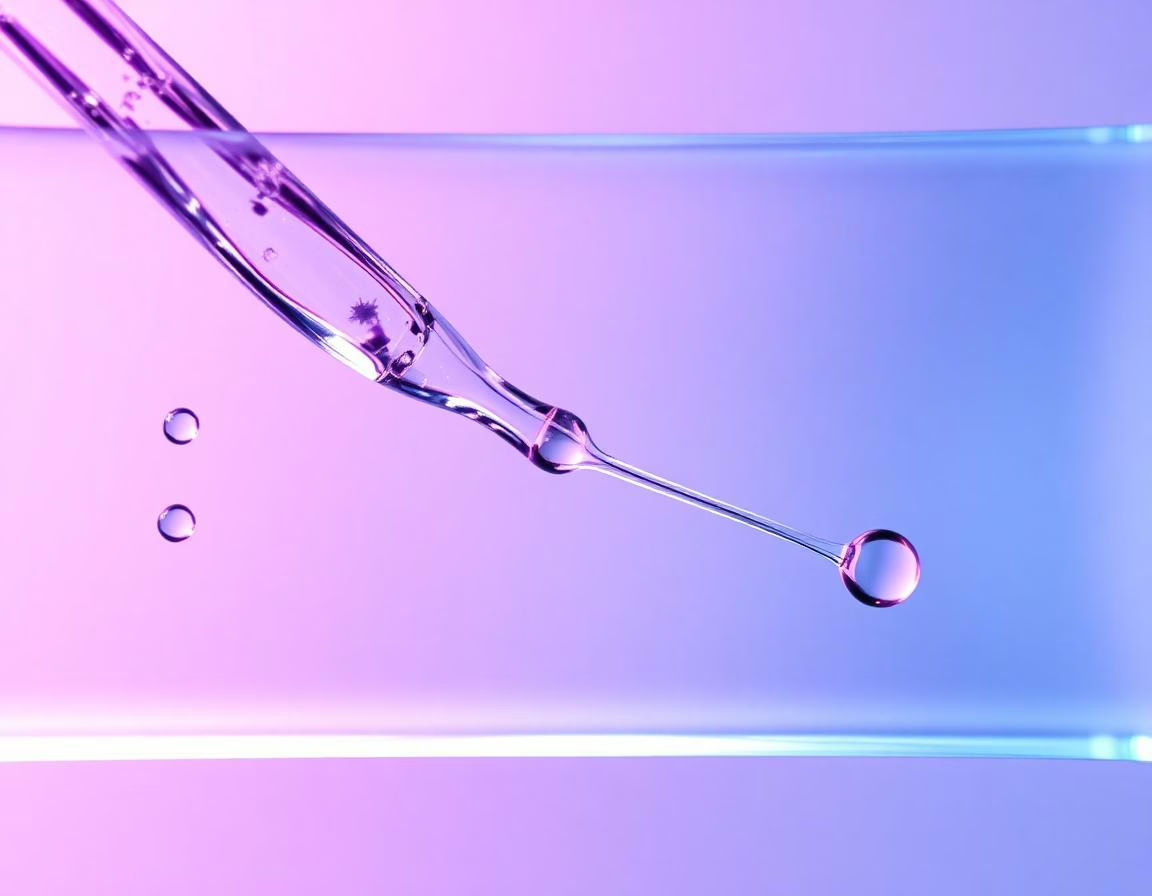
Microfluidics represents a cutting-edge frontier in engineering, centered around the manipulation of fluids in channels measuring less than one millimeter in at least one dimension. This technology optimizes reagent usage, enables precise mixing and particle handling, integrates multiple assays into compact devices (often referred to as lab-on-a-chip), and enhances imaging and tracking capabilities. The evolution of microfluidics is paving the way for significant advancements in various biomedical fields.
Enhancing Oocyte Recovery in IVF
Recent innovations in microfluidic technology have led to the development of the FIND-Chip, a device designed to automate the recovery of oocytes from follicular fluid. Traditionally a manual process, this automation not only streamlines the procedure but also improves efficiency. In clinical trials, the FIND-Chip demonstrated its ability to recover additional oocytes that might have been overlooked during manual screening. As a result, this technology significantly increases the pool of viable oocytes available for in vitro fertilization, enhancing reproductive outcomes.
Strategies for Cellular Spatial Organization
In microphysiological systems, controlling the spatial organization of cells is crucial for mimicking in vivo environments. Advanced 3D modeling frameworks enable researchers to predict critical diameters in deterministic lateral displacement microfluidics. These innovations allow scientists to better understand and manipulate cellular arrangements, improving the fidelity of tissue engineering and drug testing applications.
Droplet Microfluidics: Innovations and Trends
The field of droplet microfluidics is witnessing a surge in interest, particularly for biomedical applications. Researchers are exploring new methods to utilize droplet technology for precise biochemical reactions and assays. This approach not only enhances the efficiency of experimental processes but also opens pathways for scalable biomedical testing and diagnostics.
Accelerated Sterility Testing for Biopharmaceuticals
The introduction of a synthetic peptide nanoparticle coupled with a microfluidic chip marks a monumental advancement in sterility testing for cell- and gene-based therapeutics. This innovative solution allows for rapid sterility assessments within 18 hours, addressing safety concerns for biopharmaceutical products that cannot undergo conventional sterilization methods. By bridging this safety gap, the technology significantly enhances the viability of life-saving therapies.
Wearable Technology for Stress Monitoring
The integration of wearable technology with artificial intelligence is revolutionizing personal health management. Physicochemical-sensing electronic skins are being developed to monitor stress levels in real-time. These innovations pave the way for personalized stress management systems that could transform how individuals manage their mental health.
Non-Invasive Hormone Monitoring
In the realm of reproductive health, a groundbreaking aptamer-based nanobiosensor has been incorporated into a wearable sweat sensor. This technology allows for the non-invasive monitoring of the female reproductive hormone, oestradiol. Such advancements hold the promise of delivering sustainable solutions to healthcare needs related to female reproductive health, providing real-time insights without the need for invasive procedures.
Future Directions in Microfluidics
The future of microfluidics is bright, with ongoing research poised to unlock even more applications. Innovations in skin microphysiological systems are set to enhance nonclinical testing, while the modernization of FDA processes will further integrate microfluidic technologies into regulatory frameworks. The continued exploration of single-cell sequencing techniques for diverse microbial communities will also expand our understanding of biological systems.
In conclusion, the advancements in microfluidics are reshaping the landscape of biomedical applications. From enhancing fertility treatments to enabling rapid sterility testing and non-invasive health monitoring, these technologies are not just innovative; they are transformative. As research continues to evolve, we can expect even greater contributions from microfluidics to improve healthcare outcomes and enhance our understanding of complex biological processes.
- Microfluidics optimizes fluid manipulation on a microscale.
- Automation in IVF through microfluidic devices improves oocyte recovery rates.
- Droplet microfluidics is gaining traction for efficient biomedical applications.
- Rapid sterility testing innovations address safety in biopharmaceuticals.
- Wearable technology enhances personal health monitoring capabilities.
Read more → www.nature.com



