
Digital twin technology is revolutionizing how we approach complex environmental challenges, particularly in wildlife conservation. By creating dynamic digital models of physical entities, this innovative method enables real-time monitoring and analysis, paving the way for targeted interventions and informed decision-making.
The Digital Twin Concept
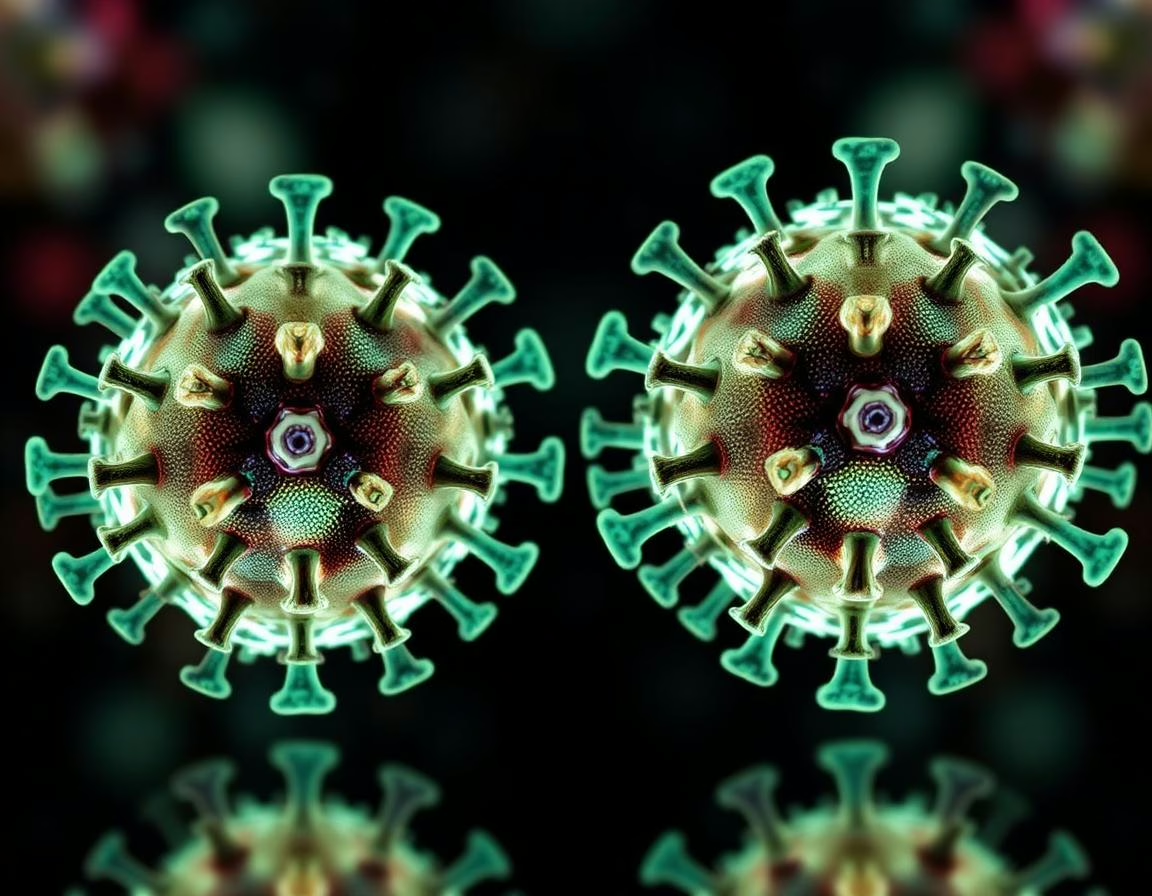
At its core, a digital twin is a virtual counterpart of a physical object, system, or environment. This technology utilizes real-time data to mirror the behaviors and conditions of its physical counterpart. Originally popularized by NASA during the Apollo missions, where engineers simulated spacecraft conditions on the ground, digital twins have evolved far beyond their initial applications. Today, they serve as powerful tools across various fields, including environmental science.
Applications in Environmental Science
Digital twin technology is becoming increasingly vital in addressing critical environmental issues. One of the most promising applications lies in the renewable energy sector. For instance, digital twins can optimize wind farm operations by continuously monitoring wind conditions and adjusting turbine settings accordingly. This not only enhances energy output but also minimizes wear and tear on machinery, leading to longer lifespans for wind turbines.
Waste reduction is another significant area where digital twins are making an impact. In manufacturing and supply chains, these digital models help companies track materials throughout their lifecycle, leading to more efficient resource use. Research indicates that implementing digital twin systems can result in waste reductions of up to 20%, significantly decreasing the volume of waste directed to landfills.
Digital Twins in Forest Management
In Finland, the Natural Resources Institute (LUKE) is leveraging digital twins to support sustainable forest management. Their Digital Forest Carbon Twins program employs advanced modeling and remote sensing technologies to create accurate digital representations of forest landscapes. This initiative allows for real-time measurement of biomass and carbon stocks, enabling efficient calculation and issuance of carbon credits to forest owners. Such efforts not only promote sustainability but also enhance the economic viability of forest conservation.
European Initiatives for Climate Monitoring
A broader initiative making use of digital twin technology is the European Commission’s Destination Earth project. This ambitious endeavor aims to develop detailed digital models of Earth systems to simulate climate change impacts and extreme weather scenarios. The project seeks to provide valuable insights that will inform the European Green Deal and Digital Strategy. By creating two specific digital twins, the Climate Change Adaptation Digital Twin and the Weather-Induced Extremes Digital Twin, the project aims to devise effective mitigation and adaptation strategies.
Tackling Biodiversity Crisis with Digital Twins
The alarming rate of biodiversity loss, with an estimated 30% of Earth’s species threatened or extinct, calls for urgent action. Digital AECOM, a leader in environmental modeling, believes that digital twin technology can play a crucial role in reversing this trend. By creating virtual replicas of natural ecosystems, the organization aims to guide conservation efforts and identify optimal areas for habitat protection and restoration.
Data-Driven Decision Making for Conservation
Digital AECOM’s initiative harnesses data collection, artificial intelligence, and machine learning to accelerate nature recovery efforts. Through climate-risk simulations, the organization evaluates the potential impacts of various nature-based solutions, enabling the selection of the most effective strategies for biodiversity preservation. This approach underscores the importance of making data-driven decisions in the development and conservation of natural spaces.
Monitoring and Maintaining Habitat Health
Moreover, digital twins can monitor the health of habitats efficiently. By integrating biosensors into the Internet of Things (IoT), a concept now referred to as the Internet of Nature (IoN), organizations can track vital environmental parameters such as air quality, stormwater management, and vegetation health. This capability allows for simulations of future green space development, ensuring that conservation efforts are both effective and sustainable.
The Future of Wildlife Conservation
Digital twin technology has the potential to redefine wildlife conservation strategies. As these technologies continue to advance, we can expect more innovative applications that integrate real-time data to inform conservation efforts. By creating a comprehensive digital ecosystem, stakeholders can better understand the intricate relationships within natural habitats and make well-informed decisions that protect biodiversity.
In conclusion, digital twins represent a transformative approach to addressing urgent environmental challenges, especially in the realm of wildlife conservation. By utilizing real-time data and advanced simulations, we can develop more effective strategies to protect our planet’s biodiversity and ensure a sustainable future for generations to come. The integration of technology and nature could very well be the key to preserving the delicate balance of our ecosystems.
- Digital twins are virtual models reflecting physical objects or systems.
- They enhance efficiency in renewable energy and waste reduction.
- Initiatives like Digital Forest Carbon Twins support sustainable resource management.
- The European Commission’s Destination Earth project aims to simulate climate change impacts.
- Digital AECOM uses digital twins to guide biodiversity conservation efforts.
Read more → www.aol.com



