
Recent research has unveiled a groundbreaking perspective on the nature of memory and consciousness, suggesting that our understanding of cognition may extend beyond the confines of the brain. This study raises profound questions about how memories are formed and retained, challenging long-held assumptions in neuroscience.
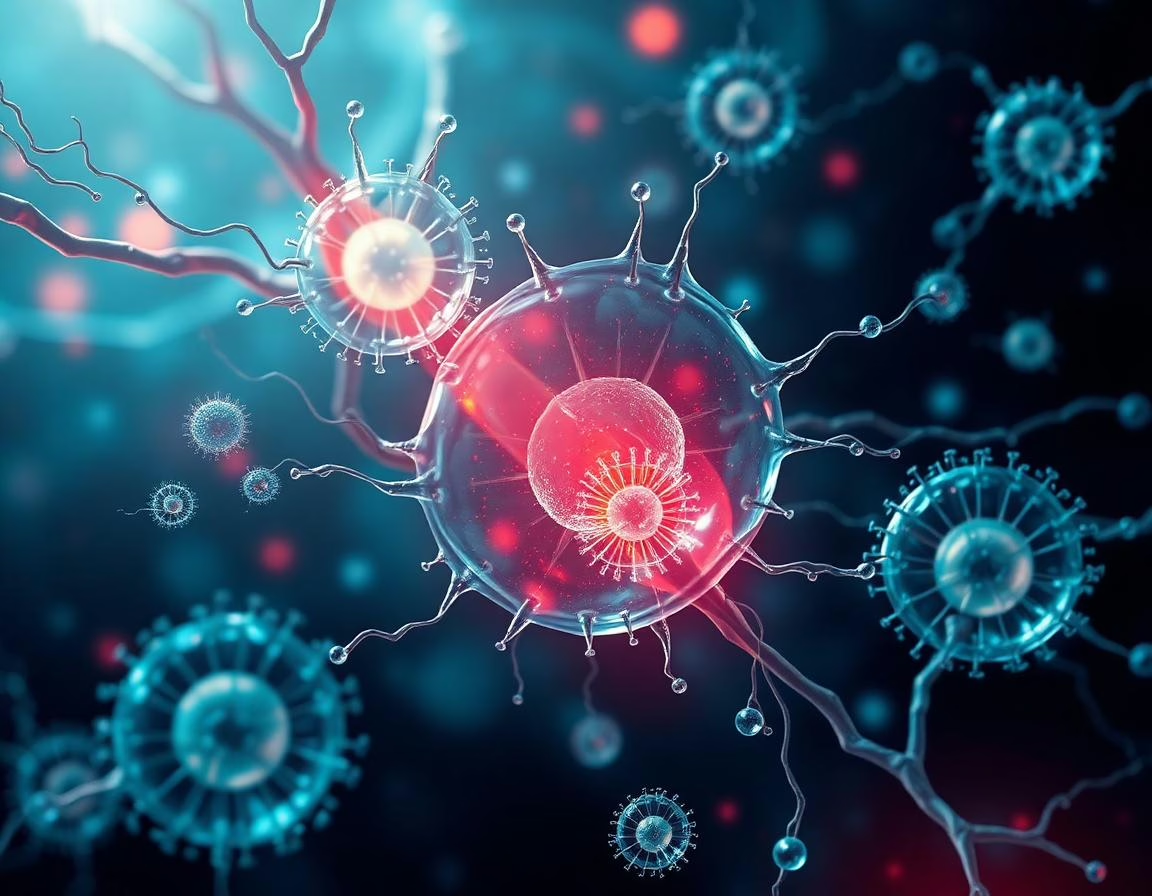
The Rhythm of Life and Memory Formation
Our daily lives are structured around patterns that influence our interactions with the world. From our morning routines to our dietary habits, these repeated actions shape how effectively our brains encode memories. Neurons, the specialized cells of the nervous system, exhibit stronger and more enduring memories when exposed to information in repetitive doses. This principle, known as the massed-spaced effect, has recently been observed not only in the brain but also in other cells throughout the body, including kidney and nerve cells.
Insights from New York University
Researchers at New York University (NYU) have made significant strides in understanding cellular memory. They discovered that kidney and nerve cells exhibit a form of memory retention similar to that of neurons, suggesting that the capacity for memory is not exclusive to the brain. This finding, published in Nature Communications, has the potential to transform approaches to medical treatments. For example, it could inform the timing and dosage of chemotherapy, optimizing how cancer cells recognize and respond to therapeutic agents.
A New Perspective on Health and Disease
Dr. Nikolay Kukushkin, a molecular philosopher at NYU and coauthor of the study, emphasizes that these findings could revolutionize our understanding of health and disease. He posits that various biological systems, previously thought to be unrelated, may actually be interconnected through shared processes of memory and adaptation.
Expanding the Concept of Consciousness
The implications of this research extend into the realm of consciousness. For some scientists, the ability of non-neuronal cells to form memories suggests that consciousness may not be limited to neurons. Dr. Kukushkin and his colleagues have previously studied memory in the neurons of sea slugs, providing a foundation for their current exploration of cellular memory in other cell types. Their findings challenge the notion that cognitive abilities are exclusive to complex neural networks.
Experimental Methodology and Findings
In their experiments, the research team exposed kidney and nerve cells to two different types of chemical signal patterns: one involving a single large dose and another consisting of smaller, spaced-out doses. By embedding luminescent molecules into a key DNA-binding protein associated with memory, they were able to track the cells’ responses. The results were striking: cells exposed to short, repeated chemical bursts demonstrated significantly stronger and longer-lasting memory responses compared to those subjected to a single large exposure.
The Significance of Timing in Memory
Dr. Kukushkin noted the surprising sensitivity of these cells to timing. Adjusting the intervals between exposure to the chemical signals revealed that even slight changes—such as a few minutes—could dramatically influence the duration of the cells’ memory. This suggests that our bodies process information on a much finer scale than previously thought, potentially altering how we approach health and lifestyle choices.
Rethinking Nutrition and Exercise
The researchers propose that these insights could reshape our understanding of how lifestyle factors, such as diet and exercise, impact cellular memory. For instance, the timing of meals or the sequence of physical activities might have lasting effects on how our cells adapt and respond to various stimuli. This perspective encourages a more nuanced approach to personal health, recognizing that even minor adjustments can yield significant benefits.
Cellular Consciousness: A Controversial Theory
Dr. Frantisek Baluska from the University of Bonn offers a provocative viewpoint with his Cellular Basis of Consciousness (CBC) theory. He argues that all cells possess a level of independent consciousness, positing that the earliest life forms were sentient and capable of learning from their environments. This theory challenges traditional views, which typically associate consciousness with complex neural systems, and presents a compelling argument for the cognitive capabilities of even the simplest organisms.
Debating the Nature of Consciousness
Despite its intriguing premise, Baluska’s theory has sparked debate within the scientific community. Critics argue that the CBC theory lacks sufficient empirical support and does not provide a clear mechanism to explain how consciousness arises from cellular processes. Nevertheless, the ongoing dialogue highlights the complexities surrounding the definition of consciousness and the potential for future discoveries to reshape our understanding.
The Future of Cellular Research
While the researchers at NYU remain cautious about attributing true consciousness to memory-storing kidney cells, they acknowledge the cognitive capabilities of these cells. Dr. Kukushkin describes their function as sophisticated information processing, suggesting that the interplay between memory and cognition in cells warrants further exploration.
The potential applications of this research extend beyond theoretical discussions, as scientists aim to investigate how these memory patterns could inform solutions to pressing biological challenges, such as obesity and immune response.
Key Takeaways
- Recent findings indicate that memory and cognition may not be exclusive to neurons, as non-neuronal cells like kidney cells exhibit memory retention.
- The massed-spaced effect, traditionally observed in neurons, has been shown to apply to other cell types, suggesting broader implications for health and treatment strategies.
-
The timing of exposure to stimuli plays a crucial role in cellular memory, with potential impacts on lifestyle choices and health outcomes.
-
The debate surrounding cellular consciousness raises important questions about the nature of awareness and cognition in all living organisms.
In conclusion, the exploration of memory beyond the brain invites us to reconsider the fabric of consciousness and the interconnectedness of biological systems. As research progresses, we may uncover transformative insights that not only enhance our understanding of cellular function but also pave the way for innovative health solutions.
Read more → www.popularmechanics.com



