
Understanding the intricate world of RNA is essential for unraveling the complexities of gene regulation. Recent technological advancements in imaging, molecular probes, and sequencing methods have transformed our ability to visualize RNA species, their interactions, and modifications in living systems. This evolution in detection capabilities not only enhances our knowledge of RNA biology but also opens new avenues for therapeutic interventions.
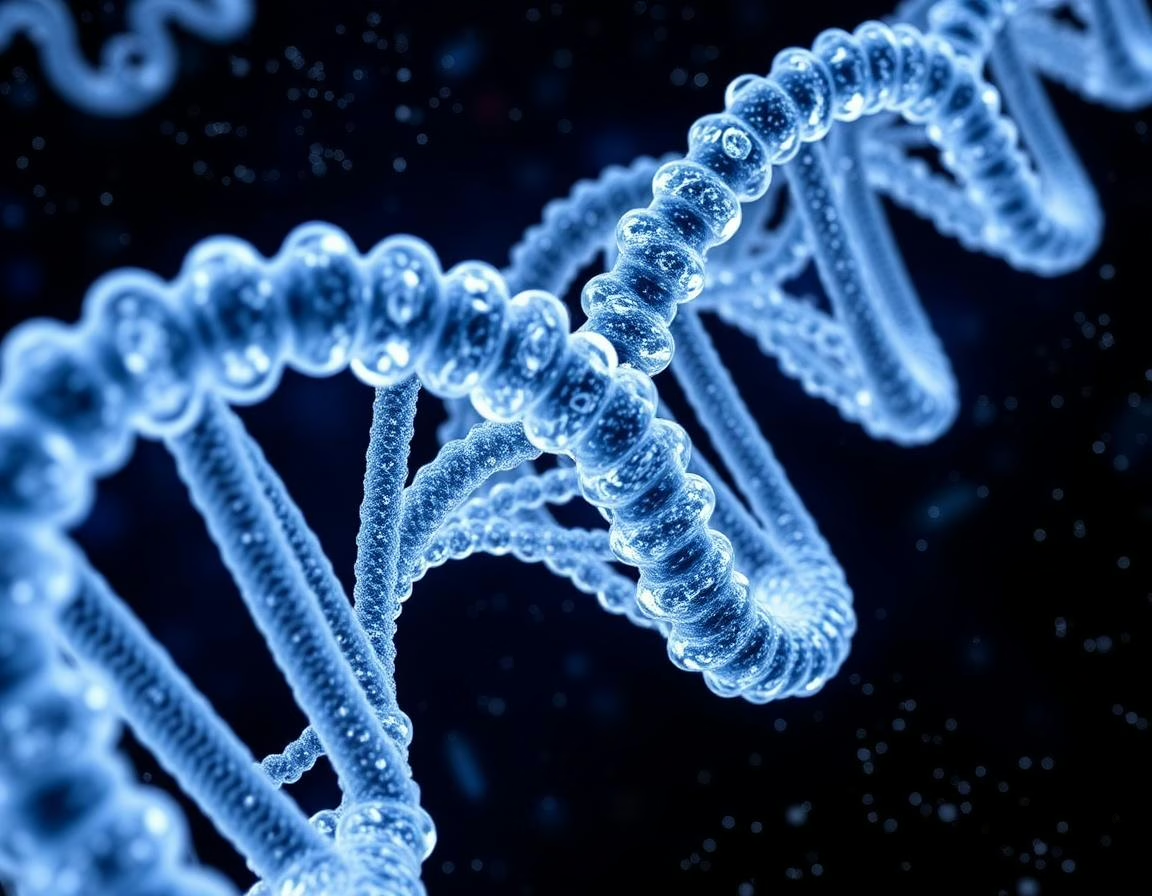
Advances in RNA Detection Techniques
The landscape of RNA detection has been revolutionized by innovative imaging technologies and molecular probes. Lectin-based detection methods and expression profiling of glycoRNAs have emerged as notable approaches. These methods allow researchers to identify and quantify RNA species with high specificity. Among these, the J2 monoclonal antibody stands out for its ability to recognize double-stranded RNAs, thanks to the insights gained from its co-crystal structure analysis.
The development of multiplexed RNA in situ hybridization techniques has further advanced the field. DART-FISH, for instance, employs padlock probes to profile numerous genes in large human tissue sections, overcoming previous limitations of spatial resolution. Such methods enable a comprehensive understanding of RNA distribution and expression patterns across various tissues.
Innovations in RNA Imaging
A novel platform for bioluminescent RNA tracking has emerged, addressing the challenges posed by traditional fluorogenic approaches. By utilizing light-emitting luciferase fragments, this ultrasensitive system enhances RNA imaging capabilities, allowing for real-time monitoring of RNA dynamics within living cells.
Moreover, the introduction of the Intracellular Spatial Transcriptomic Analysis Toolkit (InSTAnT) allows researchers to probe the spatial organization of RNA transcripts within cells. This technology reveals the significance of transcript proximity in understanding gene expression and regulation.
Exploring RNA Modifications
RNA modifications play a crucial role in regulating gene expression, yet mapping these modifications has been historically challenging. The ORCA deep learning framework, combined with nanopore RNA sequencing, offers a breakthrough in detecting multiple RNA modifications. This innovative approach not only uncovers isoform-specific patterns but also elucidates complex regulatory interactions.
The ability to selectively manipulate RNA modifications in situ has also been enhanced through the use of designer organelles. By employing circular guide RNAs, researchers can incorporate pseudouridine into mRNA, paving the way for novel strategies in RNA editing and modification.
Understanding RNA Interaction Dynamics
The exploration of RNA-protein interactions has gained momentum, with techniques such as INSCRIBE allowing for high-sensitivity capture of these interactions in fixed cells and tissues. This advancement enables researchers to map the intricate network of RNA-binding proteins (RBPs) and their targets, providing insights into the regulatory mechanisms governing gene expression.
In vivo profiling of RNA interactomes has uncovered significant regulatory hubs, revealing how small RNAs target key mRNAs. This research highlights the importance of RNA-RNA interactions in maintaining cellular homeostasis and responding to environmental changes.
Mechanistic Insights from RNA Studies
The mechanistic roles of RNA are becoming clearer through studies that focus on mRNA trafficking and its impact on cellular functions. For instance, recent findings indicate that the cell-size-dependent trafficking of TRAK2 mRNA is integral to the distribution and activity of mitochondria, demonstrating a direct link between RNA localization and organelle function.
Furthermore, researchers are uncovering complex post-transcriptional regulatory modules through systematic identification of RBP interactions. This comprehensive mapping reveals the context-specific functions of RBPs, shedding light on the intricate networks that govern RNA metabolism and gene regulation.
Conclusion
The realm of RNA research is rapidly evolving, fueled by innovative detection technologies and a deeper understanding of molecular mechanisms. As we continue to decipher the complexities of RNA dynamics, these advancements will undoubtedly lead to groundbreaking discoveries and potential therapeutic applications. The future of RNA biology promises to be as dynamic and multifaceted as the molecules themselves.
- Key Takeaways:
- Advancements in RNA imaging and detection technologies enhance understanding of RNA dynamics.
- Novel methods for RNA modification and interaction mapping unveil complex regulatory networks.
- Insights into RNA trafficking reveal its critical roles in cellular functions and organelle distribution.
Read more → www.nature.com



