
In the ongoing battle against hospital-acquired infections, a groundbreaking diagnostic tool has emerged, harnessing the power of artificial intelligence (AI) and CRISPR technology. Developed by Professor Nicole Weckman during her postdoctoral fellowship at Harvard’s Wyss Institute, this innovative system addresses the urgent need for rapid detection of antimicrobial-resistant genes, particularly in the hazardous fungus Candida auris (C. auris).
Understanding C. auris Threat
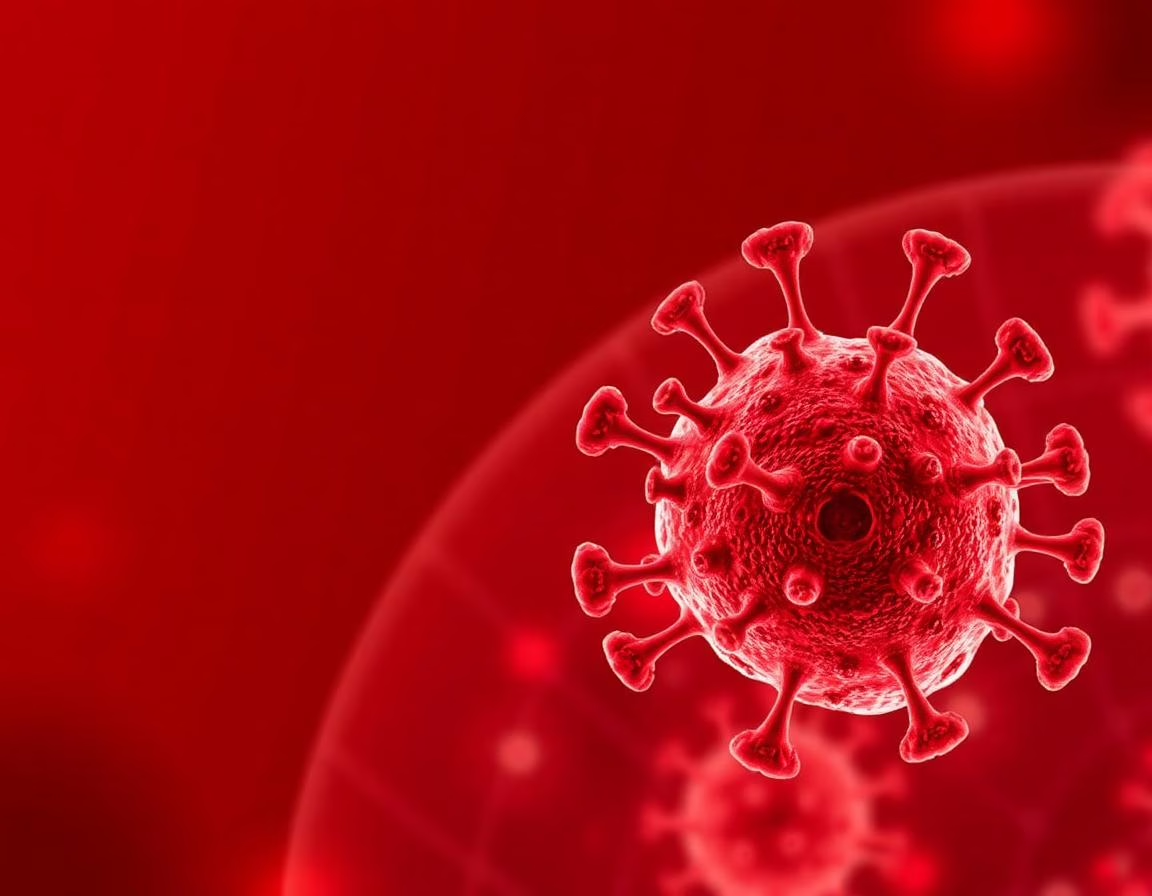
C. auris has become a significant concern in healthcare settings worldwide due to its ability to resist multiple antifungal treatments. This pathogenic fungus has been linked to serious outbreaks in hospitals, posing severe risks to vulnerable populations, especially those with weakened immune systems. The complexity of diagnosing and treating C. auris infections lies in the dual challenge of identifying the pathogen and determining the most effective antifungal therapies.
Introduction to dSHERLOCK
The newly developed diagnostic platform, known as digital SHERLOCK (dSHERLOCK), enhances the capabilities of an earlier technology called SHERLOCK, pioneered by Professor James Collins at MIT. This original system utilized CRISPR-Cas proteins to detect specific DNA sequences, enabling the identification of pathogens. dSHERLOCK elevates this process by integrating machine learning algorithms, which analyze the fluorescence generated from thousands of CRISPR reactions simultaneously.
Accelerating Diagnosis with AI
The incorporation of AI into the dSHERLOCK platform allows for rapid quantification of pathogens in patient samples. The technology delivers results in under 20 minutes, a significant improvement compared to traditional diagnostic methods, which can take up to a week. This swift turnaround is critical for effective patient management and treatment, particularly in acute care settings.
Collaborative Research Efforts
The development of dSHERLOCK emerged from a collaborative effort involving researchers from various institutions, led by Collins and Professor David Walt. The initiative was a response to the rising incidents of C. auris infections globally, underscoring the pressing need for advanced diagnostic tools in healthcare.
Enhancing Diagnostic Capabilities
Weckman, who joined the Wyss Institute team in 2020, focused on refining the CRISPR detection mechanism to expedite diagnosis. Her research involved creating streamlined, one-step diagnostics capable of detecting specific C. auris genes and mutations linked to antifungal resistance. By leveraging machine learning, the team was able to distinguish between DNA with and without mutations, enabling rapid and precise quantification.
Future Applications and Broader Impact
The potential applications of the dSHERLOCK platform extend beyond C. auris diagnostics. Researchers believe that the technology can be adapted to detect a wide range of pathogens, addressing other critical health threats. The flexibility of the CRISPR-based detection system makes it a valuable tool for various fields, including healthcare, agriculture, and environmental monitoring.
Advantages of the CRISPR Diagnostic Platform
Weckman emphasizes two significant advantages of the dSHERLOCK platform: its adaptability and cost-effectiveness. The system can be easily modified to target different infectious agents, and it operates at room temperature, eliminating the need for expensive laboratory equipment. This accessibility is especially crucial for deployment in international healthcare settings, where resources may be limited.
Moving Forward with dSHERLOCK
Since establishing her research group at the University of Toronto in early 2023, Weckman has continued her work on detecting antimicrobial-resistant infections. Collaborations with clinical microbiologists aim to enhance the diagnostic capabilities for various Candida species that can lead to severe infections. Researcher Amy Heathcote has further explored the engineering of CRISPR systems to improve detection of resistance mutations, broadening the scope of the platform’s potential applications.
In conclusion, the development of the dSHERLOCK diagnostic platform marks a significant advancement in the fight against hospital-acquired infections. By combining AI with CRISPR technology, this innovative tool promises to revolutionize diagnostics, enabling faster and more accurate identification of pathogens. As researchers continue to refine and expand the platform’s capabilities, the potential for tackling global health challenges becomes increasingly attainable.
- The dSHERLOCK platform can diagnose infections in under 20 minutes.
- It leverages AI to enhance the analysis of CRISPR reactions.
- The system is adaptable for detecting various pathogens beyond C. auris.
- It operates effectively at room temperature without costly equipment.
- Collaborative research is essential for the platform’s ongoing development and application.
Read more → news.engineering.utoronto.ca