
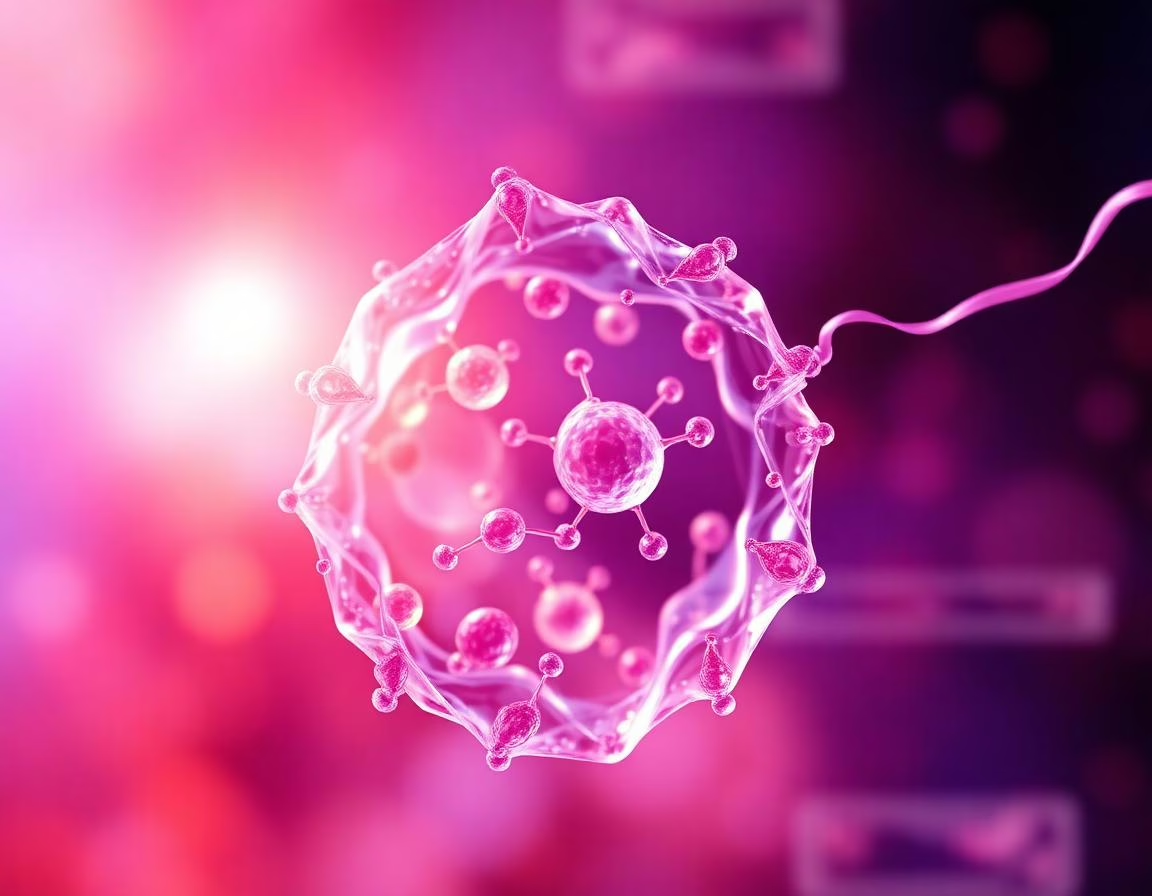
Mammalian cells are at the forefront of biomanufacturing, playing a crucial role in producing biologics and facilitating cell and gene therapies. The rise of cultivated meat production has further emphasized the importance of these cells. Over the past two decades, advancements in systems biology have provided a comprehensive understanding of mammalian cell cultures, enabling the characterization, design, and optimization of cellular processes. Concurrently, breakthroughs in synthetic biology have paved the way for innovative genetic engineering techniques, enhancing the efficiency of cellular factories and cell lines.
Systems Biology: A Holistic Approach
The application of systems biology tools has allowed researchers to gain insights into the complex interactions within mammalian cells. By utilizing multi-omics techniques, including genomic, epigenomic, transcriptomic, proteomic, and metabolomic profiling, scientists can explore the intricate networks governing cell behavior. This holistic approach facilitates the identification of critical cellular engineering targets and optimization of culture conditions, ultimately leading to enhanced productivity and improved product quality.
Moreover, the integration of mathematical modeling and artificial intelligence/machine learning (AI/ML) techniques enhances the predictive capabilities of these systems. This combination allows for the exploration of genetic and metabolic networks, leading to a deeper understanding of cellular dynamics. As a result, researchers can design more effective strategies for cell line development and bioprocess optimization.
Synthetic Biology: Engineering Cellular Factories
Synthetic biology has emerged as a powerful tool for re-engineering biological systems. By applying innovative genetic circuit designs and genome editing techniques, researchers can create tailored cellular factories that meet specific production needs. This approach not only streamlines the synthesis of desired products but also ensures consistency and reliability in biomanufacturing processes.
The ability to manipulate genetic pathways allows for the fine-tuning of metabolic pathways, resulting in higher yields of biopharmaceuticals and other therapeutic agents. As researchers continue to refine these techniques, the potential applications of synthetic biology in mammalian cell line development and bioprocessing will only expand.
Research Opportunities in Bioprocessing
The current landscape of mammalian cell bioprocessing presents numerous research opportunities. Studies that leverage multi-omics data integration, along with first-principles mathematical modeling, are particularly valuable. Researchers are encouraged to focus on identifying cellular engineering targets that can significantly enhance productivity or improve the quality of biopharmaceutical products.
Both experimental and computational research are essential in advancing the field. While some studies may emphasize one approach over the other, the combination of both methodologies can yield comprehensive insights into mammalian cell behavior. This collaborative effort will propel the development of cutting-edge bioprocesses and innovative therapeutic solutions.
The Role of Leading Researchers
Notable researchers are making significant contributions to the field of mammalian cell bioprocessing. For example, Dr. Meiyappan Lakshmanan from the Indian Institute of Technology Madras specializes in computational methods that analyze the metabolism of mammalian and microbial cells. His work focuses on integrating multi-omics data to predict complex biological traits, enhancing bioprocessing and promoting human health.
Meanwhile, Dr. Dong-Yup Lee from Sungkyunkwan University is recognized for his expertise in multi-omics integration and model-guided metabolic engineering. His research on bioprocess digital twins and computational synthetic gene design emphasizes the application of these technologies in biopharma and biotechnology sectors.
Future Directions
Looking ahead, the integration of systems biology and synthetic biology will continue to shape the future of mammalian cell bioprocessing. As researchers harness the power of advanced computational tools and innovative engineering techniques, the potential for breakthroughs in biopharmaceutical production and cell therapy applications will expand dramatically.
Furthermore, the cultivation of sustainable alternatives, such as cultivated meat, will likely benefit from the insights gained through these interdisciplinary approaches. The ongoing efforts in this field promise not only to enhance production efficiency but also to contribute to global health and environmental sustainability.
Key Takeaways
- Mammalian cells are crucial for producing biologics and facilitating cell and gene therapies.
-
Systems biology tools provide a comprehensive view of cellular processes, enabling optimization and characterization.
-
Synthetic biology allows for the design of tailored cellular factories, enhancing production efficiency.
-
Research opportunities abound in integrating multi-omics data and mathematical modeling to improve bioprocessing.
-
Leading researchers are pushing the boundaries of knowledge in this field, paving the way for future advancements.
The convergence of systems biology and synthetic biology marks a new era in mammalian cell bioprocessing. By leveraging these innovative approaches, researchers are poised to unlock unprecedented potential in biomanufacturing and therapeutic applications, ultimately benefiting society at large.
Read more → www.nature.com



