
Immunotherapy has emerged as a beacon of hope in cancer treatment, leveraging the body’s immune system to target and eliminate malignant cells. However, its effectiveness has been limited in treating fibrolamellar carcinoma, a rare and aggressive liver cancer primarily affecting younger populations. A recent study from Cornell University reveals that an existing FDA-approved drug may enhance the efficacy of immunotherapy in combating this formidable disease, potentially reshaping treatment protocols.
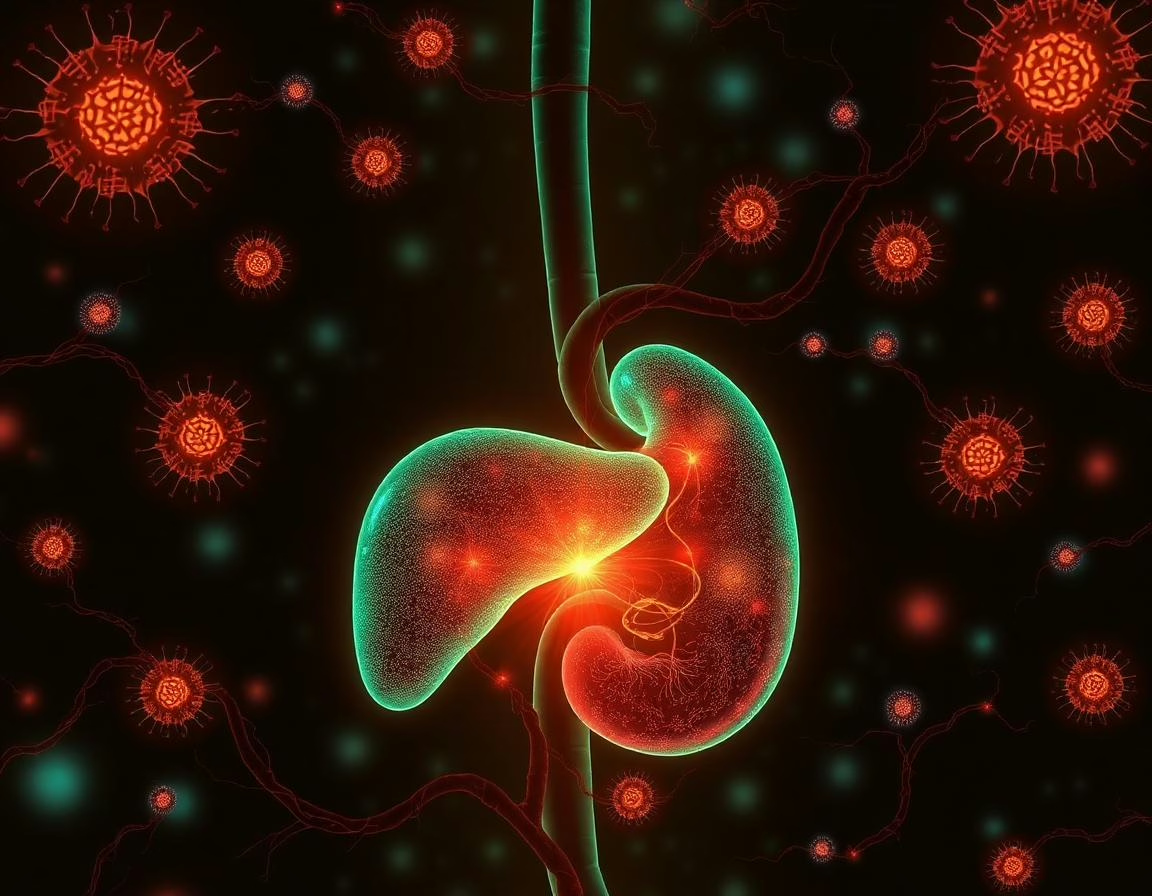
Understanding Fibrolamellar Carcinoma
Fibrolamellar carcinoma is a distinctive form of liver cancer that constitutes approximately 2% of all liver cancer cases. This aggressive cancer predominantly impacts children and young adults, often diagnosed at an advanced stage when metastasis has occurred. The prognosis for patients is grim, with limited treatment options available and a high rate of mortality.
The Mechanism of T-Cell Exclusion
In their research, published in the journal Gastroenterology, the Cornell team uncovered a crucial mechanism underlying the cancer’s resistance to immunotherapy. Fibrolamellar tumors create an environment that sequesters immune T cells, effectively shielding tumor cells from attack. This phenomenon, known as T-cell exclusion, significantly hampers the body’s ability to mount an effective immune response against the cancer.
AMD3100: A Potential Game-Changer
The study highlights AMD3100, a drug initially developed for treating a different condition, as a promising candidate for overcoming T-cell exclusion. Researchers demonstrated that AMD3100 can disrupt the sequestering effect, allowing T cells to penetrate the tumor microenvironment and engage with cancer cells. This breakthrough suggests that combining AMD3100 with immune checkpoint inhibitors could amplify the immune response, leading to more effective tumor cell eradication.
Research Findings and Implications
Utilizing patient tumor slices, the research team found that treatment with AMD3100 not only mobilized T cells to the tumor’s core but also enhanced their activation when used alongside immune checkpoint inhibitors. This combination resulted in a marked increase in tumor cell death, indicating a potential new avenue for treatment in fibrolamellar carcinoma.
Next Steps in Clinical Research
Professor Praveen Sethupathy, a co-senior author of the study, emphasizes the significance of these findings, noting that understanding T-cell exclusion is vital for developing effective strategies against fibrolamellar carcinoma. The immediate goal is to engage liver cancer clinicians to initiate clinical trials using AMD3100 in conjunction with immunotherapy. The FDA approval of AMD3100 is particularly advantageous, as it may streamline the clinical trial process, minimizing risks and expediting the introduction of new treatment protocols.
Conclusion: A New Hope for Patients
This groundbreaking study paves the way for innovative treatment strategies in fibrolamellar carcinoma, a cancer long deemed difficult to treat. By addressing the underlying mechanisms that hinder immunotherapy, researchers are opening new pathways for patients who have few options remaining. As clinical trials move forward, the combined efforts of the scientific community could transform the landscape of liver cancer treatment, offering renewed hope to affected individuals and their families.
- Key Takeaways:
- Fibrolamellar carcinoma presents significant treatment challenges due to T-cell exclusion.
- AMD3100 shows promise in mobilizing T cells to combat cancer cells effectively.
- Combining AMD3100 with immune checkpoint inhibitors enhances T cell activation and tumor cell death.
- Ongoing research aims to initiate clinical trials, leveraging the FDA-approved status of AMD3100.
- Understanding the tumor microenvironment is crucial for advancing cancer therapies.
Read more → www.news-medical.net