
Coral reefs, often termed the “rainforests of the sea,” represent some of the planet’s most vibrant and diverse ecosystems. These underwater habitats host an astonishing variety of marine life, providing vital services to millions of people. However, these majestic structures are facing unprecedented threats. The Hope for Reefs initiative, spearheaded by the California Academy of Sciences, aims to address these challenges through groundbreaking research and innovative conservation strategies.
The Urgency of Coral Reef Conservation
Coral reefs cover less than one percent of the ocean’s surface, yet they support more than 25 percent of all marine species. They play an essential role in maintaining biodiversity and offer significant economic benefits through tourism and fishing while also protecting coastlines from erosion. Despite their importance, nearly 75 percent of the world’s coral reefs are currently at risk due to human activities and climate change. With a quarter of these ecosystems already lost and predictions suggesting that another 30 percent could perish within three decades, immediate action is necessary.
Recognizing this crisis, the Hope for Reefs initiative was launched in 2016 with a mission to explore, explain, and sustain coral reefs. By advancing our understanding of coral biology, developing innovative conservation techniques, and disseminating knowledge through educational outreach, this initiative seeks to foster a healthier future for these critical ecosystems.
Global Expeditions for Coral Research
Over the next five years, Academy scientists will embark on a series of twenty expeditions, focusing on both shallow and deep reef ecosystems. Previous research endeavors have taken teams to locations such as the Philippines, Vanuatu, and Palau. These expeditions aim to uncover gaps in our understanding of coral health, species diversity, and the overall state of marine life in these regions.
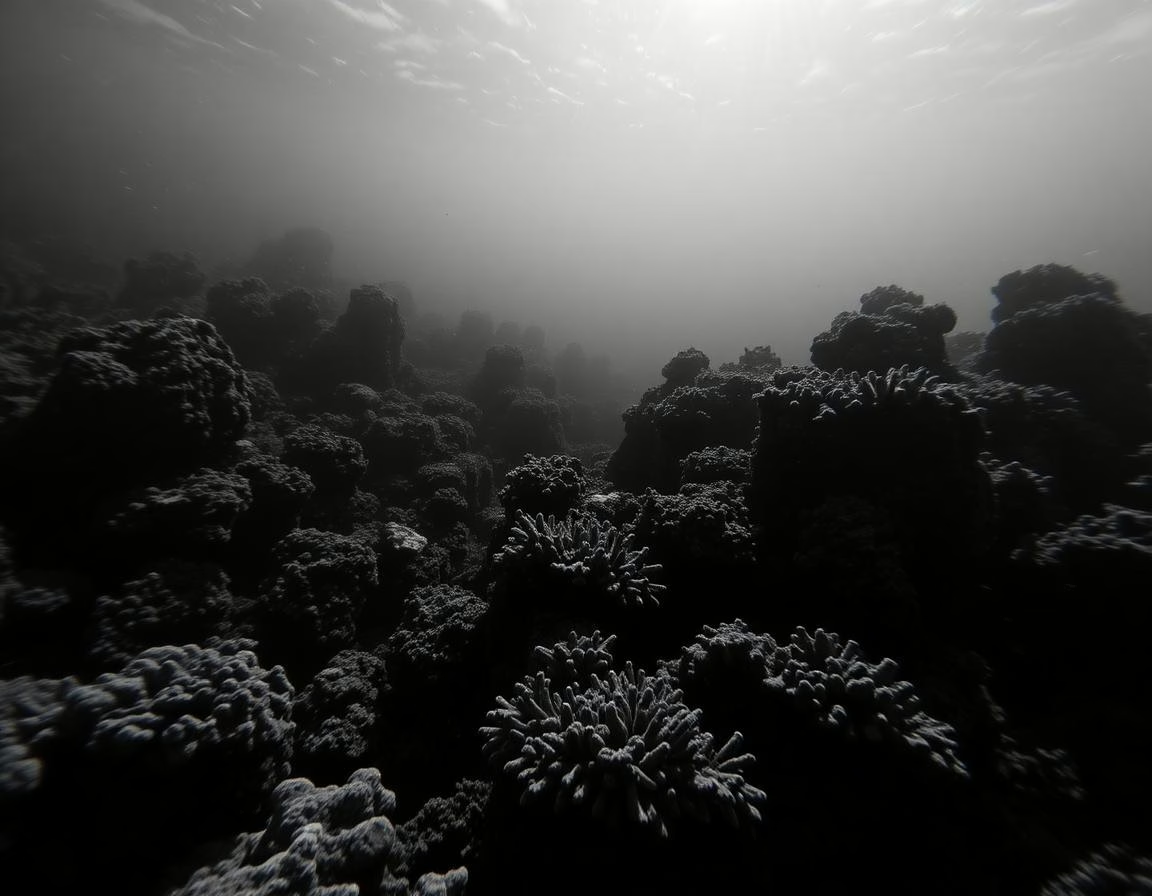
One particular area of focus will be mesophotic coral reefs, situated between shallow waters and the deep sea, typically found at depths ranging from 200 to 500 feet. These “twilight zone” reefs harbor unique marine species, yet they remain largely unexplored due to the technical difficulties involved in accessing them. The development of advanced diving technologies will enable researchers to study these depths, revealing crucial insights into how these ecosystems function and their potential role in supporting shallow-water species as environmental conditions deteriorate.
Innovative Restoration Techniques with SECORE International
Efforts to restore damaged coral reefs have often been hampered by limitations in time, resources, and labor. A new partnership with SECORE International aims to revolutionize coral restoration through the use of cultured coral larvae. By harvesting coral gametes during annual spawning events and cultivating the resulting larvae, scientists can deploy these young corals onto damaged reefs more efficiently than traditional methods.
This science-based approach allows for the rapid placement of one million coral seeding units in threatened areas by 2020, highlighting a commitment to scale global restoration efforts. Additionally, training workshops and collaborations with local communities will help establish marine protected areas, enhancing conservation outcomes.
Engaging the Public through Education
Public engagement is a cornerstone of the Hope for Reefs initiative. By fostering understanding and appreciation for coral reefs, the Academy aims to cultivate future advocates for these vital ecosystems. The Steinhart Aquarium’s revamped exhibits, including a 212,000-gallon Philippine Coral Reef tank, offer immersive educational experiences. Visitors can marvel at marine life while learning about biodiversity and conservation efforts.
Special devices known as Autonomous Reef Monitoring Structures (ARMS) have been deployed in the aquarium to monitor reef health and collect valuable data. These structures will remain in place for several years, allowing for genetic sequencing of resident species and contributing to our understanding of reef ecosystems.
Spotlight on Twilight Zone Research
The twilight zone, a relatively unknown realm of coral reefs, presents an exciting opportunity for scientific discovery. The Academy’s research in this area has already yielded significant findings, including the identification of new species and evidence of ocean warming. By bringing attention to these deep reefs, the Academy hopes to shed light on their ecological importance and the role they play in the broader marine environment.
The exhibit “Twilight Zone: Deep Reefs Revealed” showcases the Academy’s pioneering work in exploring these depths, while the full-dome film “Expedition Reef” provides audiences with an immersive experience of the underwater world.
Leadership Driving the Initiative
The success of the Hope for Reefs initiative rests on the expertise of its co-leaders, each bringing unique skills and insights.
- Rebecca Albright focuses on the resilience of coral organisms against ocean acidification and warming seas, monitoring environmental impacts on reef growth.
-
Pim Bongaerts combines molecular ecology with fieldwork to study coral biodiversity and evolution, particularly in the twilight zone.
-
Luiz Rocha investigates the evolution of coral reef fishes and employs genomic techniques to inform conservation strategies.
-
Bart Shepherd oversees the aquarium’s conservation efforts and plays a critical role in expanding the Academy’s influence in field-based research.
The Future of Coral Reefs: A Collaborative Effort
As the Hope for Reefs initiative progresses, it emphasizes the importance of collaboration among scientists, conservationists, and local communities. By integrating cutting-edge research with hands-on restoration efforts and public engagement, the Academy aims to inspire a global movement toward coral reef conservation.
The future of coral reefs hinges on our collective action and commitment to safeguarding these irreplaceable ecosystems. Together, we can foster resilience in coral populations and ensure that these underwater treasures continue to thrive for generations to come.
Takeaways:
- Coral reefs are vital to marine biodiversity and coastal protection but are facing severe threats.
-
The Hope for Reefs initiative focuses on research, innovative restoration techniques, and public education.
-
New partnerships aim to accelerate coral restoration efforts through cultured larvae technology.
-
Engaging the public fosters understanding and advocacy for coral conservation.
-
The Academy’s leadership team brings diverse expertise to drive effective solutions for reef protection.
In conclusion, the Hope for Reefs initiative not only addresses the immediate threats faced by coral reefs but also lays the groundwork for sustainable solutions that can be replicated worldwide. By investing in research and education, we can inspire a new generation committed to protecting our oceans.
Read more → www.calacademy.org



