
In a remarkable advancement in biotechnology, researchers in South Korea have introduced a pioneering technology that accurately detects modifications in ribonucleic acid (RNA). This innovation holds significant implications for understanding various biological processes, including gene expression and the development of cancer.
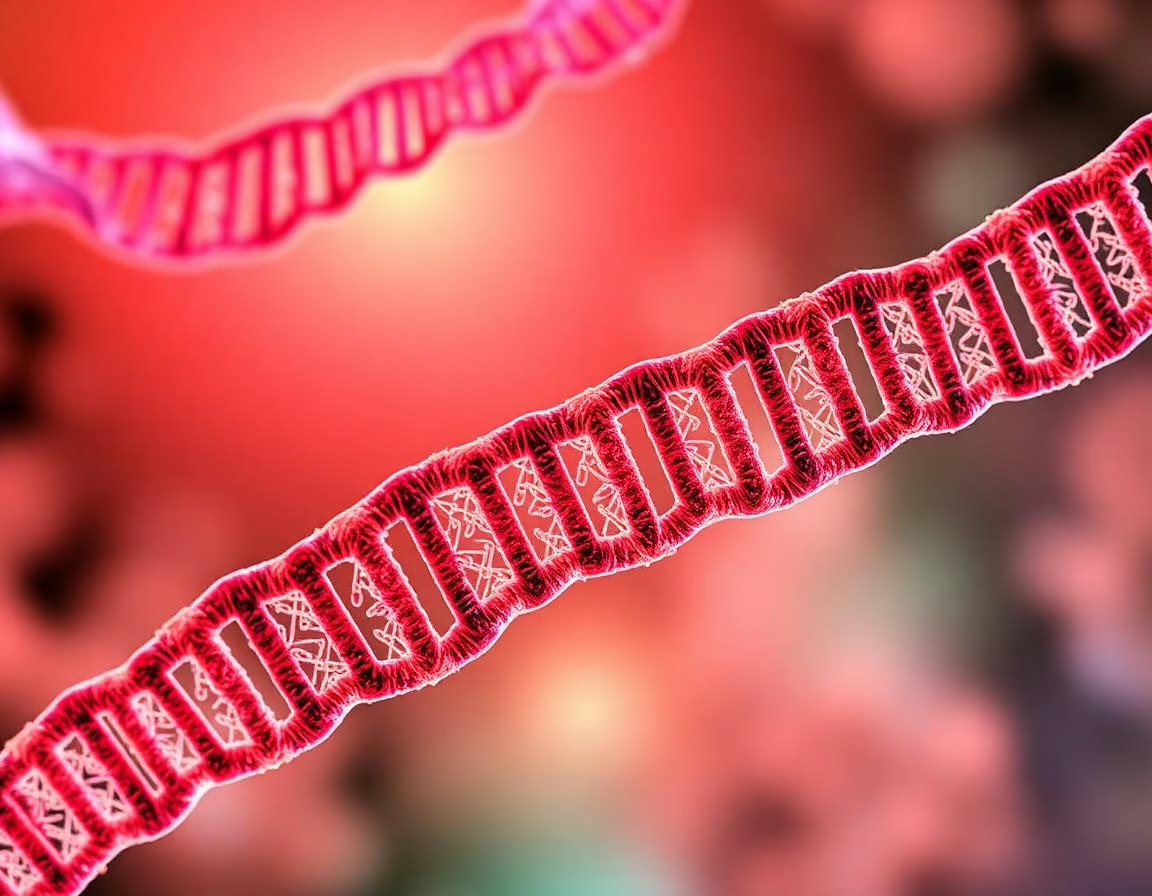
Breakthrough in RNA Research
The National Research Foundation of Korea recently announced that a team led by Professor Baek Dae-hyun from Seoul National University has successfully merged artificial intelligence (AI) with single-molecule sequencing. This combination allows for the precise detection of RNA modifications at an unprecedented level of detail. The findings were shared in the prestigious journal ‘Nature Communications’ last December, marking a significant milestone in the field of molecular biology.
Understanding RNA Modifications
RNA modifications refer to the chemical alterations of nucleotides, which are the fundamental units of RNA. These modifications play critical roles in regulating gene expression and influencing the pathways leading to diseases such as cancer. Until this recent development, researchers faced challenges in accurately measuring the location and quantity of these modifications. The existing technologies fell short, particularly when it came to examining individual RNA molecules.
Introducing DeepRM
To overcome these limitations, the research team developed an innovative AI tool named DeepRM (Deep learning for RNA Modification). This tool is designed to measure the location and extent of RNA modifications with remarkable accuracy. The foundation of DeepRM lies in single-molecule sequencing—a technique that reads RNA sequences one molecule at a time by analyzing the electrical current generated when an RNA molecule passes through a specialized channel protein.
Training the AI Model
To train the DeepRM model effectively, the team synthesized approximately 300 million RNA molecules embedded with various modifications. This vast dataset, which is over 1,000 times larger than any previously used for similar purposes, closely resembles human RNA in its characteristics. This extensive training enabled DeepRM to successfully identify RNA modifications within individual molecules by interpreting the complex current signals.
Discoveries and Implications
Using DeepRM, the research team uncovered more than 100,000 RNA modifications in human RNA samples. Notably, they identified over 10,000 modifications in atypical locations—areas that had been challenging to explore with prior technologies. This discovery is expected to lay the groundwork for further investigations into the biological and medical roles of RNA modifications.
Moreover, the ability of DeepRM to operate at single-molecule resolution has revealed a correlation between RNA production processes and specific RNA modifications. This connection sheds light on the long-mysterious mechanisms through which RNA modifications regulate gene expression, paving the way for deeper exploration into genetic regulation.
Future Prospects
Professor Baek Dae-hyun expressed optimism about the future applications of DeepRM, emphasizing its potential as a core technology in various life sciences and biomedical research fields. He indicated plans for follow-up studies aimed at enhancing DeepRM to detect multiple types of RNA modifications simultaneously, further enriching our understanding of RNA biology.
Key Takeaways
- South Korean researchers have developed DeepRM, an AI-based tool that enhances the detection of RNA modifications at a single-molecule level.
- This breakthrough allows for the discovery of previously elusive RNA modifications, significantly advancing our knowledge of gene expression regulation.
- The extensive training dataset used for DeepRM is over 1,000 times larger than previous datasets, offering a more accurate model for analysis.
In conclusion, the integration of AI with single-molecule sequencing represents a transformative leap forward in RNA research. As scientists delve deeper into the complexities of RNA modifications, the implications for understanding gene regulation and disease mechanisms could be profound, potentially leading to innovative therapeutic strategies in the future.
Read more → www.dongascience.com



