
In the realm of industrial manufacturing, the decanter centrifuge emerges as an indispensable tool that significantly enhances operational efficiency and environmental sustainability. This sophisticated equipment is engineered to utilize centrifugal force for the effective separation of solids from liquids, making it a cornerstone in various industries, from wastewater treatment to resource recovery. Companies like Jinhua Shenzhou Centrifuge Co., Ltd. are at the forefront of this innovation, developing advanced systems that are essential for modern industrial processes.
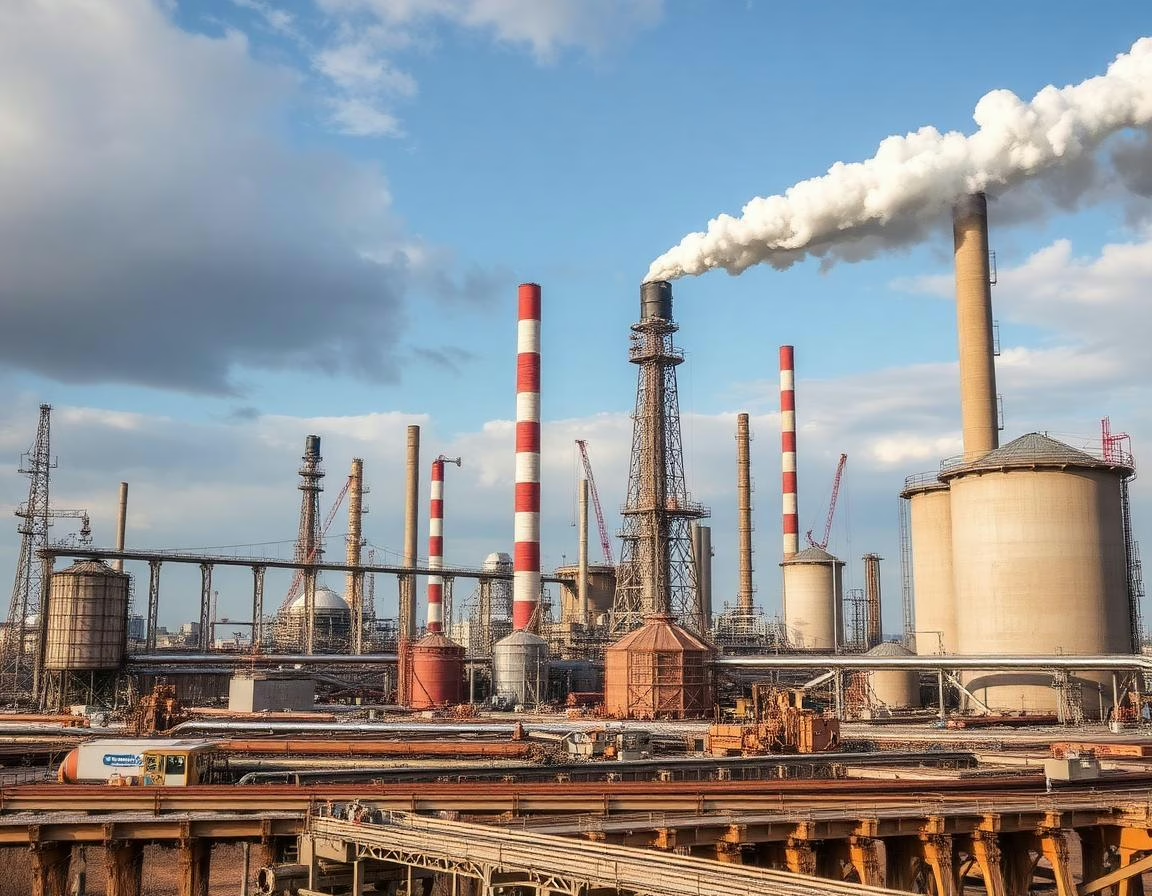
The Science of Centrifugal Separation
Centrifugal separation is not a new concept; however, its application in today’s industrial landscape calls for precision engineering and advanced technology. As global challenges, such as water scarcity and stringent environmental regulations, escalate, the demands on separation technology have become increasingly intricate. Modern decanter centrifuges are equipped with finely tuned systems that meticulously control variables like bowl speed and conveyor differential, allowing them to process a diverse range of materials—from municipal sludge to mining tailings.
The Role of 2-Phase Decanter Centrifuges
The 2-Phase Decanter Centrifuge acts as a reliable workhorse in numerous separation tasks. This system effectively separates solids from a single liquid phase, resulting in a dewatered cake and clarified liquid. Its applications are vital in sectors such as municipal wastewater treatment, food processing, and chemical production. The efficiency of this centrifuge translates directly into cost savings for industries by reducing waste disposal costs and enabling the recycling of clarified liquids.
Advancements with 3-Phase Decanter Centrifuges
For more complex separation needs, the 3-Phase Decanter Centrifuge offers a continuous and elegant solution. This advanced system can simultaneously separate a feed slurry into solid, heavy liquid, and light liquid phases. It plays a crucial role in industries such as edible oil refining and biodiesel production, where it separates valuable components from waste. By recovering oils from industrial waste streams, the 3-Phase Decanter not only addresses disposal challenges but also creates revenue opportunities, showcasing its importance in environmental management.
Engineering Excellence and Design
The design and manufacturing of decanter centrifuges require a harmonious synthesis of mechanical engineering, fluid dynamics, and materials science. The central rotating assembly must endure extreme gravitational forces, often exceeding 3,000 Gs, while resisting wear from abrasive materials. Leading manufacturers invest in advanced materials and innovative design features to enhance durability. This meticulous attention to engineering details separates high-performance centrifuges from those prone to operational issues.
Market Drivers and Environmental Necessity
The market for decanter technology is driven by interconnected factors, including rapid urbanization and industrialization, which lead to increased volumes of wastewater and effluent that require treatment. Tightening environmental regulations demand higher standards for pollutant removal and waste minimization. As a result, the efficiency of modern decanter centrifuges has become not just an economic advantage but a mandatory requirement for compliance.
Embracing Smart Technology
Innovation in decanter centrifuge technology is increasingly focused on integrating smart technology and enhancing energy efficiency. The next generation of centrifuges features connected assets equipped with sensors that monitor key operational parameters in real-time. This data feeds predictive maintenance algorithms, allowing for proactive maintenance that minimizes unplanned downtime. Additionally, automated systems can dynamically adjust operational parameters, ensuring optimal performance and further reducing energy consumption.
Future Applications and Opportunities
Looking ahead, the potential applications for decanter centrifuges are expanding into new and frontier industries. In biofuel production, particularly from algae, decanters are crucial for harvesting algal cells, making the process economically viable. Moreover, in the recycling of lithium batteries, decanter centrifuges assist in recovering valuable materials, contributing to sustainability efforts. The ability to recover and purify process water for reuse will become increasingly critical as industries strive to minimize water usage.
The Impact of Specialized Manufacturers
The influence of manufacturers in this sector extends beyond merely providing machinery. Their high-performance decanter centrifuges empower cities to manage sewage loads more efficiently and assist food processors in maintaining product purity while maximizing yield. Manufacturers become indispensable partners in both industrial productivity and environmental stewardship, providing the tools necessary for industries to balance economic operations with ecological responsibilities.
In conclusion, the advancement of decanter centrifuge technology marks a significant leap forward in addressing the challenges of modern industrial processes. As these machines become more sophisticated and integrated with smart technology, their role in promoting sustainability and efficiency will only grow. The future of industrial separation is bright, driven by innovation and a commitment to environmental stewardship.
- Key Takeaways:
- Decanter centrifuges enhance efficiency in wastewater treatment and resource recovery.
- The 2-Phase and 3-Phase systems serve distinct but equally critical roles across industries.
- Smart technology integration is revolutionizing operation and maintenance strategies.
- Future applications are poised to expand into biofuels and recycling sectors.
- Specialized manufacturers are pivotal in enabling both productivity and sustainability.
Read more → www.desmoinesregister.com



