
The fascinating relationship between humans and cats has a rich history, particularly in ancient China. For over three millennia, leopard cats served as cherished companions before the advent of domestic cats through the Silk Road. This evolution highlights not only the changing dynamics of human-animal relationships but also the societal shifts that influenced these interactions.
The Early Companions
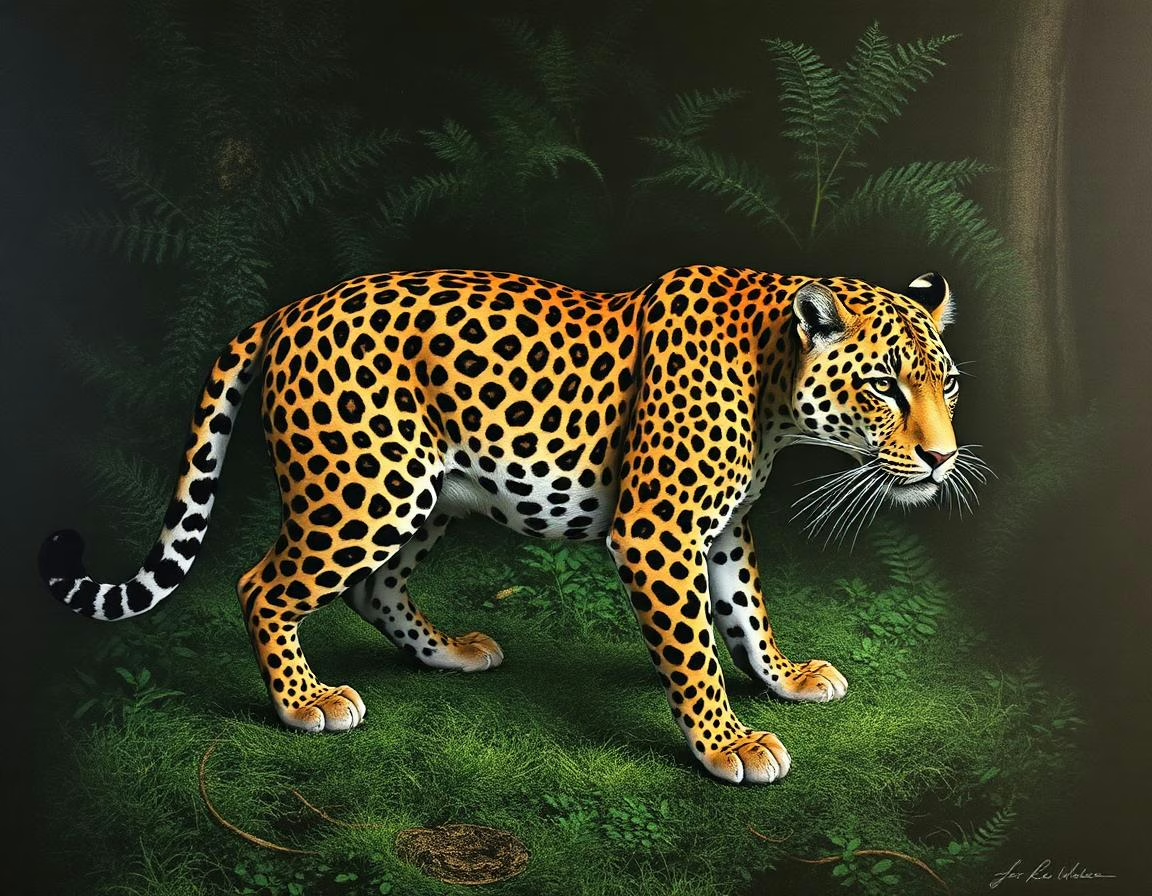
Leopard cats, a wild species native to East Asia, first entered human homes around 5,400 years ago. Their arrival coincided with the Neolithic period, a time when agriculture was taking root and communities began to flourish. With their distinctive leopard-like markings and a size comparable to domestic cats, these wildcats quickly became valued for their ability to control vermin populations.
Archaeological studies have uncovered the remains of 22 leopard cats across 14 ancient sites in China, revealing their long-standing presence in human settlements. This companionship lasted for approximately 3,500 years, suggesting that these cats played a significant role in the daily lives of early Chinese civilizations.
The Disappearance of Leopard Cats
However, around 150 CE, leopard cats vanished from the archaeological record. This disappearance aligns with the collapse of the Han Dynasty, a period marked by significant social and economic upheaval. The decline in agricultural stability led to fewer rodents, diminishing the leopard cats’ reason to coexist with humans. This phenomenon mirrors the fate of black rats in Europe after the fall of the Roman Empire, highlighting how external circumstances can drastically alter animal populations and their relationships with humans.
The Arrival of Domestic Cats
For six centuries, the absence of feline companions left a void in the lives of the Chinese people. This changed dramatically in 730 CE, when the first known domestic cat appeared in Tongwan City, a bustling hub along the Silk Road. Genetic analysis of this cat revealed connections to breeds from the Levant and Central Asia, indicating that it likely arrived through trade routes established by Silk Road merchants.
This reintroduction of cats had a profound impact on Chinese society. During the Tang Dynasty, which lasted from the seventh to the tenth centuries CE, artistic representations of domestic cats began to emerge, marking their reintegration into cultural life. These depictions reflect not only the physical presence of cats but also their growing significance in the social fabric of the time.
The Characteristics of Early Domestic Cats
Investigations into the genome of the first domestic cat have provided insights into its appearance. Researchers suggest that this feline was either predominantly white or a mackerel tabby with white markings. Historical paintings from the time indicate a preference for lighter-colored cats, particularly among the elite. This aesthetic choice showcases how human perceptions of beauty and value can influence animal breeding practices.
The End of Commensalism
As the relationship between humans and domestic cats solidified, the bond with leopard cats diminished significantly. The study concludes that while domestic cats became fully integrated into households and spread globally, the era of human-leopard cat commensalism came to an end. Leopard cats returned to their natural habitats, illustrating a pivotal shift in the dynamics of human-animal interactions.
Reflection on Human-Animal Relationships
The journey from leopard cats to domestic cats in ancient China offers insights into broader themes of companionship, adaptation, and cultural evolution. As societies evolve, so too do the relationships we cultivate with animals, shaped by environmental, social, and economic factors.
This historical narrative not only sheds light on the past but also invites reflection on current human-animal dynamics. As we navigate modernity, understanding the roots of our relationships with animals can inform how we approach conservation and domestication today.
Takeaways
- Leopard cats were companions to humans in China for over 3,500 years before the arrival of domestic cats.
- The collapse of the Han Dynasty correlated with the disappearance of leopard cats from human settlements, reflecting the impact of societal upheaval on animal populations.
-
The first domestic cat in China emerged in 730 CE through Silk Road trade, leading to a resurgence of feline companionship.
-
Genetic analysis reveals that early domestic cats were likely light-colored, aligning with aesthetic preferences of the time.
-
The transition from leopard cats to domestic cats marks a significant evolution in human-animal relationships, shaped by cultural and environmental changes.
In conclusion, the historical trajectory of leopard cats in China serves as a testament to the enduring bond between humans and animals. As we reflect on this past, we can deepen our appreciation for the complexities of these relationships today. Understanding how these dynamics have shifted over time can inspire us to foster more harmonious connections with the natural world.
Read more → www.iflscience.com



