
Former Kano State governor, Senator Rabiu Musa Kwankwaso, has announced his readiness to join the ruling All Progressives Congress (APC) under strict conditions, emphasizing the need for respect and fairness in any potential alliance. Kwankwaso’s stance stems from past experiences of being sidelined post-election and highlights the importance of negotiation and mutual benefit in politics. His “Kwankwasiyya” movement echoes this sentiment, demanding recognition and a rightful place in any partnership to secure the future of their constituents.
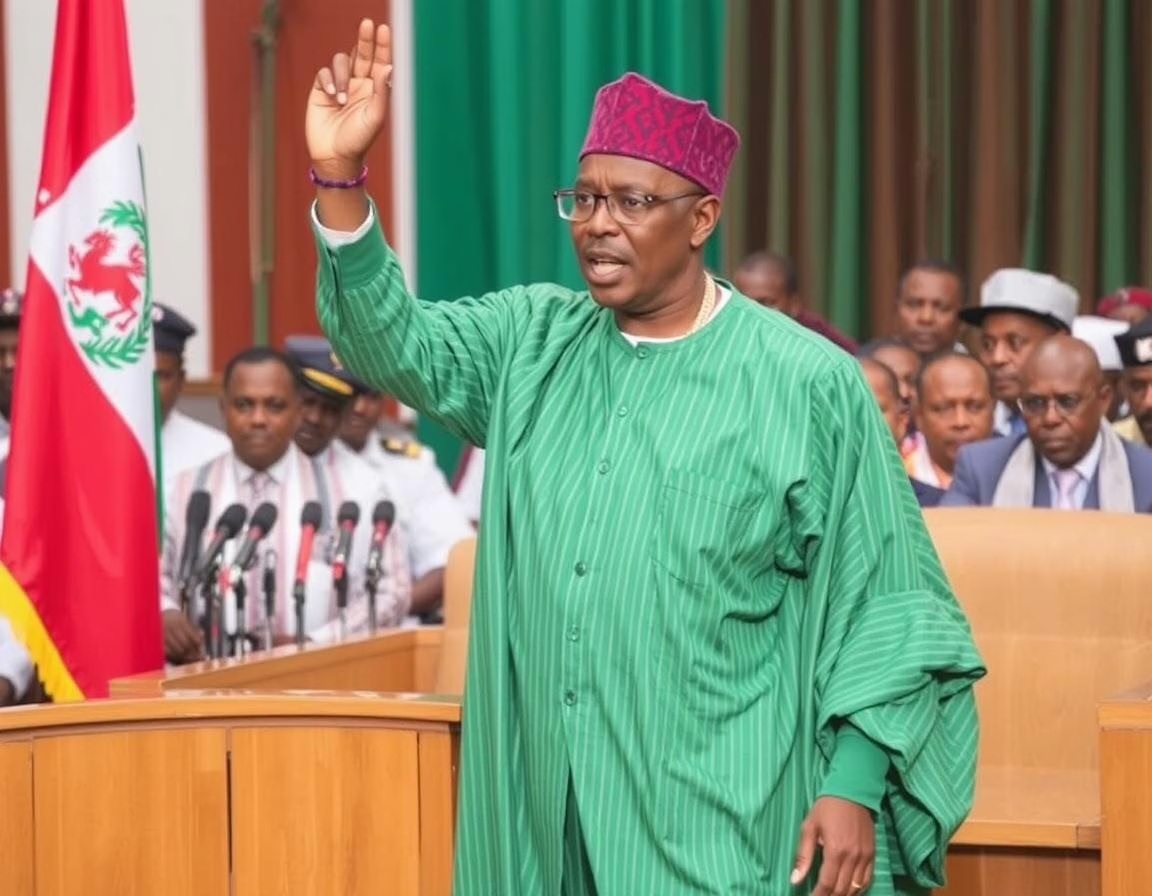
Kwankwaso’s potential move to the APC ahead of the 2027 general elections could significantly impact the political landscape in the North, given his massive grassroots following in Kano and other northern states. As a skilled mobilizer of votes, Kwankwaso’s alliance with the APC would strengthen the ruling party’s position and potentially reshape power dynamics in the region. The APC recognizes the value Kwankwaso brings and is likely to consider his conditions seriously to solidify its position leading up to the elections.
While Kwankwaso remains open to discussions, he asserts that any agreement must be based on equality and respect, emphasizing that his movement is not desperate for a deal. The strategic nature of his approach is seen as a means to safeguard his political base and potentially position himself for a significant role in the upcoming elections, either as a presidential candidate or a key influencer. The absence of formal talks between the APC and Kwankwaso’s camp indicates that negotiations may be on the horizon, presenting the possibility of a formidable alliance or a strengthened NNPP independently contesting.
Kwankwaso’s declaration reflects a broader sentiment among Nigerian politicians who seek to avoid being used during elections and then marginalized thereafter. His proactive stance in setting conditions early in the process signifies a shift towards demanding recognition and inclusion upfront, rather than waiting for post-election concessions. The significance of Kwankwaso’s influence, particularly in Kano, cannot be understated, as the state often plays a pivotal role in national election outcomes due to its large voter population.
As discussions between Kwankwaso and the APC potentially unfold, the outcome of their negotiations will have far-reaching implications for Nigeria’s political future. Should an agreement be reached, the resulting alliance could pose a formidable challenge to the opposition, reshaping the political landscape in the North and consolidating the ruling party’s hold on power. Kwankwaso’s strategic maneuvering underscores his commitment to ensuring that his movement, Kwankwasiyya, is not merely a political tool but a respected and integral part of any partnership.
In conclusion, Kwankwaso’s calculated approach to potential alliance-building with the APC signifies a pivotal moment in Nigerian politics, where established politicians are asserting their terms early on. By prioritizing respect, fairness, and inclusion, Kwankwaso aims to ensure that his movement’s interests and those of his constituents are safeguarded in any future political engagements. The unfolding negotiations between Kwankwaso and the APC hold the key to shaping the country’s political landscape and could set a precedent for how political alliances are formed and maintained in Nigeria.
Takeaways:
– Kwankwaso’s move to potentially join the APC under strict conditions signals a strategic shift in Nigerian politics.
– The alliance between Kwankwaso and the APC could significantly impact the political dynamics in the North and strengthen the ruling party’s position.
– By setting early conditions for any partnership, Kwankwaso aims to secure respect and inclusion for his movement, Kwankwasiyya, in future political engagements.
– The outcome of negotiations between Kwankwaso and the APC will play a crucial role in shaping Nigeria’s political future, particularly leading up to the 2027 general elections.
Read more on businessday.ng



