
Researchers are propelling CAR T therapy beyond blood cancers into uncharted territory, exploring its potential in treating clear cell renal cell carcinoma, a challenging form of kidney cancer. Dr. Wayne A. Marasco and his team have made significant strides by developing a groundbreaking dual-targeting CAR T-cell therapy for patients with advanced kidney cancer expressing high levels of CAIX and CD70 antigens.
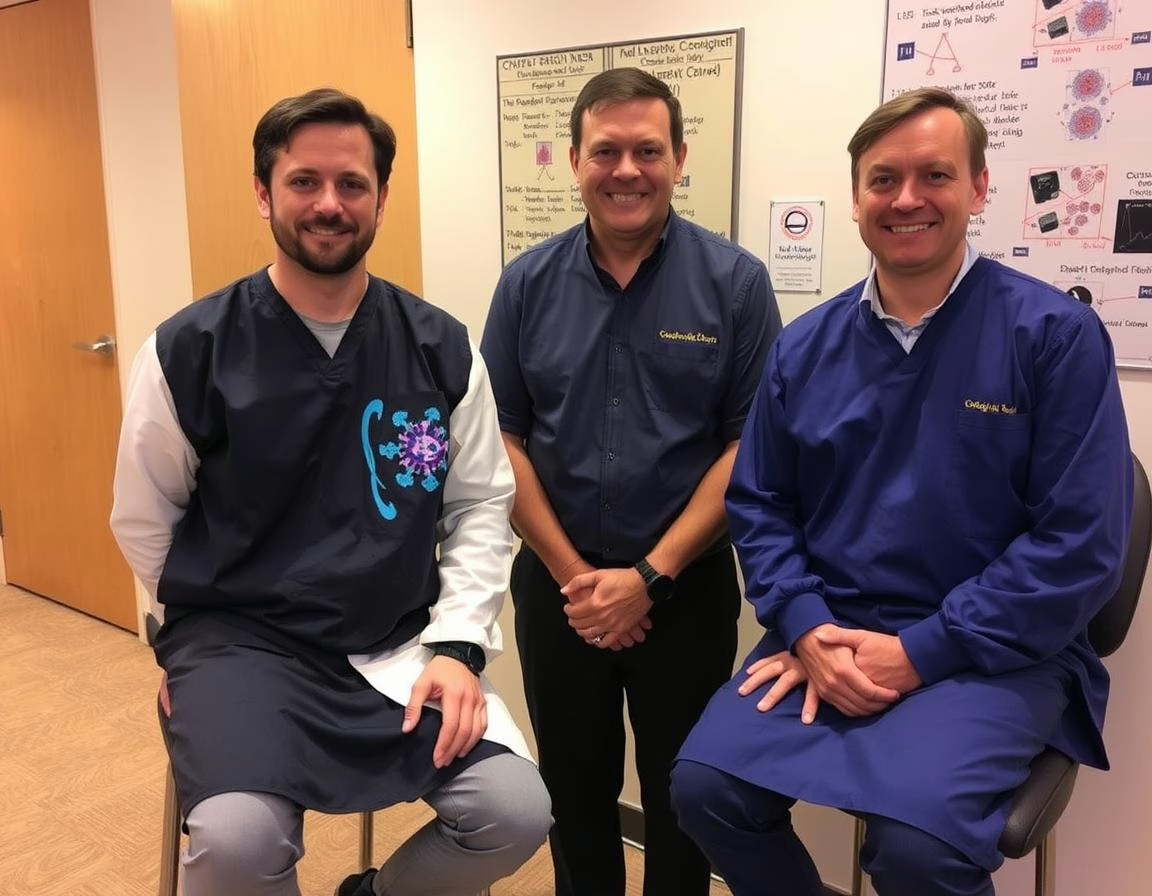
At the 2025 Kidney Cancer Research Summit, Dr. Marasco presented a visionary approach to combatting clear cell renal cell carcinoma. The dual-targeted CAR T-cell therapy aims to fine-tune treatment by precisely targeting CAIX and CD70, potentially offering a transformative path towards curing this aggressive form of cancer.
Drawing on the success of CAR T-cell therapy in hematologic malignancies, recent studies like the COBALT-RCC trial have delved into its application for solid tumors. Notably, Yescarta, a CD70-targeting CAR T-cell therapy, demonstrated an impressive disease control rate of 81% in advanced renal cell carcinoma patients, with durable responses observed.
In the TRAVERSE trial, the allogeneic CAR-T ALLO-316 showcased promising results in patients with advanced kidney cancer. The therapy, in combination with lymphodepletion, yielded an overall response rate of 20%, indicating its potential as a viable treatment option for CD70-positive tumors.
The dual-targeting feature of the CAIX/CD70-directed CAR T-cell therapy not only enhances efficacy but also prioritizes safety by selectively targeting high-density antigens on tumor cells while sparing healthy tissues. By altering the tumor microenvironment through local secretion of checkpoint inhibitors, the therapy aims to restore antitumor immunity effectively.
Preliminary efficacy data from preclinical studies have underscored the specificity and potency of the dual-targeted CAR T-cell therapy. While CD70 expression variability poses a challenge, CAIX’s consistent overexpression provides a promising target for therapy. The integration of high-avidity, low-affinity antibodies in the treatment design ensures precise targeting and minimizes off-target effects.
Looking ahead, the investigational dual-targeted CAR T-cell therapy holds immense promise for advancing kidney cancer treatment. By targeting CAIX and CD70 while delivering anti–PD-1 and -CTLA4 bispecific antibodies at the tumor site, this innovative approach could revolutionize the landscape of renal cell carcinoma therapy.
As ongoing preclinical studies near completion, the next critical steps involve GMP manufacturing and the submission of an investigational new drug application to the FDA. Dr. Marasco’s team is on track to achieve these milestones by September or October 2025, paving the way for potential clinical trials and eventual patient access to this groundbreaking therapy.
In the realm of cancer research and treatment, the evolution of CAR T-cell therapy stands as a beacon of hope, offering novel strategies to combat challenging malignancies like clear cell renal cell carcinoma. By harnessing the power of immunotherapy and precision medicine, researchers continue to push the boundaries of innovation, driving towards enhanced outcomes and improved quality of life for patients.
Takeaways:
– The innovative dual-targeting CAR T-cell therapy presents a promising avenue for treating advanced kidney cancer by precisely targeting CAIX and CD70 antigens.
– Early clinical trials have shown encouraging results, with high disease control rates and durable responses observed in patients receiving CAR T-cell therapy.
– The integration of anti–PD-1 and -CTLA4 bispecific antibodies in CAR T therapy could further enhance treatment efficacy and revolutionize the management of renal cell carcinoma.
– Ongoing preclinical studies and imminent FDA submissions signal a potential shift towards personalized and effective immunotherapy options for patients with advanced kidney cancer.
Tags: monoclonal antibodies
Read more on curetoday.com