
Lipid nanoparticles (LNPs) have revolutionized the field of drug delivery, particularly for RNA therapeutics. The successful development of LNPs for COVID-19 mRNA vaccines by Pfizer/BioNTech and Moderna has propelled the global market for LNPs to new heights. LNPs are now at the forefront of RNA therapeutics for genetic diseases, cancers, and immunotherapies. This article delves into the components, formulations, and recent advancements in LNP-based RNA therapeutics, with a specific focus on the crucial role of in vivo imaging in understanding their pharmacokinetics and pharmacodynamics.
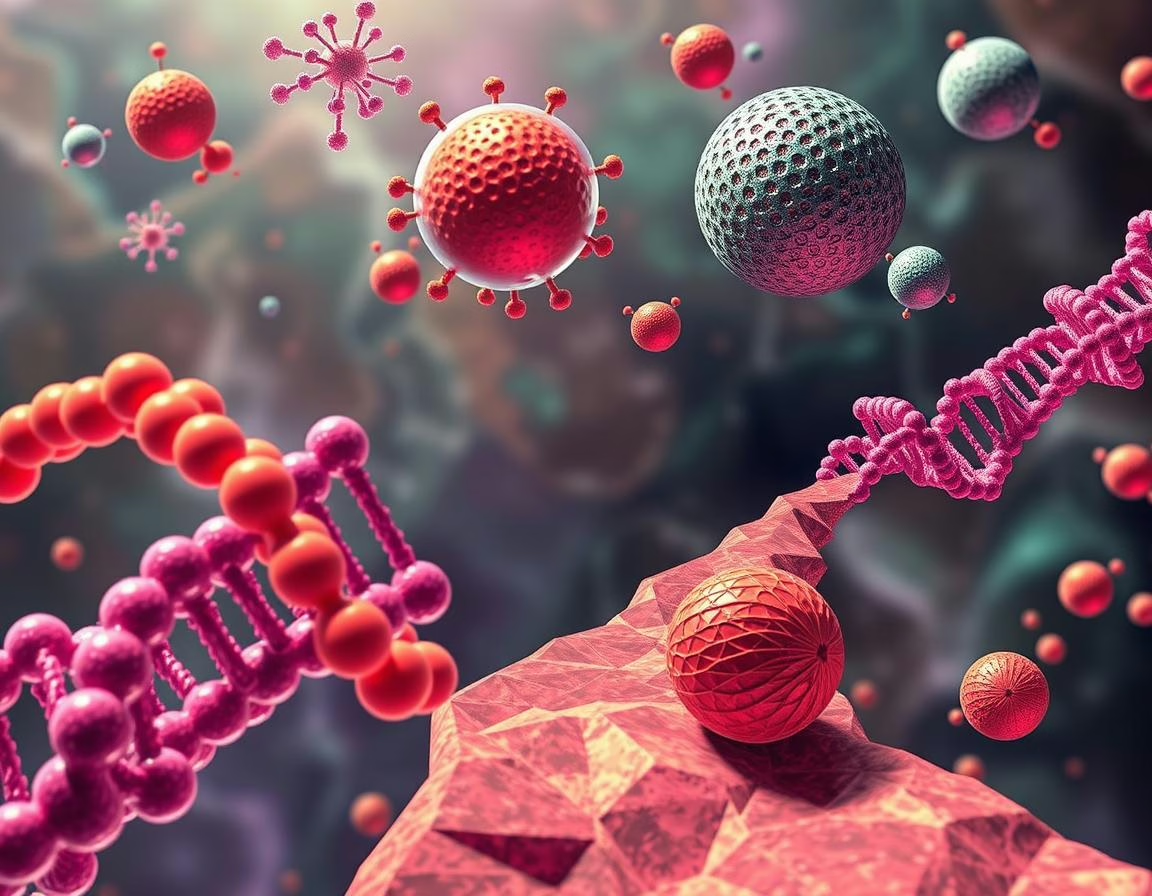
The journey of RNA therapeutics began in 1978 with the delivery of mRNA using liposomes. Over the years, advancements in cationic and ionizable lipid-based LNPs have enhanced the stability and efficacy of mRNA therapeutics. The success of mRNA vaccines like BNT162b2 and mRNA-1273 has paved the way for a myriad of LNP-based RNA therapeutics targeting infectious diseases and cancers. Imaging techniques play a pivotal role in understanding LNP behavior in vivo, aiding in target identification and therapy development.
Bioimaging techniques offer insights into drug targets, off-target effects, and PK/PD profiles of LNPs. Nanoparticles, including LNPs, are ideal platforms for bioimaging due to their versatility in incorporating various imaging contrasts without altering their pharmacokinetic properties. The concept of theranostics, combining diagnostics and therapeutics, has led to the development of novel agents like Lutathera and Pluctivo. These theranostic approaches hold promise in patient selection and personalized medicine.
The production methods of LNPs have evolved from traditional thin-film hydration to innovative microfluidic mixing. Techniques like T-junction mixing and staggered-herringbone microfluidics offer reproducible and scalable production of LNPs with high encapsulation efficiency. These methods provide control over particle size, distribution, and drug loading, crucial for clinical translation and commercial production of mRNA-LNPs.
The components of LNPs, including ionizable lipids, helper lipids, and PEGylated lipids, play essential roles in LNP formulations. Ionizable lipids switch their charge at different pH levels, aiding in mRNA encapsulation and endosomal escape. Helper lipids provide structural stability and enhance intracellular uptake, while PEGylated lipids improve stability and circulation time. However, concerns regarding PEG immunogenicity in mRNA-LNP vaccines highlight the need for alternative lipid formulations.
In clinical trials, LNPs have shown remarkable success, with FDA-approved drugs like ONPATTRO® and GIVLAARITM leading the way in treating genetic disorders. mRNA-LNPs have emerged as a game-changer in COVID-19 vaccination, offering rapid, scalable, and cost-effective solutions. The versatility of LNPs in delivering various RNA platforms, from siRNA to mRNA, underscores their potential in personalized medicine and targeted therapies.
In conclusion, the integration of in vivo imaging with LNP-based RNA therapeutics is a promising avenue for advancing precision medicine. By leveraging advanced production methods and understanding the intricate components of LNPs, researchers can unlock the full potential of RNA therapeutics for a wide range of diseases. The future of medicine lies in the synergy between innovative drug delivery systems like LNPs and cutting-edge imaging technologies, heralding a new era of personalized and effective treatments.
- LNPs have revolutionized RNA therapeutics delivery
- In vivo imaging is crucial for understanding LNP behavior
- Advanced production methods enhance LNP efficacy and scalability
- Component optimization is key for LNP formulations
- LNPs show promise in clinical trials and COVID-19 vaccines
- The future of medicine lies in integrated RNA therapeutics and imaging technologies
Tags: lipid nanoparticles, immunotherapy, codon optimization, formulation, theranostics, regulatory, clinical trials, drug delivery
Read more on pmc.ncbi.nlm.nih.gov